

corruíra-boreal vs Chestnut-breasted Wren
Troglodytes aedon versus Cyphorhinus thoracicus
Jogue um quiz com corruíra-boreal e Chestnut-breasted Wren
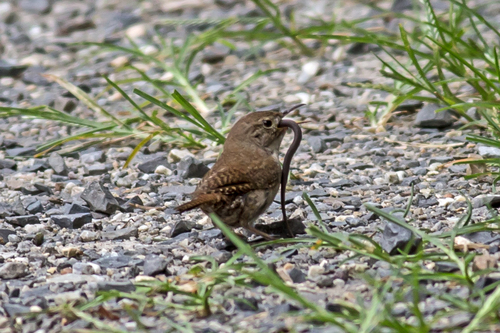 corruíra-boreal
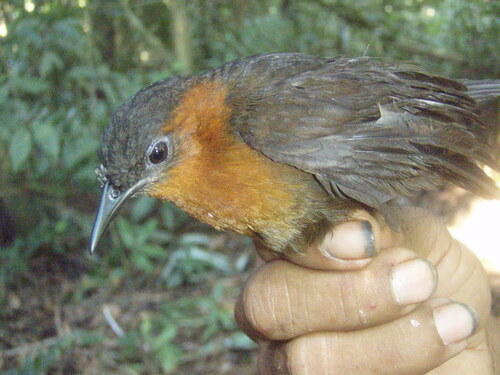 Chestnut-breasted Wren
Em resumo
A marca de campo mais confiável para separar a corruíra-boreal da Chestnut-breasted Wren é a plumagem: a Chestnut-breasted Wren exibe um rosto, garganta e parte superior do abdômen de um laranja-marrom profundo e impressionante, contrastando com sua coroa preta esfumaçada e costas marrons ricas, enquanto a corruíra-boreal é muito mais simples e não possui tons de laranja ou castanha. As juvenis da Chestnut-breasted Wren têm um abdômen inferior mais claro, mas ainda mostram a distinta cor castanha nas partes superiores, ao contrário de qualquer idade da corruíra. Estruturalmente, a Chestnut-breasted Wren é muito mais robusta e volumosa, com uma aparência geral mais escura e rica. O habitat também é uma pista forte: a corruíra-boreal é uma ave comum em subúrbios e campos abertos na América do Norte, enquanto a Chestnut-breasted Wren é uma espécie florestal do sul do Peru e noroeste da Bolívia.
Dicas de identificação
- Cor do rosto e garganta: A Chestnut-breasted Wren sempre mostra um rosto, garganta e parte superior do abdômen de um laranja-marrom profundo (castanho) — isso nunca está presente na corruíra-boreal de qualquer idade ou sexo.
- Cor da coroa: A Chestnut-breasted Wren tem uma coroa preta esfumaçada, contrastando com as costas marrons. A coroa da corruíra-boreal é sempre semelhante em tom às suas costas, nunca preta.
- Partes inferiores: A corruíra-boreal é simples por baixo, variando de marrom a buff ou cinza pálido, às vezes com listras fracas nas laterais. A Chestnut-breasted Wren tem um abdômen inferior e laterais marrons escuros, com uma transição acentuada do abdômen superior laranja-marrom.
- Marcas juvenis: Mesmo as juvenis da Chestnut-breasted Wren mostram o rosto e a garganta castanha, com apenas o abdômen inferior sendo mais claro. As juvenis da corruíra-boreal são marrons simples e não possuem qualquer castanho.
- Contraste geral: A Chestnut-breasted Wren é audaciosamente marcada e fortemente colorida; a corruíra-boreal é muito mais apagada e uniforme.
- Tamanho e volume: A Chestnut-breasted Wren é muito mais pesada e volumosa do que a corruíra-boreal — se você ver uma wren grande e robusta, não é uma corruíra-boreal.
- Cauda: Ambas as espécies têm caudas marrons escuras com listras, mas a cauda da corruíra-boreal é mais curta e frequentemente levantada; a cauda da Chestnut-breasted Wren é proporcionalmente mais longa e menos propensa a ser mantida ereta.
- Bico: A corruíra-boreal tem um bico longo e fino com uma mandíbula superior escuramente acinzentada e uma mandíbula inferior pálida com uma ponta preta. O bico da Chestnut-breasted Wren não é descrito em detalhes nas fontes, mas não é um separador primário.
- Anel ocular e sobrancelha: A corruíra-boreal pode mostrar um anel ocular e sobrancelha fracos; a Chestnut-breasted Wren não possui essas características faciais pálidas, mostrando em vez disso uma forte coloração laranja-marrom.
- Habitat: A corruíra-boreal é encontrada em habitats abertos, suburbanos ou de borda na América do Norte; a Chestnut-breasted Wren é restrita a florestas úmidas no sul do Peru e noroeste da Bolívia. A localização é uma pista forte.
- Comportamento: A corruíra-boreal é ativa, animada e frequentemente visível; a Chestnut-breasted Wren é tímida, secreta e geralmente escondida em densa vegetação florestal.
- Canto: O canto da corruíra-boreal é borbulhante e variável, frequentemente ouvido na época de reprodução; o canto da Chestnut-breasted Wren é mais musical e menos frenético, mas isso não é uma marca de campo primária.
- Estação e contexto: A corruíra-boreal está presente em sua área durante a época de reprodução e é frequentemente ouvida cantando; a Chestnut-breasted Wren é residente em florestas úmidas durante todo o ano.
- Armadilhas: Não confie nas listras nas asas e cauda, pois ambas as espécies mostram isso até certo ponto. Foque na cor do rosto e das partes inferiores, tamanho e habitat.
- Diferenças sexuais: Nenhuma diferença de plumagem específica de sexo é descrita para qualquer uma das espécies; todas as marcas de campo se aplicam a machos e fêmeas.
Tamanho
A corruíra-boreal é uma wren muito pequena, com uma média de cerca de 11,5 g de massa e 11–13 cm de comprimento [wikidata, wikipedia]. A Chestnut-breasted Wren é muito maior e mais pesada, variando de 11,5 a 15 cm de comprimento e pesando 26,5–41 g [wikipedia]. No campo, a Chestnut-breasted Wren parecerá visivelmente mais volumosa e robusta, enquanto a corruíra-boreal é pequena e compacta. A diferença de massa é especialmente impressionante — a Chestnut-breasted Wren é mais de duas vezes mais pesada que a corruíra-boreal.
Plumagem
- Juvenil/imatura: As juvenis da Chestnut-breasted Wren têm um abdômen inferior mais claro, mas mantêm o rosto, garganta e parte superior do abdômen de um laranja-marrom profundo, e as laterais e abdômen inferiores marrons escuros. As juvenis da corruíra-boreal são semelhantes aos adultos: marrons simples por cima, mais claras por baixo, com apenas listras fracas e sem tons de laranja ou castanho.
- Adulto: Os adultos da Chestnut-breasted Wren são audaciosamente marcados com uma coroa preta esfumaçada, costas e rabo marrons escuros ricos, cauda marrons escuros e um rosto, garganta e parte superior do abdômen de um laranja-marrom profundo. As laterais e o abdômen inferior são marrons escuros. Os adultos da corruíra-boreal são muito mais simples, com partes superiores variando de marrom acinzentado apagado a marrom rufo rico, partes inferiores de marrom a buff ou cinza pálido, e sempre sem qualquer coloração forte de laranja ou castanho. Ambas as espécies têm algumas listras nas asas e cauda, mas apenas a corruíra-boreal pode mostrar um anel ocular e sobrancelha fracos. O contraste e a cor geral da Chestnut-breasted Wren são muito mais fortes.
Comportamento
A corruíra-boreal é frequentemente ativa, animada e conspícua, sendo frequentemente vista pulando por arbustos, jardins e florestas abertas, muitas vezes com sua cauda curta levantada para cima. A Chestnut-breasted Wren, em contraste, é uma ave florestal furtiva, mais propensa a ser ouvida do que vista, e normalmente permanece escondida em densa vegetação. As corruíras-boreais são mais propensas a serem vistas em áreas abertas ou perto de habitações humanas, enquanto as Chestnut-breasted Wrens tendem a ficar em interiores florestais sombreados.
Habitat
O habitat é um separador forte. A corruíra-boreal é encontrada em uma ampla gama de habitats abertos e suburbanos em todo o sul do Canadá, EUA e México, e é comum em jardins, parques e habitats de borda [wikipedia]. A Chestnut-breasted Wren é restrita a florestas úmidas no sul do Peru e noroeste extremo da Bolívia, e não é encontrada em ambientes abertos ou suburbanos. Se você estiver em um parque da cidade ou quintal na América do Norte, você quase certamente está vendo uma corruíra-boreal; se você estiver em uma densa floresta sul-americana, a Chestnut-breasted Wren é possível.
Voz
A corruíra-boreal tem um canto rico, borbulhante e variável, comumente ouvido durante a época de nidificação, mas raramente depois [wikipedia]. A Chestnut-breasted Wren é notada por diferenças vocais significativas em relação a seus parentes próximos, mas nenhuma comparação direta com a corruíra-boreal é descrita nas fontes. Em geral, o canto da Chestnut-breasted Wren é mais musical e menos frenético do que o da corruíra-boreal, mas isso não é uma marca de campo primária para separação entre essas duas espécies.
corruíra-boreal · Chestnut-breasted Wren · Minhas aves difíceis