

namaqua warbler vs bronze mannikin
Phragmacia substriata versus Spermestes cucullata
Jogue um quiz com namaqua warbler e bronze mannikin
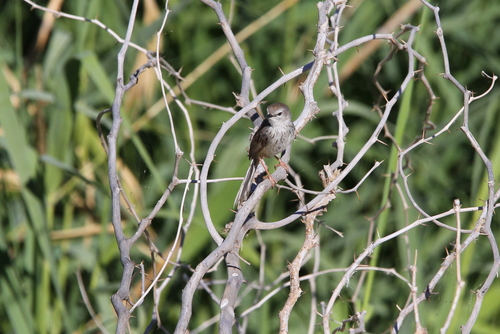 namaqua warbler
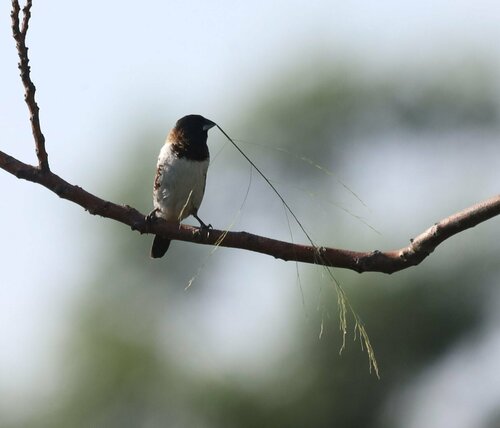 bronze mannikin
Em resumo
A marca de campo mais confiável para separar o namaqua warbler do bronze mannikin é a estrutura geral e a cauda: o namaqua warbler é um warbler esbelto e de cauda longa com uma cauda marrom, fina e erguida, enquanto o bronze mannikin é um tentilhão compacto e atarracado com uma cauda preta curta. Os mannikins juvenis são marrons simples e não possuem as partes inferiores brancas e o padrão facial do warbler. Em todas as plumagens, o peito e o supercílio brancos do warbler contrastam com o rosto e o peito escuros do mannikin. A forma do bico também é diagnóstica: o warbler tem um bico fino e reto, enquanto o mannikin tem um bico grosso e cônico de tentilhão. É improvável que esses dois sejam confundidos em voo, mas aves empoleiradas em cobertura densa podem causar confusão, especialmente os juvenis.
Dicas de identificação
- Comprimento e forma da cauda: O namaqua warbler sempre apresenta uma cauda longa, marrom e fina, frequentemente erguida; o bronze mannikin tem uma cauda curta, atarracada e preta. Esta é a verificação estrutural mais rápida em qualquer postura.
- Forma do bico: O warbler tem um bico fino, reto e preto (tipo insetívoro); o mannikin tem um bico grosso, cônico e de cor preto-acastanhada/cinza pálido (tipo tentilhão). A forma do bico é diagnóstica em qualquer idade.
- Padrão facial: O namaqua warbler apresenta um supercílio pálido (sobrancelha) e um rosto inferior branco; o mannikin tem um rosto escuro (preto a marrom-escuro), queixo e garganta, às vezes com iridescência esverdeada. Os mannikins juvenis não têm o rosto escuro, mas ainda assim não possuem a sobrancelha pálida do warbler.
- Peito e partes inferiores: O warbler tem uma garganta e um peito brancos com listras fracas; o mannikin tem um peito acastanhado (adultos) ou um buff simples (juvenis), com barriga branca e listras irregulares nos flancos/cauda. As partes inferiores do warbler nunca são listradas.
- Partes superiores: O warbler é de um marrom ruivo rico na parte superior; o mannikin é de um marrom acinzentado na parte superior, sem os tons ruivos.
- Cor das pernas: O warbler tem pernas marrom-rosadas; a cor das pernas do mannikin é menos distintiva no campo, mas geralmente é escura.
- Impressão geral: O warbler é esbelto, de cauda longa e frequentemente empoleira com a cauda erguida; o mannikin é compacto, de cauda curta e empoleira ereto ou aglomerado em bandos.
- Tamanho do grupo: O warbler é geralmente solitário ou em pares; o mannikin está quase sempre em bandos, especialmente fora da época de reprodução.
- Habitat: O warbler prefere arbustos densos e emaranhados ou canaviais; o mannikin é encontrado em bordas gramadas, jardins e margens de florestas, frequentemente perto da água.
- Estilo de voo: O warbler é ágil, frequentemente voando baixo e rapidamente entre a cobertura; o mannikin tem um voo saltitante, semelhante ao de um tentilhão, frequentemente em grupos apertados.
- Confusão juvenil: Os mannikins juvenis são marrons simples e não têm contraste facial; os warblers juvenis, embora mais apagados, ainda mostram partes inferiores pálidas e sobrancelha.
- Voz: O chamado do warbler é um agudo 'treeep-treep-trrrrrr'; o mannikin emite um chamado mais suave, de chilreio ou 'rreep-rreeep'. Se ouvido, isso é uma forte pista.
- Cor da cauda: A cauda do warbler é marrom e combina com as costas; a do mannikin é preta e contrasta com as costas.
- Associação: Os mannikins podem se misturar com outros tentilhões/finches; os warblers não.
- Comportamento de empoleiramento: O warbler frequentemente se move através da vegetação baixa, raramente empoleira em áreas abertas; o mannikin empoleira abertamente, frequentemente em grupos, e visita bordas de água expostas.
Tamanho
O namaqua warbler é ligeiramente maior e mais longo (12–13 cm) do que o bronze mannikin (9–10 cm), mas a diferença é mais óbvia nas proporções: o warbler é esbelto, com cauda e pernas longas, enquanto o mannikin é compacto, de cauda curta e robusto. O mannikin também pesa mais para seu tamanho (7–12 g) em comparação com a construção mais leve do warbler. No campo, o comprimento da cauda e a postura do warbler fazem com que ele pareça ainda mais longo do que o mannikin.
Plumagem
- Aves juvenis/imaturas: Os mannikins juvenis bronze são uniformemente marrons em cima com partes inferiores buff e não possuem o contraste facial nítido do namaqua warbler. Os warblers juvenis são mais apagados do que os adultos, mas ainda mostram um supercílio pálido e garganta/peito brancos, ao contrário de qualquer idade de mannikin.
- Adultos: Os adultos do namaqua warbler têm partes superiores de um marrom ruivo rico, uma garganta e um peito brancos (com listras fracas), uma sobrancelha pálida e uma cauda marrom longa. Os adultos do bronze mannikin têm rostos escuros (preto a marrom-escuro na cabeça, queixo, garganta e peito), com alguma iridescência esverdeada, partes superiores de um marrom acinzentado e partes inferiores brancas com listras irregulares nos flancos/cauda. A cauda do mannikin é curta e preta, não marrom e fina. O bico do warbler é fino e preto; o do mannikin é grosso, cônico e de cor preto-acastanhada/cinza pálido.
- Visões de voo: Nenhum padrão distintivo de asa superior é descrito para nenhuma das espécies, mas a cauda longa e a forma geral do warbler são distintas em voo, enquanto o mannikin parece atarracado e de cauda curta.
Comportamento
O namaqua warbler é geralmente visto sozinho ou em pares, movendo-se baixo em arbustos com a cauda erguida e forrageando por insetos. Ele raramente é gregário. O bronze mannikin é altamente social, frequentemente em bandos de 8–20, alimentando-se de sementes e visitando a água para beber e se banhar. Os mannikins frequentemente se limpam mutuamente e constroem ninhos de pouso comunitários, às vezes associando-se a outros tentilhões. Os warblers são mais secretos e menos propensos a serem vistos em bandos abertos.
Habitat
O namaqua warbler prefere arbustos densos e baixos e canaviais, frequentemente em regiões áridas ou semiáridas. O bronze mannikin é encontrado em savanas mesicas, margens de florestas e jardins—geralmente em habitats mais úmidos, mais abertos ou de borda. Os mannikins são mais propensos a estar perto de habitações humanas e áreas gramadas, enquanto os warblers se mantêm em vegetação densa e emaranhada.
Voz
O namaqua warbler emite um chamado agudo 'treeep-treep-trrrrrr'. O bronze mannikin tem um 'rreep-rreeep' em voo e uma série de notas de chilreio, ofegantes ou zumbidoras quando empoleirado. A canção do mannikin é repetitiva e semelhante à de um tentilhão, enquanto o chamado do warbler é mais agudo e alto. As vocalizações são bastante diferentes se ouvidas bem, mas ambas podem ser ignoradas em bandos mistos ou ambientes barulhentos.