

Namaqua Warbler vs Bronze Mannikin
Phragmacia substriata contro Spermestes cucullata
Fai un quiz con Namaqua Warbler e Bronze Mannikin
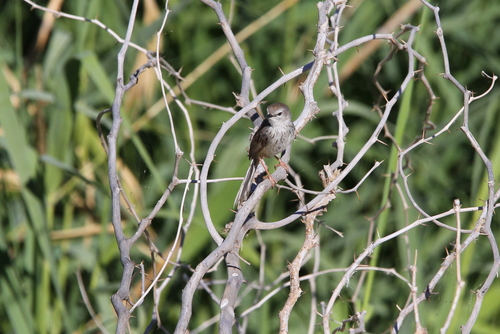 Namaqua Warbler
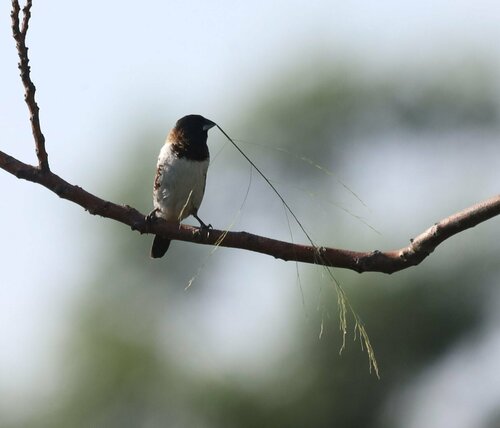 Bronze Mannikin
In breve
Il segno distintivo più affidabile per separare il Namaqua Warbler dal Bronze Mannikin è la struttura generale e la coda: il Namaqua Warbler è un warbler snello e dalla coda lunga con una coda marrone frastagliata e sollevata, mentre il Bronze Mannikin è un finch compatto e tozzo con una coda nera corta. I mannikins juvenili sono di un marrone uniforme e mancano delle parti inferiori bianche e del motivo facciale del warbler. In tutte le livree, il petto e il sopracciglio bianchi del warbler contrastano con il viso e il petto scuri del mannikin. Anche la forma del becco è diagnostica: il warbler ha un becco sottile e dritto, mentre il mannikin ha un becco spesso e conico. È improbabile che questi due vengano confusi in volo, ma gli uccelli posati in copertura densa possono causare confusione, specialmente i juvenili.
Consigli di identificazione
- Lunghezza e forma della coda: Il Namaqua Warbler mostra sempre una coda lunga e marrone, spesso sollevata; il Bronze Mannikin ha una coda corta, tozza e nera. Questo è il controllo strutturale più veloce in qualsiasi postura.
- Forma del becco: Il warbler ha un becco sottile, dritto e nero (tipo insetti); il mannikin ha un becco spesso, conico e di colore grigio scuro/chiaro (tipo finch). La forma del becco è diagnostica a qualsiasi età.
- Motivo facciale: Il Namaqua Warbler mostra un sopracciglio chiaro e una parte inferiore del viso bianca; il mannikin ha un viso scuro (nero a marrone scuro), mento e gola, a volte con iridescenza verdognola. I mannikins juvenili mancano del viso scuro ma non hanno ancora il sopracciglio chiaro del warbler.
- Petto e parti inferiori: Il warbler ha una gola e un petto bianchi con striature deboli; il mannikin ha un petto scuro (adulti) o di un buffo uniforme (juvenili), con un ventre bianco e barrature irregolari sui fianchi/su di dietro. Le parti inferiori del warbler non sono mai barrate.
- Parte superiore: Il warbler è di un ricco marrone ruggine sopra; il mannikin è di un marrone grigiastro sopra, privo delle tonalità rugginose.
- Colore delle zampe: Il warbler ha zampe marrone-rosate; il colore delle zampe del mannikin è meno distintivo sul campo ma generalmente scuro.
- Impressione generale: Il warbler è snello, dalla coda lunga e spesso si posa con la coda sollevata; il mannikin è compatto, dalla coda corta e si posa eretto o accalcato in gruppi.
- Dimensione del gruppo: Il warbler è solitamente solitario o in coppie; il mannikin è quasi sempre in gruppi, specialmente al di fuori della stagione riproduttiva.
- Habitat: Il warbler preferisce cespugli densi e intricati o canneti; il mannikin si trova ai margini erbosi, nei giardini e ai margini delle foreste, spesso vicino all'acqua.
- Stile di volo: Il warbler è agile, spesso vola basso e rapidamente tra la copertura; il mannikin ha un volo saltellante, simile a un finch, spesso in gruppi stretti.
- Confusione giovanile: I mannikins juvenili sono di un marrone uniforme e mancano di contrasto facciale; i warblers juvenili, sebbene più opachi, mostrano ancora parti inferiori chiare e sopracciglio.
- Voce: Il richiamo del warbler è un acuto e alto 'treeep-treep-trrrrrr'; il mannikin emette un richiamo più morbido, cinguettante o 'rreep-rreeep'. Se udito, questo è un forte indizio.
- Colore della coda: La coda del warbler è marrone e si abbina al dorso; quella del mannikin è nera e contrasta con il dorso.
- Associazione: I mannikins possono mescolarsi con altri finch/waxbills; i warblers no.
- Comportamento di posarsi: Il warbler si muove spesso attraverso la vegetazione bassa, raramente si posa in aperto; il mannikin si posa apertamente, spesso in gruppi, e visita i bordi dell'acqua esposti.
Taglia
Il Namaqua Warbler è leggermente più grande e lungo (12–13 cm) rispetto al Bronze Mannikin (9–10 cm), ma la differenza è più evidente nelle proporzioni: il warbler è snello con una coda e zampe lunghe, mentre il mannikin è compatto, dalla coda corta e tozzo. Il mannikin pesa anche di più per la sua dimensione (7–12 g) rispetto alla costruzione più leggera del warbler. Sul campo, la lunghezza della coda e la postura del warbler lo fanno apparire ancora più lungo del mannikin.
Piumaggio
- Uccelli juvenili/immaturi: I mannikins juvenili sono uniformemente marroni sopra con parti inferiori di un buffo e mancano del netto contrasto facciale del Namaqua Warbler. I warblers juvenili sono più opachi degli adulti ma mostrano ancora un sopracciglio chiaro e una gola/petto bianchi, a differenza di qualsiasi età del mannikin.
- Adulti: Gli adulti del Namaqua Warbler hanno parti superiori di un ricco marrone ruggine, una gola e un petto bianchi (con striature deboli), un sopracciglio chiaro e una lunga coda marrone. Gli adulti del Bronze Mannikin hanno un viso scuro (nero a marrone scuro sulla testa, mento, gola e petto), con un po' di iridescenza verdognola, parti superiori marrone grigiastro e parti inferiori bianche con barrature irregolari sui fianchi/su di dietro. La coda del mannikin è corta e nera, non marrone e frastagliata. Il becco del warbler è sottile e nero; quello del mannikin è spesso, conico e di colore grigio scuro/chiaro.
- Viste in volo: Non è descritto alcun motivo distintivo per l'ala superiore di entrambe le specie, ma la lunga coda e la forma generale del warbler sono distintive in volo, mentre il mannikin appare tozzo e dalla coda corta.
Comportamento
Il Namaqua Warbler è solitamente visto singolarmente o in coppie, muovendosi in basso nei cespugli con la coda sollevata e foraggiando per insetti. È raramente gregario. Il Bronze Mannikin è altamente sociale, spesso in gruppi di 8–20, si nutre di semi e visita l'acqua per bere e fare il bagno. I mannikins spesso si puliscono a vicenda e costruiscono nidi di riposo comuni, a volte associandosi con altri finch. I warblers sono più riservati e meno probabili da vedere in gruppi aperti.
Habitat
Il Namaqua Warbler preferisce cespugli densi e bassi e canneti, spesso in regioni aride o semi-aride. Il Bronze Mannikin si trova in savane mesiche, margini forestali e giardini—generalmente in habitat più umidi, più aperti o ai margini. I mannikins sono più probabili attorno agli insediamenti umani e nelle aree erbose, mentre i warblers si attengono a vegetazione spessa e intricata.
Voce
Il Namaqua Warbler emette un richiamo acuto 'treeep-treep-trrrrrr'. Il Bronze Mannikin ha un 'rreep-rreeep' in volo e una serie di note cinguettanti, affannose o ronzanti quando è posato. Il canto del mannikin è ripetitivo e simile a un finch, mentre il richiamo del warbler è più acuto e alto. Le vocalizzazioni sono abbastanza diverse se udite bene, ma entrambe possono essere trascurate in gruppi misti o ambienti rumorosi.
Namaqua Warbler · Bronze Mannikin · I miei uccelli difficili