

mexican violetear vs amethyst-throated mountain-gem
Colibri thalassinus versus Lampornis amethystinus
Jogue um quiz com mexican violetear e amethyst-throated mountain-gem
 mexican violetear
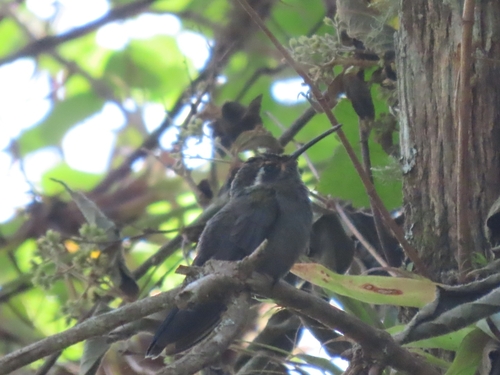 amethyst-throated mountain-gem
Em resumo
A marca de campo mais confiável para separar o mexican violetear do amethyst-throated mountain-gem é a cor da garganta: o mexican violetear de todas as idades apresenta uma garganta e um peito verdes brilhantes, enquanto o macho adulto do amethyst-throated mountain-gem tem um gorget rosa brilhante (ou violeta a azul real em algumas subespécies) e as fêmeas/juvenis apresentam uma garganta canela ou mais opaca. Além disso, o mexican violetear tem uma mancha auricular violeta proeminente e uma cauda azul-verde metálica com uma faixa subterminal preta, enquanto o mountain-gem tem uma faixa pós-ocular esbranquiçada, auriculares escuros e uma cauda preta larga e ligeiramente bifurcada com pontas cinzas. Estruturalmente, o mountain-gem é mais robusto, com um corpo ligeiramente mais longo e uma cauda mais larga, e frequentemente apresenta uma parte inferior da cauda de cor canela clara. Ambas as espécies se sobrepõem em distribuição no México, mas o mountain-gem é mais restrito a florestas montanas de maior elevação. Se você ver um beija-flor com uma garganta verde e uma mancha auricular violeta, é um violetear; se a garganta for rosa, canela ou violeta e houver uma faixa branca atrás do olho, é o mountain-gem.
Dicas de identificação
- A cor da garganta é fundamental: O mexican violetear sempre apresenta uma garganta e um peito verdes brilhantes; o macho adulto do amethyst-throated mountain-gem tem um gorget rosa brilhante, roxo avermelhado ou violeta/azul (dependendo da subespécie), enquanto fêmeas e juvenis têm uma garganta canela ou mais opaca. Esta é a marca mais confiável para todas as idades.
- Mancha auricular violeta: Apenas o violetear tem uma mancha violeta proeminente nos lados do pescoço; o mountain-gem não possui essa característica.
- Faixa pós-ocular branca: O amethyst-throated mountain-gem de todas as idades e sexos apresenta uma faixa esbranquiçada distinta atrás do olho, contrastando com auriculares escuros. O mexican violetear nunca apresenta essa característica.
- Padrão da cauda: O mexican violetear tem uma cauda azul-verde metálica com penas centrais bronzeadas e uma faixa subterminal preta ousada. A cauda do mountain-gem é preta com pontas cinzas nas penas externas e é ligeiramente bifurcada; não possui os tons azul-verde metálicos e bronzeados.
- Coberturas da parte inferior da cauda: O mountain-gem apresenta coberturas da parte inferior da cauda de cor canela clara, especialmente em fêmeas e juvenis; a parte inferior da cauda do violetear é verde brilhante, combinando com a barriga.
- Formato do bico: Ambos têm bicos retos e pretos, mas o bico do violetear é ligeiramente mais curvado. Isso é sutil e raramente é diagnóstico em campo.
- Coroa e costas: O violetear é verde brilhante por cima; os machos do mountain-gem têm uma coroa e costas verdes escuras com uma região posterior bronzeada, e algumas subespécies apresentam regiões posteriores mais bronzeadas ou roxas.
- Tamanho e estrutura: O mountain-gem é ligeiramente maior e mais robusto, com uma cauda mais larga e ligeiramente bifurcada, mas isso só é aparente com comparação direta.
- Dimorfismo sexual: O mountain-gem apresenta forte dimorfismo sexual na cor da garganta (gorget brilhante em machos, canela/opaca em fêmeas); os sexos do violetear são semelhantes.
- Confusão juvenil/imatura: Os juvenis do mountain-gem se assemelham às fêmeas, mas podem apresentar algumas penas de gorget rosa; os juvenis do violetear se parecem com os adultos, com gargantas verdes e mancha auricular violeta.
- Variação de subespécies: As subespécies do mountain-gem podem mudar a cor do gorget (machos de L. a. margaritae têm gorgets violeta a azul real e são mais escuros no geral), mas sempre carecem da mancha auricular violeta e da garganta verde do violetear.
- Contexto de habitat: Em florestas de pinheiros e carvalhos de alta elevação ou florestas perenes, especialmente acima de 900 m, o mountain-gem é mais provável; o violetear é mais disseminado e pode ocorrer em elevações mais baixas ou em uma gama mais ampla de tipos de floresta.
- Vocalizações: Se você ouvir um murmúrio quieto e complexo ou uma série de apitos agudos, é o mountain-gem. A canção do violetear não é descrita aqui.
- Comportamento de exibição: Machos do mountain-gem realizam voos de exibição aérea em círculos e mergulhos; a exibição do violetear não é descrita.
- Armadilhas: Não confie apenas na coloração verde geral ou no tamanho, pois ambos são beija-flores de tamanho médio e esverdeados. Foque na cor da garganta, mancha auricular e padrão facial para uma separação confiável.
Tamanho
O mexican violetear é um beija-flor de tamanho médio, medindo 9,7–12 cm de comprimento e pesando 4,8–5,6 g. O amethyst-throated mountain-gem é ligeiramente maior e mais pesado no geral: 11,5–12,5 cm de comprimento, com machos pesando 5–7,8 g e fêmeas 5–5,8 g. O mountain-gem é, portanto, um pouco mais robusto e longo, especialmente nos machos, mas a diferença de tamanho é sutil e nem sempre confiável em campo, a menos que ambos sejam vistos lado a lado. Ambos têm bicos retos de comprimento médio e pretos, mas o bico do violetear é ligeiramente mais curvado.
Plumagem
Nenhuma marca de padrão de asa ou de voo específica para a idade é descrita para ambas as espécies, portanto, a separação depende das características da cabeça, garganta e cauda. O mexican violetear de todas as idades é verde brilhante por cima, com uma garganta e um peito verdes brilhantes, uma mancha auricular violeta proeminente no lado do pescoço e uma cauda azul-verde metálica com penas centrais bronzeadas e uma faixa subterminal preta ousada. Machos adultos do amethyst-throated mountain-gem têm uma coroa e costas verdes escuras, região posterior bronzeada, coberturas da cauda superiores escuras e um gorget rosa brilhante (ou violeta/azul em algumas subespécies); a cauda é preta com pontas cinzas e ligeiramente bifurcada. Fêmeas e juvenis têm uma garganta canela ou mais opaca, auriculares escuros, uma faixa pós-ocular esbranquiçada e uma parte inferior da cauda de cor canela clara. A variação de subespécies no mountain-gem pode mudar a cor do gorget de roxo avermelhado para violeta/azul real (especialmente em L. a. margaritae), e ambos os sexos dessa subespécie são muito mais escuros no geral. O violetear nunca apresenta uma faixa pós-ocular branca, garganta canela ou cauda preta com pontas cinzas.
Comportamento
Ambas as espécies se alimentam de néctar e são ativas, mas o mountain-gem é menos territorial e frequentemente é visto realizando voos de exibição com movimentos circulares paralelos e mergulhos, especialmente durante o acasalamento. O comportamento do violetear é menos descrito aqui, mas geralmente é encontrado em áreas florestais e pode se mover sazonalmente. O mountain-gem pode ser visto nas bordas da floresta e no interior, frequentemente pousando de forma conspícua. Essas diferenças comportamentais são sutis e nem sempre são diagnósticas em campo.
Habitat
O mexican violetear é encontrado em áreas florestais do México à Nicarágua, frequentemente em uma variedade de elevações, e pode vagar amplamente, às vezes aparecendo muito ao norte de sua faixa habitual. O amethyst-throated mountain-gem é mais restrito a florestas perenes montanas e de pinheiros e carvalhos de 900–3.000 m de elevação no México, Guatemala, Honduras e El Salvador. No México, o mountain-gem é mais provável em elevações mais altas e em florestas montanas mais densas, enquanto o violetear pode ser encontrado em uma gama mais ampla de habitats florestais, incluindo elevações mais baixas. A sobreposição é possível nas montanhas mexicanas, mas o contexto pode ajudar: um beija-flor em uma floresta de pinheiros e carvalhos de alta elevação é mais provável de ser um mountain-gem.
Voz
A canção do mountain-gem é um murmúrio quieto e complexo com uma frase introdutória de duas sílabas e até nove frases complexas, cantadas por ambos os sexos. Também emite um chamado de alimentação persistente e zumbido, uma série de chamados territoriais curtos e rápidos, e um chamado de exibição de 7–10 apitos agudos. Nenhum detalhe de vocalização é fornecido para o mexican violetear aqui, portanto, a canção é apenas diagnóstica se você ouvir o murmúrio distinto ou os chamados de exibição do mountain-gem.
mexican violetear · amethyst-throated mountain-gem · Minhas aves difíceis