

papagaio-moleiro vs sulphur-winged parakeet
Amazona farinosa versus Pyrrhura hoffmanni
Jogue um quiz com papagaio-moleiro e sulphur-winged parakeet
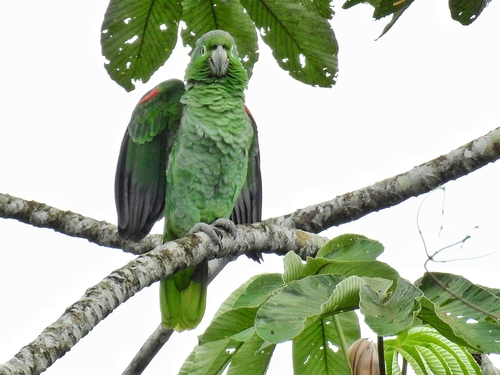 papagaio-moleiro
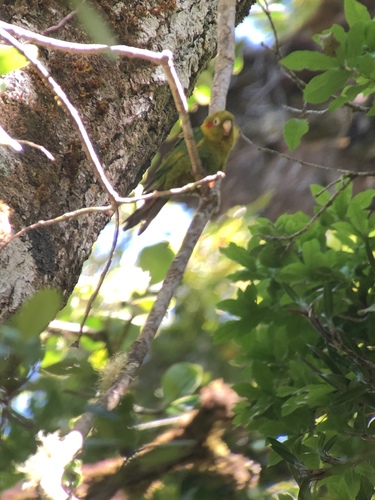 sulphur-winged parakeet
Em resumo
A maneira mais confiável de separar o papagaio-moleiro do sulphur-winged parakeet é pelo tamanho e estrutura geral: o papagaio-moleiro é um papagaio excepcionalmente grande e corpulento, com uma cauda curta e quadrada, enquanto o sulphur-winged parakeet é muito menor e mais esbelto, com uma cauda proporcionalmente mais longa. Em voo, os papagaios-moleiros adultos mostram uma borda de cauda azulada e preta larga e um especulum vermelho na asa, enquanto os sulphur-winged parakeets exibem coberturas primárias amarelas e primárias externas azuis, mas não têm a borda de cauda pesada. Empoleirados, os papagaios-moleiros têm uma aparência pálida, 'polvilhada de farinha' com uma nuca e costas esbranquiçadas, enquanto os sulphur-winged parakeets são verde brilhante com toques amarelos e laranja na cabeça e no peito. Mesmo à distância, a diferença de volume e forma da cauda é impressionante. As vocalizações também são distintas: os papagaios-moleiros têm chamados profundos e ásperos, enquanto os sulphur-winged parakeets emitem notas agudas e estridentes.
Dicas de identificação
- Tamanho e volume: O papagaio-moleiro é mais de duas vezes mais pesado e muito mais longo que o sulphur-winged parakeet. Se o pássaro parecer maciço, com pescoço grosso e asas largas, é um papagaio-moleiro; se esbelto, pequeno e de cauda longa, é um sulphur-winged parakeet. Esta é a marca de campo mais confiável em todas as idades e estações.
- Forma da cauda: O papagaio-moleiro tem uma cauda curta e quadrada, típica dos papagaios do gênero Amazona. O sulphur-winged parakeet tem uma cauda proporcionalmente mais longa e mais pontuda. Isso é óbvio em voo e quando empoleirado.
- Padrão de voo: O papagaio-moleiro voa com batidas de asa profundas e lentas, parecendo pesado e deliberado. O sulphur-winged parakeet é muito mais ágil e rápido em voo, com batidas de asa rápidas e rasas.
- Padrão de asa adulto (em voo): O papagaio-moleiro mostra uma borda de cauda azulada e preta larga na asa e um especulum vermelho (mancha vermelha na asa), melhor visto em boa luz. O sulphur-winged parakeet não tem a borda de cauda; em vez disso, procure coberturas primárias amarelas e primárias internas, primárias externas azuis e sem especulum vermelho. Funciona melhor para adultos.
- Plumagem juvenil/imatura: Os sulphur-winged parakeets imaturos são mais apagados, com menos amarelo nas asas e menos laranja no peito. Os imaturos do papagaio-moleiro não são descritos em detalhes, mas a tonalidade esbranquiçada 'farinhenta' está presente na maioria das idades.
- Cabeça e face: O papagaio-moleiro pode mostrar algumas penas amarelas na coroa, mas nunca tanto quanto o papagaio-campeiro. Ele tem um anel ocular branco largo e uma aparência pálida e polida na nuca e nas costas. O sulphur-winged parakeet tem inclusões amarelas na cabeça e na nuca, coberturas auriculares terracota brilhantes e um anel ocular branco, mas a cabeça nunca é polida ou 'farinhenta'.
- Cor do peito: O papagaio-moleiro é verde liso por baixo. O sulphur-winged parakeet tem uma lavagem laranja apagada no peito (adultos), que pode ser uma marca sutil, mas útil em distâncias curtas.
- Cor da cauda: A cauda do papagaio-moleiro é bicolor: verde na base, amarelo mais claro na ponta. A cauda do sulphur-winged parakeet é oliva-rúfio por cima com bordas verdes e marrom-avermelhado por baixo.
- Tamanho e forma do bico: O papagaio-moleiro tem um bico grande e pesado, típico dos papagaios do gênero Amazona. O bico do sulphur-winged parakeet é muito menor e mais delicado.
- Vocalizações: O papagaio-moleiro emite chamados profundos e ásperos, especialmente ao amanhecer e ao anoitecer. O sulphur-winged parakeet emite chamados agudos e estridentes "krree krree krree", muitas vezes em bandos barulhentos. Se você ouvir um chacoalhar estridente e penetrante, é o periquito.
- Habitat e elevação: O papagaio-moleiro é um pássaro de floresta de baixa altitude; o sulphur-winged parakeet é uma espécie montana, geralmente acima de 1600 m. Se você estiver em uma floresta de montanha, espere encontrar o sulphur-winged parakeet; em florestas úmidas de baixa altitude, o papagaio-moleiro.
- Comportamento social: Os papagaios-moleiros costumam estar em grandes bandos lentos ou em pares, às vezes com araras. Os sulphur-winged parakeets estão em pequenos bandos ativos, muitas vezes tagarelando em voo.
- Postura empoleirada: O papagaio-moleiro parece ereto, pesado e com peito largo. O sulphur-winged parakeet é mais horizontal, esbelto e ativo.
- Hábitos alimentares: Ambos comem frutas e sementes, mas o papagaio-moleiro pode ser visto se alimentando em lavouras (especialmente milho) em plantações de baixa altitude; o sulphur-winged parakeet forrageia na copa das florestas montanas.
- Armadilhas: Raramente, o papagaio-moleiro pode não ter amarelo óbvio na coroa, e os imaturos do sulphur-winged parakeet podem não ter amarelo nas asas. Sempre verifique o tamanho, a estrutura e o padrão da asa/cauda em voo para confirmação.
Tamanho
O papagaio-moleiro está entre os maiores papagaios do gênero Amazona, medindo 38–41 cm de comprimento e pesando 540–700 g (geralmente mais pesado em cativeiro) [wikipedia]. Em contraste, o sulphur-winged parakeet é muito menor, medindo 23–24 cm e cerca de 82 g [wikidata]. A diferença é dramática em campo: o papagaio-moleiro parece maciço e largo, com um bico grosso e cauda curta e quadrada, enquanto o sulphur-winged parakeet é esbelto, leve e de cauda longa. Mesmo sem comparação direta, o volume e o tamanho do papagaio-moleiro são inconfundíveis entre os papagaios neotropicais.
Plumagem
- Padrão de asa juvenil/imatura: Nenhum padrão específico de asa superior juvenil é descrito para nenhuma das espécies, mas a opacidade relacionada à idade é notada para o sulphur-winged parakeet (imaturos têm escamas mais apagadas, menos laranja no peito e muito menos amarelo nas asas) [wikipedia].
- Papagaio-moleiro adulto: Principalmente verde com uma tonalidade esbranquiçada ou 'farinhenta' característica nas costas e na nuca, dando uma aparência polida. Em voo, mostra uma borda de cauda azulada e preta na asa e um especulum vermelho conspícuo. A cauda é distintamente bicolor: metade basal verde, metade distal amarelo mais claro. Penas amarelas ocasionais na coroa, mas muito menos que o papagaio-campeiro. Anel ocular branco largo [wikipedia].
- Sulphur-winged parakeet adulto: Principalmente verde, mas com inclusões amarelas na cabeça, nuca e garganta; coberturas auriculares terracota brilhantes; lavagem laranja apagada no peito; coberturas primárias amarelas e primárias internas, primárias externas azuis; parte superior da cauda oliva-rúfio com bordas verdes, parte inferior marrom-avermelhado. Imaturos são mais apagados no geral, com menos amarelo e laranja [wikipedia].
- Contraste chave: A aparência 'polvilhada de farinha' do papagaio-moleiro e a cauda bicolor são únicas. Os painéis de asa amarelos e as primárias azuis do sulphur-winged parakeet são distintas em voo, mas não têm a borda de cauda pesada e o especulum vermelho do papagaio-moleiro.
Comportamento
Os papagaios-moleiros são sociais, frequentemente vistos em pares ou grandes bandos, e às vezes se misturam com outros papagaios, como araras. Eles geralmente são silenciosos, mas podem ser barulhentos ao amanhecer e ao anoitecer. Em cativeiro, são conhecidos por serem gentis e calmos [wikipedia]. Os sulphur-winged parakeets forrageiam em pequenos bandos, muitas vezes na copa da floresta, e são geralmente mais ativos e ágeis, com movimentos frequentes de bandos e chamados de voo barulhentos. Ambas as espécies podem ser vistas em grupos, mas os bandos do periquito são menores e mais frenéticos, enquanto os papagaios-moleiros são mais lentos e pesados em voo.
Habitat
O papagaio-moleiro ocorre em florestas e plantações úmidas a semiúmidas de baixa altitude em toda a América Central e do Sul tropical, raramente aventurando-se em florestas decíduas e ausente de habitats abertos/secos, exceto em florestas de galeria [wikipedia]. O sulphur-winged parakeet é restrito a florestas montanas e crescimento arbustivo ou secundário adjacente na Costa Rica e no Panamá ocidental, geralmente acima de 1600 m de elevação [wikipedia]. Assim, o sulphur-winged parakeet é uma espécie de montanha, enquanto o papagaio-moleiro é um pássaro de floresta de baixa altitude. A sobreposição é mínima, exceto possivelmente em elevações médias no sul da América Central.
Voz
O papagaio-moleiro tem uma voz profunda e áspera, tipicamente não aguda, e geralmente é silencioso, exceto ao amanhecer e ao anoitecer [wikipedia]. O sulphur-winged parakeet emite uma série de notas agudas e estridentes ("krree krree krree"), tanto empoleirado quanto em voo, e os bandos podem ser barulhentos e penetrantes. Os chamados do periquito são estridentes, mas não gritos, e muito mais agudos do que os do papagaio-moleiro. Se você ouvir um chamado profundo e áspero, suspeite do papagaio-moleiro; se ouvir um chacoalhar agudo e rápido, é provavelmente o sulphur-winged parakeet.
papagaio-moleiro · sulphur-winged parakeet · Minhas aves difíceis