

Motmot

ムジボウシインコ 対 ホオベニインコ

Amazona farinosa 対 Pyrrhura hoffmanni

ムジボウシインコとホオベニインコのクイズ
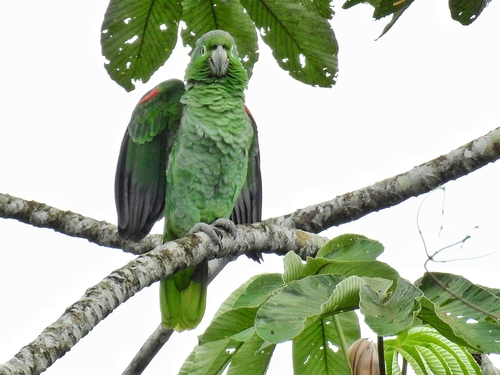
ムジボウシインコ (Amazona farinosa) ムジボウシインコ
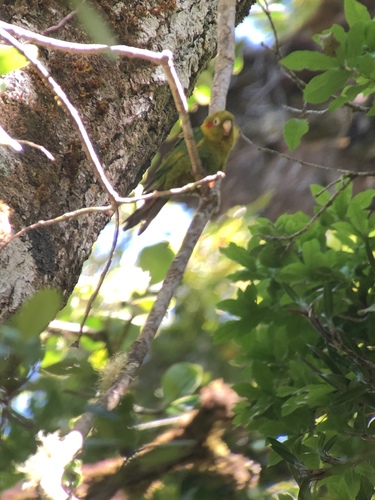
ホオベニインコ (Pyrrhura hoffmanni) ホオベニインコ

メディア

読み込み中…

要点

ムジボウシインコとホオベニインコを区別する最も信頼できる方法は、サイズと全体的な構造によるものです:ムジボウシインコは非常に大きく、重い体を持つオウムで、短くて四角い尾を持っています。一方、ホオベニインコはずっと小さく、スリムで、相対的に長い尾を持っています。飛行中、成鳥のムジボウシインコは広い青黒い後縁と翼に赤いスペキュラムを示しますが、ホオベニインコは黄色の初級羽覆いと青い外側の初級羽を示し、重い後縁は欠いています。止まっているとき、ムジボウシインコは淡い「粉をまぶした」外観を持ち、白っぽい後頭部と背中を持っていますが、ホオベニインコは頭部と胸に黄色とオレンジのタッチを持つ明るい緑色です。距離があっても、体格と尾の形の違いは際立っています。鳴き声も異なります:ムジボウシインコは深く、粗い呼び声を持ち、ホオベニインコは高音で鋭い音を出します。

識別のコツ

  1. Size and bulk: ムジボウシインコはホオベニインコの2倍以上の重さと長さがあります。もし鳥が巨大で、太い首と広い翼を持っているなら、それはムジボウシインコです;もしスリムで小さく、長い尾を持っているなら、それはホオベニインコです。これはすべての年齢と季節において最も信頼できるフィールドマークです。
  2. Tail shape: ムジボウシインコは短くて四角い尾を持ち、アマゾナオウムに典型的です。ホオベニインコは相対的に長く、より尖った尾を持っています。これは飛行中や止まっているときに明らかです。
  3. Flight pattern: ムジボウシインコは深く、遅い翼の羽ばたきで飛び、重くて意図的に見えます。ホオベニインコは飛行中、ずっと機敏で迅速で、速くて浅い羽ばたきを持っています。
  4. Adult wing pattern (in flight): ムジボウシインコは翼に広い青黒い後縁と赤いスペキュラム(翼の赤い斑点)を示し、良い光の中で最もよく見えます。ホオベニインコは後縁が欠けており、代わりに黄色の初級羽覆いと内側の初級羽、青い外側の初級羽、赤いスペキュラムがないことを探してください。成鳥に最も適しています。
  5. Juvenile/immature plumage: 幼鳥のホオベニインコは鈍い色合いで、翼の黄色が少なく、胸のオレンジも少ないです。ムジボウシインコの幼鳥は詳細には記述されていませんが、「粉をまぶした」白っぽい色合いはほとんどの年齢に見られます。
  6. Head and face: ムジボウシインコは頭頂にいくつかの黄色い羽毛を示すことがありますが、キビタイボウシインコほど多くはありません。広い白い目のリングと、後頭部と背中に淡い霜のような外観を持っています。ホオベニインコは頭部と後頭部に黄色の斑点を持ち、明るいテラコッタ色の耳覆い、胸に鈍いオレンジの色合いを持ち、白い目のリングがありますが、頭は決して霜がかかっていたり「粉をまぶした」りはしません。
  7. Breast color: ムジボウシインコは下側が単色の緑色です。ホオベニインコは胸に鈍いオレンジの色合いを持っています(成鳥)、これは近距離での微妙ですが役立つマークになることがあります。
  8. Tail color: ムジボウシインコの尾は二色で、基部は緑色、先端は淡い黄色です。ホオベニインコの尾は赤褐色で、緑の縁取りがあり、赤褐色の下面を持っています。
  9. Bill size and shape: ムジボウシインコはアマゾナオウムに典型的な大きくて重いくちばしを持っています。ホオベニインコのくちばしはずっと小さく、より繊細です。
  10. Vocalizations: ムジボウシインコは深く、粗い呼び声を出し、特に夜明けと夕暮れにそうです。ホオベニインコは高音で鋭い「クリクリクリ」という呼び声を出し、しばしば騒がしい群れの中で鳴きます。もし鋭く、刺すような喋り声を聞いたら、それはホオベニインコです。
  11. Habitat and elevation: ムジボウシインコは低地の森林の鳥です;ホオベニインコは高地の種で、通常1600 m以上です。もし高地の森林にいるなら、ホオベニインコを期待してください;低地の湿った森林では、ムジボウシインコです。
  12. Social behavior: ムジボウシインコはしばしば大きく、ゆっくりとした群れやペアで見られ、時にはマカオと混ざることもあります。ホオベニインコは小さく、活発な群れで、飛行中にしばしばおしゃべりをします。
  13. Perched posture: ムジボウシインコは直立していて、重く、広い胸を持っています。ホオベニインコはより水平で、スリムで、活発です。
  14. Feeding habits: 両種とも果物や種子を食べますが、ムジボウシインコは低地のプランテーションで作物(特にトウモロコシ)を食べているのが見られることがあります;ホオベニインコは高地の森林の樹冠で採餌します。
  15. Pitfalls: 稀に、ムジボウシインコは頭に明らかな黄色が欠けていることがあり、ホオベニインコの幼鳥は翼に黄色が欠けていることがあります。常にサイズ、構造、翼/尾のパターンを飛行中に確認してください。

大きさ

ムジボウシインコは最大のアマゾナオウムの一つで、長さ38〜41 cm、重さ540〜700 g(飼育下ではしばしば重くなる)です [wikipedia]。対照的に、ホオベニインコは23〜24 cmで約82 gとずっと小さいです [wikidata]。フィールドでの違いは劇的です:ムジボウシインコは巨大で広く、厚いくちばしと短くて四角い尾を持っているのに対し、ホオベニインコはスリムで軽く、長い尾を持っています。直接比較がなくても、ムジボウシインコの体格とサイズはネオトロピカルオウムの中で間違いなく目立ちます。

羽色

行動

ムジボウシインコは社交的で、しばしばペアや大きな群れで見られ、時にはマカオなど他のオウムと混ざることもあります。通常は静かですが、夜明けと夕暮れには騒がしくなることがあります。飼育下では、優しく穏やかなことで知られています [wikipedia]。ホオベニインコは小さな群れで採餌し、しばしば森林の樹冠で活動的で敏捷であり、頻繁に群れの動きや騒がしい飛行の呼び声を出します。両種とも群れで見られますが、ホオベニインコの群れは小さく、より活発で、ムジボウシインコは飛行中に遅く、重いです。

生息環境

ムジボウシインコは熱帯中央アメリカと南アメリカの湿った低地の森林やプランテーションに生息し、落葉樹林にはめったに入らず、ギャラリーフォレストを除いて開けた/乾燥した生息地には存在しません [wikipedia]。ホオベニインコはコスタリカとパナマ西部の高地の森林と隣接する低木や二次成長に制限されており、通常1600 m以上の標高に生息しています [wikipedia]。したがって、ホオベニインコは高地の種であり、ムジボウシインコは低地の森林の鳥です。重複は最小限で、南中央アメリカの中標高でのみ可能性があります。

声

ムジボウシインコは深く、粗い声を持ち、通常は高音ではなく、夜明けと夕暮れを除いて通常は静かです [wikipedia]。ホオベニインコは高音で鋭い音を出し(「クリクリクリ」)、止まっているときも飛行中も鳴き、群れは騒がしく刺さるような音を出すことがあります。ホオベニインコの呼び声は鋭いですが、叫び声ではなく、ムジボウシインコの声よりもはるかに高音です。もし深く、粗い呼び声を聞いたら、ムジボウシインコを疑ってください;もし鋭く、迅速な喋り声を聞いたら、それはホオベニインコの可能性が高いです。

より良い説明を送る

比較と同じ項目を使ってください。文章はすぐに公開されます。

The most reliable way to separate Mealy Amazon from Sulphur-winged Parakeet is by size and overall structure: Mealy Amazon is an exceptionally large, heavy-bodied parrot with a short, square tail, while Sulphur-winged Parakeet is much smaller and slimmer, with a proportionally longer tail. In flight, adult Mealy Amazons show a broad bluish-black trailing edge and a red speculum on the wing, whereas Sulphur-winged Parakeets display yellow primary coverts and blue outer primaries, but lack the heavy trailing edge. Perched, Mealy Amazons have a pale, 'flour-dusted' look with a whitish nape and back, while Sulphur-winged Parakeets are bright green with yellow and orange touches on the head and breast. Even at a distance, the difference in bulk and tail shape is striking. Vocalizations are also distinct: Mealy Amazons have deep, harsh calls, while Sulphur-winged Parakeets give high-pitched, shrill notes.

  1. Size and bulk: Mealy Amazon is more than twice as heavy and much longer than Sulphur-winged Parakeet. If the bird appears massive, thick-necked, and broad-winged, it's a Mealy Amazon; if slim, small, and long-tailed, it's a Sulphur-winged Parakeet. This is the most reliable field mark in all ages and seasons.
  2. Tail shape: Mealy Amazon has a short, square tail, typical of Amazona parrots. Sulphur-winged Parakeet has a proportionally longer, more pointed tail. This is obvious in flight and when perched.
  3. Flight pattern: Mealy Amazon flies with deep, slow wingbeats, appearing heavy and deliberate. Sulphur-winged Parakeet is much more agile and rapid in flight, with quick, shallow wingbeats.
  4. Adult wing pattern (in flight): Mealy Amazon shows a broad bluish-black trailing edge to the wing and a red speculum (red patch on the wing), best seen in good light. Sulphur-winged Parakeet lacks the trailing edge; instead, look for yellow primary coverts and inner primaries, blue outer primaries, and no red speculum. Works best for adults.
  5. Juvenile/immature plumage: Immature Sulphur-winged Parakeets are duller, with less yellow on the wings and less orange on the breast. Mealy Amazon immatures are not described in detail, but the 'mealy' whitish tinge is present in most ages.
  6. Head and face: Mealy Amazon may show a few yellow feathers on the crown, but never as much as Yellow-crowned Amazon. It has a broad white eye-ring and a pale, frosted look to the nape and back. Sulphur-winged Parakeet has yellow inclusions on the head and nape, bright terracotta ear coverts, and a white eye-ring, but the head is never frosted or 'mealy.'
  7. Breast color: Mealy Amazon is plain green below. Sulphur-winged Parakeet has a dull orange wash on the breast (adults), which can be a subtle but helpful mark at close range.
  8. Tail color: Mealy Amazon's tail is bi-colored: green at the base, paler yellow at the tip. Sulphur-winged Parakeet's tail is rufous-olive above with green fringes and reddish-brown below.
  9. Bill size and shape: Mealy Amazon has a large, heavy bill typical of Amazona parrots. Sulphur-winged Parakeet's bill is much smaller and more delicate.
  10. Vocalizations: Mealy Amazon gives deep, harsh calls, especially at dawn and dusk. Sulphur-winged Parakeet gives high-pitched, shrill "krree krree krree" calls, often in noisy flocks. If you hear a shrill, piercing chatter, it's the parakeet.
  11. Habitat and elevation: Mealy Amazon is a lowland forest bird; Sulphur-winged Parakeet is a montane species, usually above 1600 m. If you're in highland forest, expect Sulphur-winged Parakeet; in lowland humid forest, Mealy Amazon.
  12. Social behavior: Mealy Amazons are often in large, slow-moving flocks or pairs, sometimes with macaws. Sulphur-winged Parakeets are in small, active flocks, often chattering in flight.
  13. Perched posture: Mealy Amazon appears upright, heavy, and broad-chested. Sulphur-winged Parakeet is more horizontal, slim, and active.
  14. Feeding habits: Both eat fruits and seeds, but Mealy Amazon may be seen feeding on crops (especially corn) in lowland plantations; Sulphur-winged Parakeet forages in the canopy of montane forests.
  15. Pitfalls: Rarely, Mealy Amazon may lack obvious yellow on the crown, and Sulphur-winged Parakeet immatures may lack yellow on the wings. Always check size, structure, and wing/tail pattern in flight for confirmation.

Mealy Amazon is among the largest Amazona parrots, measuring 38–41 cm in length and weighing 540–700 g (often heavier in captivity) [wikipedia]. In contrast, Sulphur-winged Parakeet is much smaller at 23–24 cm and about 82 g [wikidata]. The difference is dramatic in the field: Mealy Amazon appears massive and broad, with a thick bill and short, square tail, while Sulphur-winged Parakeet is slim, light, and long-tailed. Even without direct comparison, the Mealy Amazon's bulk and size are unmistakable among Neotropical parrots.

  • Juvenile/immature wing pattern: No specific juvenile upperwing pattern is described for either species, but age-related dullness is noted for Sulphur-winged Parakeet (immatures have duller scaling, less orange on breast, and much less yellow on wings) [wikipedia].
  • Adult Mealy Amazon: Mainly green with a characteristic whitish or 'mealy' tinge on the back and nape, giving a frosted look. In flight, shows a bluish-black trailing edge to the wing and a conspicuous red speculum. Tail is distinctly bi-colored: basal half green, distal half paler yellow. Occasional yellow feathers on the crown, but much less than Yellow-crowned Amazon. Broad white eye-ring [wikipedia].
  • Adult Sulphur-winged Parakeet: Mostly green, but with yellow inclusions on head, nape, and throat; bright terracotta ear coverts; dull orange wash on breast; yellow primary coverts and inner primaries, blue outer primaries; tail upperside rufous-olive with green fringes, underside reddish-brown. Immatures are duller overall, with less yellow and orange [wikipedia].
  • Key contrast: Mealy Amazon's 'flour-dusted' look and bi-colored tail are unique. Sulphur-winged Parakeet's yellow wing panels and blue primaries are distinctive in flight, but lack the heavy trailing edge and red speculum of Mealy Amazon.

Mealy Amazons are social, often seen in pairs or large flocks, and sometimes mix with other parrots like macaws. They are usually quiet but can be loud at dawn and dusk. In captivity, they are known for being gentle and calm [wikipedia]. Sulphur-winged Parakeets forage in small flocks, often in the forest canopy, and are generally more active and agile, with frequent flock movements and noisy flight calls. Both species can be seen in groups, but the parakeet's flocks are smaller and more frenetic, while Mealy Amazons are slower and heavier in flight.

Mealy Amazon occurs in humid to semi-humid lowland forests and plantations across tropical Central and South America, rarely venturing into deciduous forest and absent from open/dry habitats except for gallery forest [wikipedia]. Sulphur-winged Parakeet is restricted to montane forests and adjacent shrubby or secondary growth in Costa Rica and western Panama, usually above 1600 m elevation [wikipedia]. Thus, Sulphur-winged Parakeet is a highland species, while Mealy Amazon is a lowland forest bird. Overlap is minimal except possibly at mid-elevations in southern Central America.

Mealy Amazon has a deep, harsh voice, typically not high-pitched, and is usually quiet except at dawn and dusk [wikipedia]. Sulphur-winged Parakeet gives a series of high-pitched, shrill notes ("krree krree krree"), both perched and in flight, and flocks can be noisy and piercing. The parakeet's calls are shrill but not screechy, and much higher-pitched than the Mealy Amazon's. If you hear a deep, harsh call, suspect Mealy Amazon; if you hear a shrill, rapid chatter, it's likely Sulphur-winged Parakeet.

変更を破棄しますか?

保存していない編集があります。今離れると失われます。

ムジボウシインコ · ホオベニインコ · 苦手な鳥