

fragata vs fragata-grande
Fregata magnificens versus Fregata minor
Jogue um quiz com fragata e fragata-grande
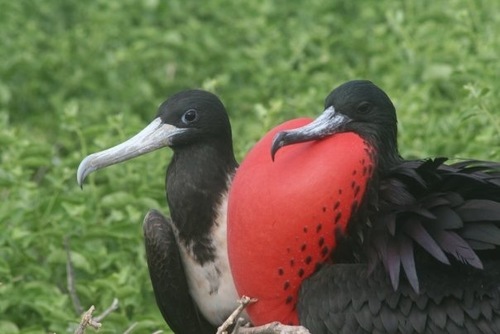 fragata
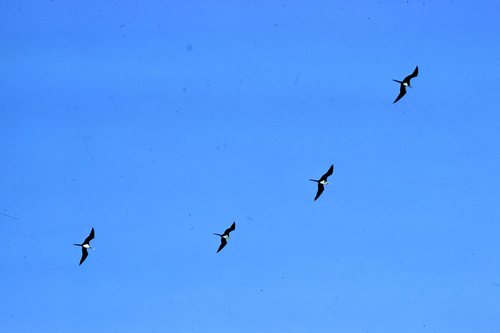 fragata-grande
Em resumo
A marca de campo mais confiável para separar a fragata e a fragata-grande é a cor da iridescência nas penas das escápulas dos machos adultos: a fragata apresenta um brilho roxo, enquanto a fragata-grande apresenta verde. Para fêmeas e imaturos, concentre-se no padrão e na extensão do branco na cabeça, peito e barriga, bem como na cor do anel ocular: fêmeas de fragata têm um anel ocular azul e um peito branco mais extenso, enquanto fêmeas de fragata-grande têm um anel ocular vermelho e uma garganta e peito brancos. Juvenis de fragata têm uma distinta mancha branca em forma de diamante na barriga, ausente na fragata-grande. Ambas as espécies são muito semelhantes em estrutura e voo, mas a fragata é ligeiramente maior no geral. Em áreas de sobreposição, atenção cuidadosa a essas sutis diferenças de plumagem e partes moles é essencial.
Dicas de identificação
- Parte inferior juvenil: Juvenis de fragata mostram uma distinta mancha branca em forma de diamante na barriga, ausente na fragata-grande. Esta é a marca mais confiável para imaturos em voo.
- Iridescência das escápulas de machos adultos: Em boa luz, machos de fragata mostram um brilho roxo nas escápulas, enquanto machos de fragata-grande mostram verde. Isso é sutil e requer vistas próximas.
- Cor do anel ocular das fêmeas: Fêmeas de fragata têm um anel ocular azul; fêmeas de fragata-grande têm um anel ocular vermelho. Isso é melhor visto a curta distância ou em fotos.
- Padrão do peito das fêmeas: Fêmeas de fragata têm um peito branco e lados do pescoço inferiores, frequentemente com uma faixa marrom nas asas. Fêmeas de fragata-grande têm uma garganta e peito brancos, mas não têm a faixa marrom nas asas.
- Cabeça e garganta juvenil: Juvenis de fragata-grande têm um rosto branco com tonalidade ferrugem, enquanto juvenis de fragata têm uma cabeça e partes inferiores mais brancas, sem a tonalidade ferrugem.
- Tamanho: A fragata é ligeiramente maior no geral, mas isso raramente é útil a menos que os pássaros estejam lado a lado.
- Saco gular: Ambos os machos têm um saco inflável vermelho na garganta durante a época de reprodução; isso não é uma característica separadora.
- Estrutura de voo: Ambas as espécies têm asas extremamente longas e estreitas e uma cauda profundamente bifurcada; as diferenças estruturais são mínimas e não confiáveis para separação.
- Padrão da asa superior: Não há diferença forte no padrão da asa superior para adultos; ambos são uniformemente escuros acima.
- Distribuição: Se vistos nas Américas (especialmente na costa atlântica), a fragata é mais provável; no Pacífico central ou Oceano Índico, a fragata-grande é mais provável. Nas Galápagos e em algumas ilhas atlânticas, ambas ocorrem—use marcas de plumagem.
- Comportamento: Ambas as espécies planam e kleptoparasitam outras aves marinhas. Apenas fêmeas de fragata-grande são notadas por caçar filhotes de aves marinhas em colônias, mas isso não é uma marca de campo.
- Visões empoleiradas: A cor do anel ocular e o padrão do peito são mais úteis em fêmeas empoleiradas.
- Bandos mistos: Em áreas de sobreposição, verifique cuidadosamente cada pássaro para as marcas acima; não confie apenas na composição do bando.
- Voz: Não é útil para separação em campo; ambos são silenciosos em voo.
- Armadilhas: Pássaros imaturos são frequentemente mal identificados; sempre procure pela mancha na barriga em forma de diamante (fragata) ou cabeça ferrugem (fragata-grande) em juvenis, e verifique a cor do anel ocular e o brilho das escápulas em adultos quando possível.
Tamanho
A fragata é a maior fragata, medindo 89–114 cm de comprimento com uma envergadura de 2,17–2,44 m e pesando 1,1–1,59 kg. A fragata-grande é ligeiramente menor, com 85–105 cm de comprimento, envergadura de 2,05–2,30 m e peso de 1,0–1,59 kg (machos mais leves que fêmeas). No campo, essa diferença de tamanho é sutil e raramente diagnóstica, exceto em comparação direta, já que ambas são grandes, com asas longas e caudas profundamente bifurcadas.
Plumagem
Juvenis e imaturos são melhor separados pelo padrão da parte inferior: juvenis de fragata têm uma distinta mancha branca em forma de diamante na barriga, enquanto juvenis de fragata-grande têm um rosto branco com tonalidade ferrugem, cabeça e garganta, mas não têm a barriga em forma de diamante. Machos adultos de ambas as espécies são totalmente pretos com um saco inflável vermelho na garganta, mas a iridescência difere: a fragata apresenta um brilho roxo nas escápulas, a fragata-grande apresenta verde. Fêmeas adultas de fragata têm um peito branco e lados inferiores do pescoço, uma faixa marrom nas asas e um anel ocular azul; fêmeas de fragata-grande têm uma garganta e peito brancos, um anel ocular vermelho e não têm a faixa marrom nas asas. Machos de ambas as espécies têm o saco gular vermelho, mas a iridescência das penas ao redor é a chave. Em voo, ambas mostram asas longas e estreitas e uma cauda profundamente bifurcada, sem diferença forte no padrão da asa superior para adultos.
Comportamento
Ambas as espécies são altamente aéreas, passando dias em voo, e são silenciosas em voo. Elas frequentemente planam em térmicas e forrageiam ao pegar presas da superfície do oceano ou assediando outras aves marinhas. A fragata é notada por cobrir longas distâncias e às vezes voar a velocidades muito altas. Fêmeas de fragata-grande são conhecidas por caçar filhotes de aves marinhas em colônias, um comportamento não mencionado para a fragata. Ambas as espécies exibem o saco gular vermelho durante o acasalamento, com machos inflando-o e exibindo para atrair fêmeas.
Habitat
A fragata é encontrada sobre águas tropicais e subtropicais das Américas (Pacífico: México ao Peru; Atlântico: Flórida ao sul do Brasil, Galápagos, Cabo Verde). A fragata-grande é mais disseminada no Pacífico tropical (Havai, Galápagos), Oceano Índico (Seicheles, Maurício) e tem uma pequena presença no Atlântico Sul (St. Helena, Ascensão). Onde as distribuições se sobrepõem (notavelmente Galápagos), uma identificação cuidadosa é necessária. Ambas as espécies são pelágicas, raramente vistas em terra, e nidificam colonialmente em ilhas remotas.
Voz
Ambas as espécies são silenciosas em voo. A fragata faz vários sons de chocalho no ninho, mas estes não são úteis para separação em campo a distância ou em voo. Nenhuma diferença vocal distinta é descrita para a fragata-grande nas fontes.