

Magnificent Frigatebird vs Great Frigatebird
Fregata magnificens contro Fregata minor
Fai un quiz con Magnificent Frigatebird e Great Frigatebird
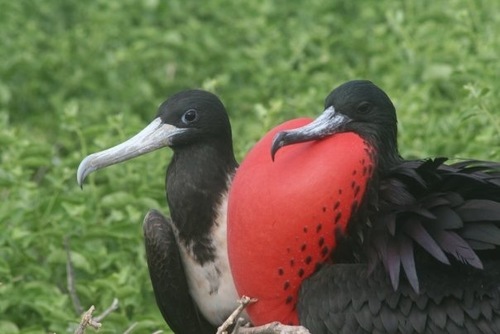 Magnificent Frigatebird
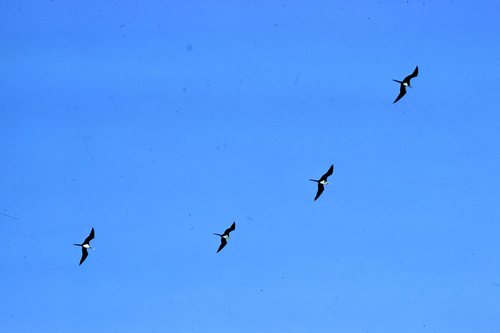 Great Frigatebird
In breve
Il segno di campo più affidabile per separare il Magnificent Frigatebird e il Great Frigatebird è il colore dell'iridescenza sulle piume scapolari dei maschi adulti: il Magnificent mostra una lucentezza viola, mentre il Great mostra verde. Per le femmine e gli immaturi, concentrati sul motivo e sull'estensione del bianco sulla testa, sul petto e sull'addome, così come sul colore dell'anello oculare: le femmine di Magnificent hanno un anello oculare blu e un petto bianco più esteso, mentre le femmine di Great hanno un anello oculare rosso e una gola e un petto bianchi. I giovani Magnificent Frigatebirds hanno una distintiva macchia bianca a forma di diamante sull'addome, assente nel Great. Entrambe le specie sono molto simili nella struttura e nel volo, ma il Magnificent è leggermente più grande nel complesso. Nelle aree sovrapposte, prestare attenzione a queste sottili differenze di piumaggio e parti molli è essenziale.
Consigli di identificazione
- Juvenile underparts: I giovani Magnificent Frigatebirds mostrano una distintiva macchia bianca a forma di diamante sull'addome, assente nel Great. Questo è il segno più affidabile per gli immaturi in volo.
- Adult male scapular iridescence: In buona luce, i maschi di Magnificent mostrano una lucentezza viola sulle scapolari, mentre i maschi di Great mostrano verde. Questo è sottile e richiede viste ravvicinate.
- Female eye-ring color: Le femmine di Magnificent hanno un anello oculare blu; le femmine di Great hanno un anello oculare rosso. Questo è meglio visto a distanza ravvicinata o in foto.
- Female breast pattern: Le femmine di Magnificent hanno un petto bianco e lati del collo inferiori, spesso con una banda marrone sulle ali. Le femmine di Great hanno una gola e un petto bianchi ma mancano della banda marrone sulle ali.
- Juvenile head and throat: I giovani Great Frigatebird hanno un volto, una testa e una gola bianchi con una sfumatura ruggine, mentre i giovani Magnificent hanno una testa e parti inferiori più bianche senza la sfumatura ruggine.
- Size: Il Magnificent è leggermente più grande nel complesso, ma questo è raramente utile a meno che gli uccelli non siano affiancati.
- Gular sac: Entrambi i maschi hanno un sacco gular rosso gonfiabile durante la stagione di riproduzione; questo non è un carattere distintivo.
- Flight structure: Entrambe le specie hanno ali estremamente lunghe e strette e una coda profondamente biforcuta; le differenze strutturali sono minime e non affidabili per la separazione.
- Upperwing pattern: Nessuna forte differenza nel motivo delle ali superiori per gli adulti; entrambi sono uniformemente scuri sopra.
- Range: Se visti nelle Americhe (specialmente sulla costa atlantica), il Magnificent è più probabile; nel Pacifico centrale o nell'Oceano Indiano, il Great è più probabile. Nelle Galápagos e in alcune isole atlantiche, entrambi si trovano—usa i segni del piumaggio.
- Behavior: Entrambe le specie planano e kleptoparassitano altri uccelli marini. Solo le femmine di Great Frigatebird sono note per cacciare i pulcini di uccelli marini nelle colonie, ma questo non è un segno di campo.
- Perched views: Il colore dell'anello oculare e il motivo del petto sono più utili sulle femmine posate.
- Mixed flocks: Nelle aree di sovrapposizione, controlla attentamente ogni uccello per i segni sopra; non fare affidamento solo sulla composizione del gruppo.
- Voice: Non utile per la separazione sul campo; entrambi sono silenziosi in volo.
- Pitfalls: Gli uccelli immaturi sono spesso identificati erroneamente; cerca sempre la macchia a forma di diamante sull'addome (Magnificent) o la testa ruggine (Great) nei giovani, e controlla il colore dell'anello oculare e la lucentezza scapolare negli adulti quando possibile.
Taglia
Il Magnificent Frigatebird è il più grande dei fregate, misurando 89–114 cm di lunghezza con un'apertura alare di 2.17–2.44 m e pesando 1.1–1.59 kg. Il Great Frigatebird è leggermente più piccolo, con una lunghezza di 85–105 cm, un'apertura alare di 2.05–2.30 m e un peso di 1.0–1.59 kg (maschi più leggeri delle femmine). Sul campo, questa differenza di dimensioni è sottile e raramente diagnostica, tranne che in confronto diretto, poiché entrambi sono grandi, con ali lunghe e coda profondamente biforcuta.
Piumaggio
I giovani e gli immaturi sono meglio separati dal motivo delle parti inferiori: i giovani Magnificent Frigatebirds hanno una distintiva macchia bianca a forma di diamante sull'addome, mentre i giovani Great Frigatebird hanno un volto, una testa e una gola bianchi con una sfumatura ruggine ma mancano della macchia a diamante. I maschi adulti di entrambe le specie sono completamente neri con un sacco gular rosso gonfiabile, ma l'iridescenza differisce: il Magnificent mostra una lucentezza viola sulle scapolari, il Great mostra verde. Le femmine adulte di Magnificent hanno un petto bianco e lati del collo inferiori, una banda marrone sulle ali e un anello oculare blu; le femmine di Great hanno una gola e un petto bianchi, un anello oculare rosso e mancano della banda marrone sulle ali. I maschi di entrambe le specie hanno il sacco gular rosso, ma l'iridescenza delle piume circostanti è la chiave. In volo, entrambi mostrano ali lunghe e strette e una coda profondamente biforcuta, senza una forte differenza nel motivo delle ali superiori per gli adulti.
Comportamento
Entrambe le specie sono altamente aeree, trascorrendo giorni in volo, e sono silenziose in volo. Spesso planano su termiche e si nutrono afferrando prede dalla superficie dell'oceano o infastidendo altri uccelli marini. Il Magnificent Frigatebird è noto per coprire lunghe distanze e talvolta volare a velocità molto elevate. Le femmine di Great Frigatebird sono note per cacciare i pulcini di uccelli marini nelle colonie, un comportamento non menzionato per il Magnificent. Entrambe le specie mostrano il sacco gular rosso durante il corteggiamento, con i maschi che lo gonfiano e si esibiscono per attrarre le femmine.
Habitat
Il Magnificent Frigatebird si trova sopra le acque tropicali e subtropicali delle Americhe (Pacifico: Messico a Perù; Atlantico: Florida a sud del Brasile, Galápagos, Capo Verde). Il Great Frigatebird è più diffuso nel Pacifico tropicale (Hawaii, Galápagos), nell'Oceano Indiano (Seychelles, Mauritius) e ha una piccola presenza nell'Atlantico meridionale (St. Helena, Ascensione). Dove gli areali si sovrappongono (in particolare Galápagos), è necessaria un'attenta identificazione. Entrambe le specie sono pelagiche, raramente viste nell'entroterra, e nidificano colonialmente su isole remote.
Voce
Entrambe le specie sono silenziose in volo. Il Magnificent Frigatebird emette vari suoni di rattling nel nido, ma questi non sono utili per la separazione sul campo a distanza o in volo. Non sono descritte differenze vocali distintive per il Great Frigatebird nelle fonti.
Magnificent Frigatebird · Great Frigatebird · I miei uccelli difficili