

long-billed hermit vs stripe-throated hermit
Phaethornis longirostris versus Phaethornis striigularis
Jogue um quiz com long-billed hermit e stripe-throated hermit
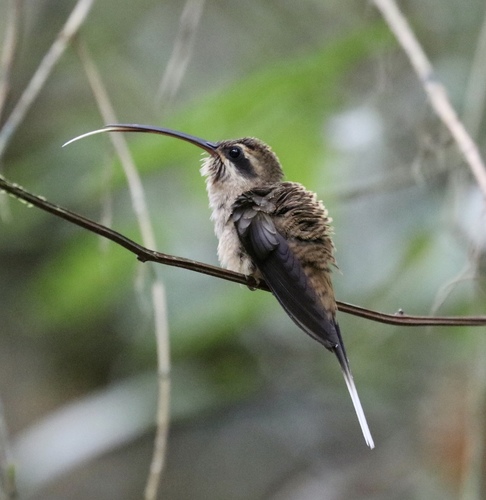 long-billed hermit
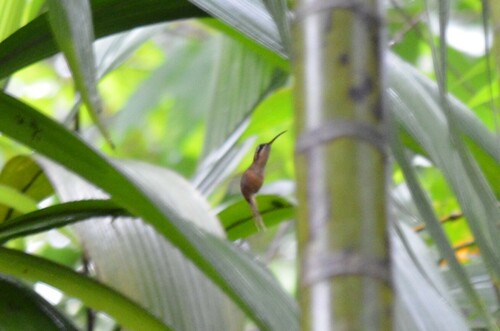 stripe-throated hermit
Em resumo
A maneira mais confiável de separar o long-billed hermit do stripe-throated hermit é pelo tamanho e pela estrutura do bico: o long-billed hermit é muito maior e tem um bico visivelmente mais longo e mais fortemente curvado, especialmente nos machos. O stripe-throated hermit é pequeno e compacto, com um bico muito mais curto e uma distinta rabadinha ruiva pálida. Ambas as espécies têm padrões gerais de eremita semelhantes, mas o stripe-throated hermit apresenta uma garganta levemente estriada e um supercílios e faixa malar pálidos mais óbvios, enquanto o long-billed hermit tem uma garganta mais simples e penas centrais da cauda mais longas. Os juvenis do stripe-throated hermit são especialmente ruivos na parte superior, o que nunca é igualado pelo long-billed. A voz, o habitat e o comportamento podem ajudar, mas o tamanho e a forma do bico são os mais decisivos em campo.
Dicas de identificação
- O tamanho é a verificação mais rápida: o long-billed hermit é muito maior e mais longo que o stripe-throated hermit. Se o pássaro parecer pequeno, compacto e delicado, suspeite do stripe-throated. Se parecer magro e alongado, especialmente na cauda e no bico, suspeite do long-billed.
- Forma e comprimento do bico: o long-billed hermit tem um bico muito longo e fortemente curvado, especialmente nos machos. O stripe-throated hermit tem um bico muito mais curto e menos dramaticamente curvado. As fêmeas do long-billed têm um bico mais curto, mas mais curvado que os machos, mas ainda mais longo que o stripe-throated.
- Partes superiores juvenis: os juvenis do stripe-throated hermit têm um dorso ruivo pálido, que nunca é visto no long-billed hermit de qualquer idade. Esta é uma marca chave para imaturos.
- Penas centrais da cauda: o long-billed hermit tem penas centrais da cauda muito longas com pontas brancas proeminentes, muitas vezes se estendendo bem além do resto da cauda. O stripe-throated hermit tem uma cauda mais curta com penas centrais menos pronunciadas e pontas que são esbranquiçadas a ocre, mas não tão longas ou marcantes.
- Padrão facial: o stripe-throated hermit apresenta uma forte máscara negra, contornada por um supercílios pálido acima e uma faixa malar pálida abaixo. O long-billed hermit tem um rosto menos contrastante, sem a máscara e as faixas bem definidas.
- Padrão da garganta: o stripe-throated hermit tem uma garganta pálido marrom acinzentado com finas estrias escuras (embora às vezes fracas). O long-billed hermit tem uma garganta simples, sem estrias.
- Cor da rabadinha: o stripe-throated hermit tem uma rabadinha ruiva pálida, que pode ser uma marca rápida de campo por trás. O long-billed hermit não possui essa característica.
- Coberturas da cauda superior: o long-billed hermit apresenta faixas escuras e ocre nas coberturas da cauda superior, que o stripe-throated não possui.
- Cor das partes inferiores: o long-billed hermit tem partes inferiores marrons a acinzentadas, enquanto o stripe-throated hermit apresenta flancos cor de palha e uma barriga mais pálida.
- Cor do bico: o stripe-throated hermit tem a metade basal inferior do bico amarela, com o restante do bico preto. O bico do long-billed hermit é todo escuro.
- Diferenças sexuais: o long-billed hermit apresenta dimorfismo sexual no comprimento e na curvatura do bico; os sexos do stripe-throated hermit são virtualmente idênticos.
- Vocalizações: se ouvido cantando, o long-billed hermit emite notas 'sweeup' agudas e penetrantes ou chips semelhantes a pardais (dependendo da subespécie); o stripe-throated hermit emite uma canção monótona, aguda e estridente. Chamadas são menos confiáveis, mas podem apoiar a identificação.
- Comportamento em leks: os machos do long-billed hermit se reúnem em leks comunitários maiores e se exibem balançando a cauda. O stripe-throated hermit é mais solitário fora do período de acasalamento.
- Sobreposição de habitat: ambas ocorrem no sub-bosque e nas bordas de florestas úmidas; não confie apenas no habitat onde ambas são possíveis.
- Armadilhas: os imaturos do stripe-throated hermit podem parecer mais apagados e menos estriados na garganta, mas o dorso ruivo ainda é diagnóstico. As fêmeas do long-billed hermit podem ter um bico mais curvado, mas ainda mais longo que qualquer stripe-throated. Em luz fraca, o tamanho e a forma do bico permanecem as verificações mais confiáveis.
Tamanho
O long-billed hermit é significativamente maior, medindo de 13 a 16 cm de comprimento e pesando de 4 a 7,5 g, dependendo do sexo. O stripe-throated hermit está entre os menores eremitas, com apenas 9 a 10 cm e 2 a 3 g. A diferença de tamanho é impressionante quando vistas lado a lado ou com experiência; o long-billed hermit parece magro e alongado, enquanto o stripe-throated hermit é compacto e delicado.
Plumagem
Os juvenis do stripe-throated hermit têm um dorso ruivo pálido, que nunca é visto no long-billed hermit de qualquer idade. Nos adultos, o stripe-throated hermit apresenta partes superiores verde iridescente opacas, uma rabadinha ruiva pálida, flancos cor de palha e uma garganta pálido marrom acinzentado com finas estrias escuras (embora essas estrias possam ser fracas e difíceis de ver). Seu rosto é marcado por uma forte máscara negra contornada por um supercílios e faixa malar cor de palha. A cauda é negra com pontas esbranquiçadas a ocre. Os adultos do long-billed hermit têm partes superiores marrom-esverdeadas, partes inferiores marrons a acinzentadas e coberturas da cauda superior com faixas escuras e ocre. As penas centrais da cauda são muito mais longas e têm longas pontas brancas. A garganta é simples, sem as finas estrias do stripe-throated. Variações sutis existem entre as subespécies do long-billed hermit, mas não se sobrepõem às características ruivas ou estriadas do stripe-throated.
Comportamento
Ambas as espécies são alimentadoras de linha de armadilha, movendo-se através de circuitos para visitar flores em busca de néctar, e ambos os machos se exibem em leks. Os machos do long-billed hermit são notáveis por seu acasalamento comunitário, onde cantam e balançam suas longas caudas por horas. O stripe-throated hermit é mais solitário fora do período de acasalamento e parece ainda mais delicado e rápido em seus movimentos. Ambos constroem ninhos suspensos a partir de fibras vegetais e seda de aranha, mas a estrutura do ninho não é uma marca de campo confiável.
Habitat
Ambas as espécies habitam o sub-bosque e as bordas de florestas úmidas e crescimento secundário, frequentemente se sobrepondo na América Central e no noroeste da América do Sul. O long-billed hermit varia do México ao Peru, ocorrendo do nível do mar até 2.500 m, dependendo da região, e é encontrado em uma gama mais ampla de tipos de floresta, incluindo florestas de galeria e nuvens. O stripe-throated hermit é geralmente comum em habitats semelhantes, mas está mais estritamente associado a florestas de planície e encosta, e não é encontrado tão ao norte ou ao sul quanto o long-billed hermit. O habitat sozinho não é confiável para separação onde ambas ocorrem.
Voz
As subespécies do long-billed hermit do norte cantam uma série contínua de notas únicas, penetrantes e ascendentes 'sweeup', com uma chamada aguda e explosiva 'week!', muitas vezes em voo. A subespécie do sul (baroni) emite uma série de notas semelhantes a pardais 'tchee..tchee..tchee..' e uma chamada fina 'seep'. O stripe-throated hermit canta uma canção monótona, aguda e estridente que varia por região, mas é geralmente menos penetrante e mais estridente do que a do long-billed hermit. Chamadas nem sempre são diagnósticas, mas a impressão geral é que o long-billed hermit é mais agudo e penetrante, enquanto o stripe-throated é mais alto e estridente.
long-billed hermit · stripe-throated hermit · Minhas aves difíceis