

Long-billed Hermit vs Stripe-throated Hermit
Phaethornis longirostris contro Phaethornis striigularis
Fai un quiz con Long-billed Hermit e Stripe-throated Hermit
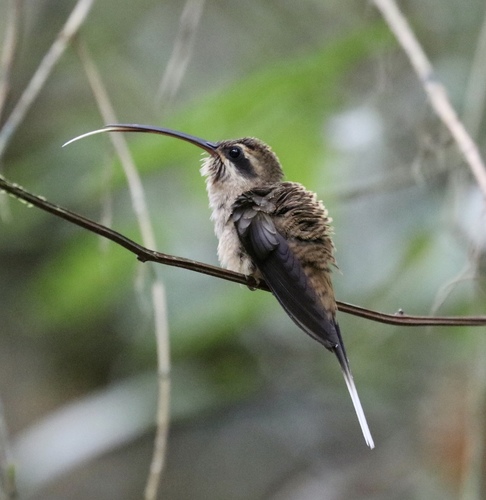 Long-billed Hermit
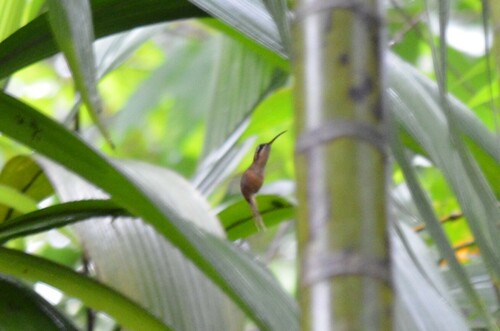 Stripe-throated Hermit
In breve
Il modo più affidabile per separare il Long-billed Hermit dallo Stripe-throated Hermit è attraverso la dimensione e la struttura del becco: il Long-billed Hermit è molto più grande e ha un becco visibilmente più lungo e fortemente ricurvo, specialmente nei maschi. Lo Stripe-throated Hermit è piccolo e compatto, con un becco molto più corto e un distintivo posteriore rufous pallido. Entrambe le specie hanno schemi generali simili, ma lo Stripe-throated Hermit mostra una gola leggermente striata e un supercilium pallido e una striscia malare più evidente, mentre il Long-billed Hermit ha una gola più semplice e piume centrali della coda più lunghe. I giovani Stripe-throated Hermits sono particolarmente rufous sopra, cosa che non si riscontra mai nel Long-billed. La voce, l'habitat e il comportamento possono aiutare, ma la dimensione e la forma del becco sono i fattori più decisivi sul campo.
Consigli di identificazione
- La dimensione è il controllo più veloce: il Long-billed Hermit è molto più grande e lungo dello Stripe-throated Hermit. Se l'uccello appare piccolo, compatto e delicato, sospetta lo Stripe-throated. Se appare slanciato ed allungato, specialmente nella coda e nel becco, sospetta il Long-billed.
- Forma e lunghezza del becco: il Long-billed Hermit ha un becco molto lungo e fortemente ricurvo, specialmente nei maschi. Lo Stripe-throated Hermit ha un becco molto più corto e meno drammaticamente curvato. Le femmine del Long-billed hanno un becco più corto ma più curvato rispetto ai maschi, ma comunque più lungo dello Stripe-throated.
- Parte superiore dei giovani: i giovani Stripe-throated Hermits hanno un dorso rufous pallido, che non si vede mai nel Long-billed Hermit di alcuna età. Questo è un segno chiave per gli immaturi.
- Piume centrali della coda: il Long-billed Hermit ha piume centrali della coda molto lunghe con punte bianche prominenti, che spesso si estendono ben oltre il resto della coda. Lo Stripe-throated Hermit ha una coda più corta con piume centrali meno pronunciate e punte che sono bianche a ocra ma non così lunghe o appariscenti.
- Schema del viso: lo Stripe-throated Hermit mostra una forte maschera nerastra, bordata da un supercilium pallido sopra e una striscia malare pallida sotto. Il Long-billed Hermit ha un viso meno contrastante, privo della maschera e delle strisce ben definite.
- Schema della gola: lo Stripe-throated Hermit ha una gola grigio-marrone pallido con fini striature scure (anche se a volte deboli). Il Long-billed Hermit ha una gola semplice senza striature.
- Colore del posteriore: lo Stripe-throated Hermit ha un posteriore rufous pallido, che può essere un segno rapido sul campo da dietro. Il Long-billed Hermit non ha questa caratteristica.
- Copritrici della coda superiore: il Long-billed Hermit mostra bande scure e ocra sulle copritrici della coda superiore, che lo Stripe-throated non ha.
- Colore delle parti inferiori: il Long-billed Hermit ha parti inferiori brune a grigie, mentre lo Stripe-throated Hermit mostra fianchi color crema e una pancia più chiara.
- Colore del becco: lo Stripe-throated Hermit ha una metà basale gialla nella mandibola inferiore, con il resto del becco nero. Il becco del Long-billed Hermit è tutto scuro.
- Differenze sessuali: il Long-billed Hermit mostra dimorfismo sessuale nella lunghezza e curvatura del becco; lo Stripe-throated Hermit ha sessi praticamente identici.
- Vocalizzazioni: se sentito cantare, il Long-billed Hermit emette note 'sweeup' stridenti e penetranti o cinguettii simili a quelli di un passero (a seconda della sottospecie); lo Stripe-throated Hermit emette una canzone monotona, acuta e stridula. Le chiamate sono meno affidabili ma possono supportare l'identificazione.
- Comportamento nei leks: i maschi del Long-billed Hermit si radunano in leks comunali più grandi e si esibiscono muovendo la coda. Lo Stripe-throated Hermit è più solitario al di fuori del lekking.
- Sovrapposizione dell'habitat: entrambe le specie si trovano nel sottobosco e nei margini delle foreste umide; non fare affidamento solo sull'habitat dove entrambe sono possibili.
- Trappole: i giovani Stripe-throated Hermits possono apparire più opachi e meno striati sulla gola, ma il dorso rufous è ancora diagnostico. Le femmine del Long-billed Hermit possono avere un becco più curvato, ma comunque più lungo di qualsiasi Stripe-throated. In scarsa illuminazione, la dimensione e la forma del becco rimangono i controlli più affidabili.
Taglia
Il Long-billed Hermit è significativamente più grande, misurando 13–16 cm di lunghezza e pesando 4–7.5 g a seconda del sesso. Lo Stripe-throated Hermit è tra i più piccoli eremiti, con soli 9–10 cm e 2–3 g. La differenza di dimensione è sorprendente quando visti fianco a fianco o con esperienza; il Long-billed Hermit appare slanciato e allungato, mentre lo Stripe-throated Hermit è compatto e delicato.
Piumaggio
I giovani Stripe-throated Hermits hanno un dorso rufous pallido completamente, che non si vede mai nel Long-billed Hermit di alcuna età. Negli adulti, lo Stripe-throated Hermit mostra parti superiori di un verde iridescente opaco, un posteriore rufous pallido, fianchi color crema e una gola grigio-marrone pallido con fini striature scure (anche se queste striature possono essere deboli e difficili da vedere). Il suo viso è contrassegnato da una forte maschera nerastra bordata da un supercilium e una striscia malare color crema. La coda è nerastra con punte bianche a ocra. Gli adulti del Long-billed Hermit hanno parti superiori marrone-verdastre, parti inferiori brune a grigie e copritrici della coda superiore con bande scure e ocra. Le piume centrali della coda sono molto più lunghe e hanno lunghe punte bianche. La gola è semplice, priva delle fini striature dello Stripe-throated. Esistono variazioni sottili tra le sottospecie del Long-billed Hermit, ma non si sovrappongono con le caratteristiche rufous o striate dello Stripe-throated.
Comportamento
Entrambe le specie sono alimentatori a circuito, muovendosi attraverso circuiti per visitare fiori per il nettare, e entrambi i maschi si esibiscono nei leks. I maschi del Long-billed Hermit sono noti per il loro lekking comunale, dove cantano e muovono le loro lunghe code per ore. Lo Stripe-throated Hermit è più solitario al di fuori del lekking e appare ancora più delicato e veloce nei suoi movimenti. Entrambi costruiscono nidi appesi da fibre vegetali e seta di ragno, ma la struttura del nido non è un segno affidabile sul campo.
Habitat
Entrambe le specie abitano il sottobosco e i margini delle foreste umide e della crescita secondaria, sovrapponendosi spesso in America Centrale e nel nord-ovest del Sud America. Il Long-billed Hermit si estende dal Messico al Perù, vivendo dal livello del mare fino a 2.500 m a seconda della regione, e si trova in una gamma più ampia di tipi di foresta, comprese le foreste galleria e le foreste nuvolose. Lo Stripe-throated Hermit è generalmente comune in habitat simili ma è più strettamente associato a foreste di pianura e di piede, e non si trova così a nord o a sud come il Long-billed Hermit. L'habitat da solo non è affidabile per la separazione dove entrambe si trovano.
Voce
Le sottospecie settentrionali del Long-billed Hermit cantano una serie continua di note singole, penetranti e stridenti 'sweeup', con una chiamata acuta ed esplosiva 'week!', spesso in volo. Le sottospecie meridionali (baroni) emettono una serie di note simili a quelle di un passero 'tchee..tchee..tchee..' e una sottile chiamata 'seep'. Lo Stripe-throated Hermit canta una canzone monotona, acuta e stridula che varia a seconda della regione ma è generalmente meno penetrante e più stridula rispetto a quella del Long-billed Hermit. Le chiamate non sono sempre diagnostiche, ma l'impressione generale è che il Long-billed Hermit sia più acuto e penetrante, mentre lo Stripe-throated è più alto e stridulo.
Long-billed Hermit · Stripe-throated Hermit · I miei uccelli difficili