

little bronze-cuckoo vs plaintive cuckoo
Chalcites minutillus versus Cacomantis merulinus
Jogue um quiz com little bronze-cuckoo e plaintive cuckoo
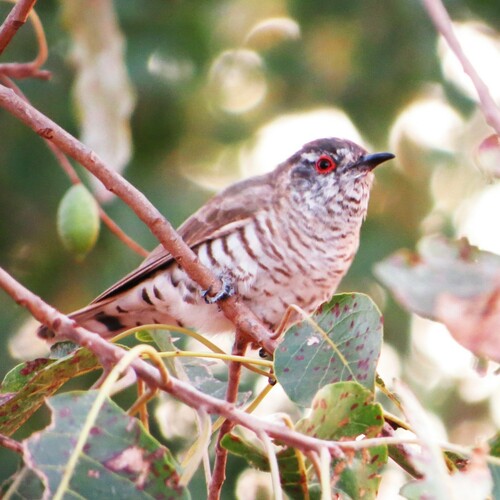 little bronze-cuckoo
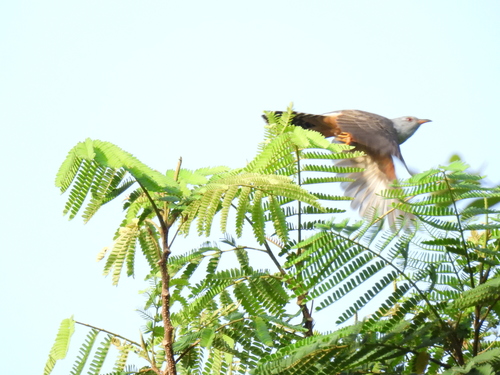 plaintive cuckoo
Em resumo
A marca de campo mais confiável para separar little bronze-cuckoo de plaintive cuckoo é o tamanho: little bronze-cuckoo é o menor cuco do mundo, extremamente compacto e esbelto, enquanto plaintive cuckoo é visivelmente maior e mais robusto. Se você ver um cuco muito pequeno, verde metálico, com uma mancha branca atrás do olho e fortes listras brancas abaixo, é little bronze-cuckoo; um pássaro maior com partes inferiores laranja e uma cabeça cinza ou ruiva é plaintive. Os juvenis de ambos podem ser confusos, mas o little bronze-cuckoo permanece muito menor e mais bronzeado acima. A estrutura e o padrão da cauda também ajudam: little bronze-cuckoo é mais delicado, com uma cauda mais longa em relação ao seu tamanho, enquanto plaintive cuckoo tem uma cauda mais larga com pontas brancas e um bico mais robusto. A sobreposição de habitat é possível, mas plaintive cuckoo é mais frequentemente encontrado em florestas abertas e jardins, enquanto little bronze-cuckoo prefere vegetação mais densa.
Dicas de identificação
- O tamanho é a pista mais imediata: little bronze-cuckoo é minúsculo (15–16 cm), muito menor que plaintive cuckoo (21–24 cm). Se o pássaro parece do tamanho de um pardal, é little bronze-cuckoo.
- Estrutura: little bronze-cuckoo é esbelto, com uma cauda proporcionalmente longa e bico fino; plaintive cuckoo é mais robusto, com um bico mais grosso e cauda mais larga com pontas brancas.
- Cor das partes superiores: little bronze-cuckoo é verde metálico bronzeado acima; plaintive cuckoo é marrom-cinza (macho) ou ruivo com listras escuras (fêmea hepática), nunca metálico.
- Padrão das partes inferiores: little bronze-cuckoo é branco com fortes listras escuras; plaintive cuckoo é laranja abaixo (macho) ou pálido com listras fracas (fêmea hepática), nunca fortemente listrado de branco.
- Padrão da cabeça: little bronze-cuckoo tem uma mancha branca distinta atrás do olho; plaintive cuckoo pode mostrar uma sobrancelha pálida (fêmea hepática/juvenil), mas nunca uma mancha branca no olho.
- Padrão da cauda: a cauda de plaintive cuckoo é larga com pontas brancas e listras escuras (especialmente em fêmeas hepáticas/juvenis); a cauda de little bronze-cuckoo é longa e esbelta, sem pontas brancas fortes ou listras ao longo de toda a extensão.
- Anel orbital: o macho little bronze-cuckoo tem um anel orbital vermelho, ausente em plaintive cuckoo.
- Confusão juvenil: o juvenil little bronze-cuckoo é mais apagado, mas ainda bronzeado acima e não tem listras fortes na cabeça; o juvenil plaintive cuckoo é ruivo mais pálido com listras escuras na coroa e na garganta e uma supercílios pálido.
- Estilo de voo: little bronze-cuckoo é direto e ágil, frequentemente se movendo entre a folhagem densa; plaintive cuckoo é menos rápido e mais propenso a pousar em áreas abertas.
- Contexto de habitat: vegetação densa e emaranhada favorece little bronze-cuckoo; florestas abertas, terras agrícolas ou jardins sugerem plaintive cuckoo.
- Vocalização: plaintive cuckoo emite apitos repetidos e lamentosos; a voz de little bronze-cuckoo não é descrita, então, se você ouvir o chamado clássico, é plaintive.
- Dimorfismo sexual: as fêmeas de plaintive cuckoo são variáveis, com muitas em uma forma ruiva 'hepática'—nunca igualada por little bronze-cuckoo.
- Espécies hospedeiras: se você observar o cuco perto de hospedeiros Geryone, isso pode indicar little bronze-cuckoo, embora isso não seja sempre confiável.
- Cor do bico: plaintive cuckoo tem um maxilar superior preto e um maxilar inferior amarelo; o bico de little bronze-cuckoo não é descrito como bicolor.
- Atacado por pequenos pássaros: plaintive cuckoo é frequentemente atacado em áreas abertas, o que pode ajudar no contexto.
Tamanho
Little bronze-cuckoo é dramaticamente menor, medindo apenas 15–16 cm de comprimento e pesando 14,5–17 g [wikipedia][avonet]. Plaintive cuckoo é muito maior, com 21–24 cm de comprimento [wikipedia]. Mesmo à distância, a diferença de tamanho é óbvia se você tiver uma referência. Little bronze-cuckoo não é apenas mais curto, mas também muito mais esbelto e leve, com uma cauda proporcionalmente mais longa. Plaintive cuckoo parece mais robusto, com um corpo mais profundo e um bico mais pesado.
Plumagem
-
Juvenis: Os juvenis de ambas as espécies podem ser confusos, mas os juvenis de little bronze-cuckoo são versões mais apagadas dos adultos, sem manchas nas laterais e com menos brilho no geral. Os juvenis de plaintive cuckoo se assemelham às fêmeas hepáticas: marrom-avermelhado acima com listras escuras (não barras) na coroa e na garganta, mais pálidos abaixo com listras fracas e uma supercílios pálido. A cauda do juvenil plaintive cuckoo é listrada e com pontas brancas.
-
Machos adultos: Little bronze-cuckoo é verde metálico bronzeado acima, branco abaixo com fortes listras escuras, e uma mancha branca distinta atrás do olho. Os machos adultos de plaintive cuckoo são marrom-cinza acima, laranja abaixo, com uma cabeça cinza, garganta e parte superior do peito, e penas da cauda com pontas brancas. Sem brilho metálico ou mancha branca no olho.
-
Fêmeas adultas: As fêmeas de little bronze-cuckoo são semelhantes aos machos, mas ligeiramente maiores e não têm o anel orbital vermelho. As fêmeas de plaintive cuckoo são variáveis: algumas se assemelham aos machos, mas muitas estão na forma 'hepática'—ruiva rica acima com listras escuras, mais pálidas abaixo com listras fracas, uma sobrancelha pálida e uma cauda fortemente listrada. Little bronze-cuckoo nunca mostra essa combinação de ruivo/listras ou sobrancelha pálida.
-
Em voo: Little bronze-cuckoo é descrito como direto e rápido, com uma aparência esbelta e de cauda longa. Plaintive cuckoo é mais robusto, com uma cauda mais larga e com pontas brancas e partes superiores menos metálicas.
Comportamento
Little bronze-cuckoo é ágil e rápido, se movendo entre a vegetação densa com um voo direto e ligeiramente ondulante. É frequentemente difícil de avistar, exceto quando se move entre a cobertura. Plaintive cuckoo é geralmente solitário e secreto, mas frequenta habitats mais abertos, pousando de forma conspícua às vezes. Ambos são parasitas de ninho, mas plaintive cuckoo é mais propenso a ser atacado por pequenos pássaros em áreas abertas. O tamanho menor e a construção esbelta de little bronze-cuckoo tornam seus movimentos mais delicados e rápidos.
Habitat
Little bronze-cuckoo prefere vegetação densa, incluindo bordas de florestas e arbustos, e é frequentemente associado a áreas onde suas espécies hospedeiras Geryone nidificam. Plaintive cuckoo é mais um generalista de habitat, encontrado em bordas de florestas, florestas abertas, arbustos, pastagens, terras agrícolas, parques e jardins. Se você ver um cuco verde bronzeado profundo em folhagem emaranhada, suspeite de little bronze-cuckoo; um cuco maior em campo aberto ou jardins é mais provável que seja plaintive.
Voz
Plaintive cuckoo é nomeado por sua canção: uma série de chamados lamentosos e apitantes—frases ascendentes de três notas e séries descendentes mais longas. A voz de little bronze-cuckoo não é descrita nas notas, então a vocalização é diagnóstica principalmente para plaintive cuckoo: se você ouvir um apito lamentoso, distinto e repetido, é provavelmente plaintive cuckoo.
little bronze-cuckoo · plaintive cuckoo · Minhas aves difíceis