

águia-da-pomerânia vs milhafre-preto
Clanga pomarina versus Milvus migrans
Jogue um quiz com águia-da-pomerânia e milhafre-preto
 águia-da-pomerânia
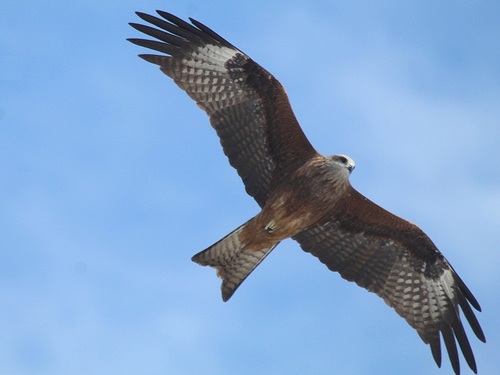 milhafre-preto
Em resumo
A marca de campo mais confiável entre a águia-da-pomerânia e o milhafre-preto é a combinação do padrão da asa superior e da cauda em voo: a águia-da-pomerânia (especialmente juvenis e adultos) apresenta um distinto 'V' branco na região do rabo e não possui cauda bifurcada, enquanto o milhafre-preto tem uma cauda levemente bifurcada e não apresenta nenhuma marca branca na região do rabo. Juvenis de águia-da-pomerânia também mostram manchas brancas proeminentes nas remiges, mas não apresentam manchas nas coberturas, enquanto os juvenis de milhafre-preto não mostram essas características. Estruturalmente, a águia é mais robusta, com uma cabeça e bico menores para seu tamanho, enquanto o milhafre parece mais esguio e leve em voo. Ambos podem parecer acastanhados à distância, mas a atenção cuidadosa ao formato das asas e da cauda, bem como ao estilo de voo, os separará na maioria das condições.
Dicas de identificação
- 'V' Branco na Região do Rabo (Águia-da-Pomerânia): Em todas as idades, exceto os juvenis mais jovens, procure um claro 'V' branco na região do rabo em voo; o milhafre-preto nunca mostra essa marca.
- Formato da Cauda: O milhafre-preto sempre tem uma cauda levemente bifurcada, melhor vista quando a ave abre a cauda em voo ou quando está empoleirada; a cauda da águia-da-pomerânia é reta ou ligeiramente arredondada.
- Padrão das Asas de Juvenis: Juvenis de águia-da-pomerânia mostram manchas brancas proeminentes nas remiges (penas de voo), mas não apresentam manchas nas coberturas; juvenis de milhafre-preto não têm essas manchas brancas e possuem asas marrons mais uniformes.
- Mancha Creme no Pescoço (Juvenil de Águia-da-Pomerânia): Juvenis de águia mostram uma mancha pálida ou creme no pescoço, ausente nos milhafres.
- Marcas na Asa Superior: Adultos de águia-da-pomerânia frequentemente mostram uma mancha branca na asa superior; o milhafre-preto nunca mostra isso.
- Estrutura da Cabeça e do Bico: A águia tem uma cabeça e bico proporcionalmente menores para seu tamanho, dando-lhe uma aparência menos 'curvada' do que o milhafre. A cabeça do milhafre é mais clara, mas não é notavelmente pequena.
- Estilo de Voo: O milhafre-preto é mais leve e ágil, frequentemente planando com as asas em um V raso; a águia-da-pomerânia voa com batidas de asa mais lentas e profundas e asas menos flexionadas.
- Tom da Plumagem: Ambos são marrons, mas a cabeça e as coberturas das asas da águia são mais claras e contrastam com o corpo mais escuro; o milhafre é mais uniformemente escuro com algumas listras mais claras na cabeça e partes inferiores.
- Postura Empoleirada: As águias são mais robustas, mais eretas e com aparência sólida quando empoleiradas; os milhafres são mais esguios e frequentemente se sentam de forma mais horizontal.
- Contexto do Habitat: Se vistos perto de áreas urbanas, locais de lixo ou em grandes grupos, o milhafre-preto é muito mais provável; a águia-da-pomerânia evita esses ambientes.
- Vocalização: Se ouvido, a águia emite um grito semelhante ao de um cachorro, enquanto o milhafre produz um apito agudo e um chamado semelhante a um relincho.
- Abundância Relativa: O milhafre-preto é muito mais comum e amplamente distribuído, especialmente durante a migração ou inverno; a águia-da-pomerânia é mais escassa e mais local.
- Cor do Bico: Ambos têm bicos escuros, mas o cera e a abertura do milhafre são amarelos, o que pode ser visto de perto.
- Cor das Pernas: Ambos têm pernas amarelas, não sendo um separador chave.
- Armadilha Híbrida: Híbridos raros entre as duas espécies de águia (não milhafre) podem ser confusos, mas híbridos de milhafre-preto não são uma preocupação aqui.
Tamanho
A águia-da-pomerânia é significativamente mais pesada (média de 1475,5g) do que o milhafre-preto (média de 828g), tornando-a uma ave mais robusta no geral. Ambas as espécies têm envergaduras semelhantes (cerca de 150 cm), mas a águia é mais robusta, com um corpo mais pesado e peito mais profundo. A cabeça e o bico da águia são proporcionalmente pequenos para seu tamanho, enquanto o milhafre é mais esguio e leve, com uma cauda mais longa e flexível. Em aves empoleiradas, a águia parece mais ereta e sólida, enquanto o milhafre é mais esguio e frequentemente se senta com uma postura mais horizontal.
Plumagem
- Aves juvenis/imaturas em voo: Juvenis de águia-da-pomerânia não apresentam manchas nas coberturas, mas mostram manchas brancas proeminentes nas remiges (penas de voo) e uma mancha creme no pescoço. O 'V' branco na região do rabo está presente mesmo em adultos, embora menos definido em juvenis. Juvenis de milhafre-preto não mostram essas manchas brancas nas remiges ou marcas na região do rabo; sua plumagem é predominantemente marrom com cabeça e pescoço mais claros, e uma aparência listrada no corpo.
- Adultos: Adultos de águia-da-pomerânia têm cabeça e coberturas das asas marrons claras contrastando com o corpo e asas mais escuras, e um 'V' branco na região do rabo. Adultos de milhafre-preto são marrons escuros no geral, com cabeça e pescoço mais claros, e uma cauda levemente bifurcada. A asa superior do milhafre não apresenta manchas brancas ou marcas na região do rabo, e sua cauda é sempre bifurcada (não quadrada ou arredondada como na águia).
- Cauda: A cauda da águia é reta ou ligeiramente arredondada, nunca bifurcada; a cauda do milhafre é distintamente levemente bifurcada, visível tanto empoleirada quanto em voo.
- Partes inferiores: Ambos são acastanhados, mas o milhafre frequentemente parece listrado devido aos eixos das penas escuros, enquanto a águia é mais uniforme na parte inferior.
Comportamento
A águia-da-pomerânia é cautelosa e tende a caçar em áreas abertas ou levemente arborizadas, frequentemente planando alto, mas com batidas de asa mais poderosas e lentas e voo menos leve do que o milhafre. O milhafre-preto é muito mais ágil e leve no ar, frequentemente visto planando e circulando com as asas em um ângulo dihedral raso (forma de V), e é mais provável de ser visto perto de habitações humanas, alimentando-se ou caçando em habitats variados. Milhafres também são mais propensos a serem vistos em grupos, especialmente perto de fontes de alimento, enquanto a águia é mais solitária ou vista em pares.
Habitat
A águia-da-pomerânia prefere campos abertos ou levemente arborizados, frequentemente longe de assentamentos humanos densos, e se reproduz na Europa Central e Oriental, sudeste até a Turquia e Armênia, hibernando na África. O milhafre-preto é altamente adaptável, encontrado em uma ampla gama de habitats, desde campos abertos até áreas urbanas, e é muito mais provável de ser visto perto de cidades, vilarejos e corpos d'água. Ambos podem se sobrepor em áreas de migração ou invernada, mas o milhafre é muito mais abundante e tolerante à presença humana.
Voz
A águia-da-pomerânia emite um grito semelhante ao de um cachorro, que é bastante diferente do apito agudo distintivo do milhafre-preto, seguido por um rápido chamado semelhante a um relincho. As vocalizações raramente são diagnósticas à distância, mas se ouvidas bem, a diferença é clara.