

Águila Pomerana vs Milano Negro
Clanga pomarina frente a Milvus migrans
Juega un quiz con Águila Pomerana y Milano Negro
 Águila Pomerana
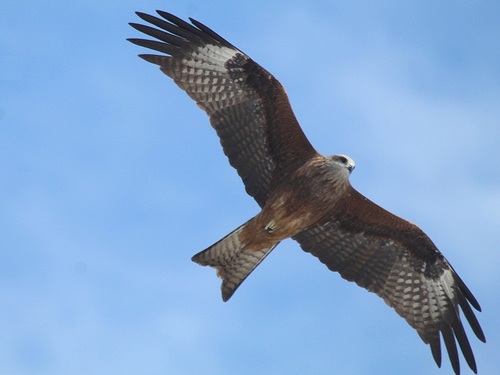 Milano Negro
En breve
La marca de campo más confiable entre el Águila Pomerana y el Milano Negro es la combinación del patrón del ala superior y la cola en vuelo: el Águila Pomerana (especialmente los juveniles y adultos) muestra una 'V' blanca distinta en el rabadilla y carece de cola ahorquillada, mientras que el Milano Negro tiene una cola ligeramente ahorquillada y carece de cualquier marca blanca en el rabadilla. Los juveniles de Águila Pomerana también muestran manchas blancas prominentes en las remiges pero carecen de manchas en las cobertoras, mientras que los juveniles de Milano Negro no muestran estas características. Estructuralmente, el águila es más robusta con una cabeza y un pico más pequeños para su tamaño, mientras que el milano parece más esbelto y ligero en vuelo. Ambos pueden parecer marrones a distancia, pero la atención cuidadosa a la forma de las alas y la cola, así como al estilo de vuelo, los separará en la mayoría de las condiciones.
Consejos de identificación
- 'V' Blanca en el Rabadilla (Águila Pomerana): En todas las edades excepto los juveniles más jóvenes, busca una clara 'V' blanca en el rabadilla en vuelo; el Milano Negro nunca muestra esta marca.
- Forma de la Cola: El Milano Negro siempre tiene una cola ligeramente ahorquillada, mejor vista cuando el ave abre su cola en vuelo o cuando está posada; la cola del Águila Pomerana es recta o ligeramente redondeada.
- Patrón de Alas Juveniles: Los juveniles de Águila Pomerana muestran manchas blancas prominentes en las remiges (plumas de vuelo) pero carecen de manchas en las cobertoras; los juveniles de Milano Negro carecen de estas manchas blancas y tienen alas marrones más uniformes.
- Parche Crema en el Cuello (Juvenil de Águila Pomerana): Los juveniles de águila muestran un parche pálido o de color crema en el cuello, ausente en los milanos.
- Marcas en el Ala Superior: Los adultos de Águila Pomerana a menudo muestran un parche blanco en el ala superior; el Milano Negro nunca lo hace.
- Estructura de la Cabeza y el Pico: El águila tiene una cabeza y un pico proporcionalmente más pequeños para su tamaño, dándole un aspecto menos 'ganchudo' que el milano. La cabeza del milano es más clara pero no notablemente pequeña.
- Estilo de Vuelo: El Milano Negro es más ligero y ágil, a menudo planeando con las alas en una 'V' poco profunda; el Águila Pomerana vuela con batidos de alas más lentos y profundos y alas menos flexionadas.
- Tono del Plumaje: Ambos son marrones, pero la cabeza y las cobertoras del águila son más claras y contrastan con el cuerpo más oscuro; el milano es más uniformemente oscuro con algunas estrías más claras en la cabeza y las partes inferiores.
- Postura al Posarse: Las águilas son más robustas, más erguida y con un aspecto sólido cuando están posadas; los milanos son más delgados y a menudo se sientan más horizontalmente.
- Contexto del Hábitat: Si se ven cerca de áreas urbanas, sitios de basura o en grandes grupos, es mucho más probable que sea un Milano Negro; el Águila Pomerana evita tales entornos.
- Vocalización: Si se escucha, el águila emite un ladrido similar al de un perro, mientras que el milano produce un silbido agudo y un llamado similar a un relincho.
- Abundancia Relativa: El Milano Negro es mucho más común y extendido, especialmente en migración o invierno; el Águila Pomerana es más escasa y más local.
- Color del Pico: Ambos tienen picos oscuros, pero el cere y la abertura del milano son amarillos, lo que se puede ver a corta distancia.
- Color de las Piernas: Ambos tienen piernas amarillas, no es un separador clave.
- Trampa Híbrida: Híbridos raros entre las dos especies de águila (no milano) pueden ser confusos, pero los híbridos de Milano Negro no son una preocupación aquí.
Tamaño
El Águila Pomerana es significativamente más pesada (promedio 1475.5g) que el Milano Negro (promedio 828g), lo que la convierte en un ave más robusta en general. Ambas especies tienen envergaduras similares (alrededor de 150 cm), pero el águila es más robusta, con un cuerpo más pesado y un pecho más profundo. La cabeza y el pico del águila son proporcionalmente pequeños para su tamaño, mientras que el milano es más esbelto y ligero, con una cola más larga y flexible. En aves posadas, el águila parece más erguida y sólida, mientras que el milano es más delgado y a menudo se sienta con una postura más horizontal.
Plumaje
- Aves juveniles/inmaduras en vuelo: Los juveniles de Águila Pomerana carecen de manchas en las cobertoras pero muestran manchas blancas prominentes en las remiges (plumas de vuelo) y un parche de color crema en el cuello. La 'V' blanca en el rabadilla está presente incluso en los adultos, aunque menos definida en los juveniles. Los juveniles de Milano Negro no muestran estas manchas blancas en las remiges ni marcas en el rabadilla; su plumaje es en general marrón con cabeza y cuello más claros, y una apariencia estriada en el cuerpo.
- Adultos: Los adultos de Águila Pomerana tienen cabeza y cobertoras de alas de color marrón claro que contrastan con el cuerpo y las alas más oscuras, y una 'V' blanca en el rabadilla. Los adultos de Milano Negro son de color marrón oscuro en general, con una cabeza y un cuello más claros, y una cola ligeramente ahorquillada. El ala superior del milano carece de parches blancos o marcas en el rabadilla, y su cola siempre está ahorquillada (no cuadrada o redondeada como en el águila).
- Cola: La cola del águila es recta o ligeramente redondeada, nunca ahorquillada; la cola del Milano Negro es distintivamente ahorquillada, visible tanto posada como en vuelo.
- Partes Inferiores: Ambos son marrones, pero el milano a menudo parece estriado debido a los ejes de plumas oscuros, mientras que el águila es más uniforme por debajo.
Comportamiento
El Águila Pomerana es cautelosa y tiende a cazar sobre campos abiertos o ligeramente boscosos, a menudo planeando alto pero con batidos de alas más poderosos y lentos y un vuelo menos ligero que el milano. El Milano Negro es mucho más ágil y ligero en el aire, a menudo visto planeando y circulando con las alas en un dihedral poco profundo (forma de V), y es más probable que se vea cerca de la vivienda humana, buscando alimento o cazando sobre hábitats variados. Los milanos también son más propensos a ser vistos en grupos, especialmente cerca de fuentes de alimento, mientras que el águila es más solitaria o se ve en parejas.
Hábitat
El Águila Pomerana prefiere campos abiertos o ligeramente boscosos, a menudo lejos de asentamientos humanos densos, y cría en Europa Central y Oriental, al sureste hasta Turquía y Armenia, invernando en África. El Milano Negro es altamente adaptable, encontrado en una amplia gama de hábitats desde campos abiertos hasta áreas urbanas, y es mucho más probable que se vea cerca de pueblos, ciudades y cuerpos de agua. Ambos pueden superponerse en terrenos de migración o invernada, pero el milano es mucho más abundante y tolerante a la presencia humana.
Voz
El Águila Pomerana emite un ladrido similar al de un perro, que es bastante diferente del silbido agudo distintivo del Milano Negro seguido de un llamado rápido y similar a un relincho. Las vocalizaciones rara vez son diagnósticas a distancia, pero si se escuchan bien, la diferencia es clara.