

Aquila anatraia minore vs Nibbio bruno
Clanga pomarina contro Milvus migrans
Fai un quiz con Aquila anatraia minore e Nibbio bruno
 Aquila anatraia minore
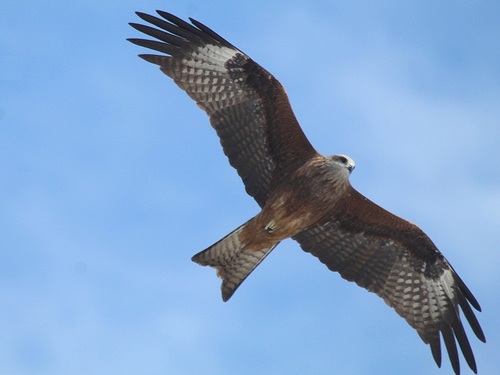 Nibbio bruno
In breve
Il segno di campo più affidabile tra l'Aquila anatraia minore e il Nibbio bruno è la combinazione del modello dell'ala superiore e della coda in volo: l'Aquila anatraia minore (soprattutto i giovani e gli adulti) mostra una chiara 'V' bianca sul sopraccoda e non ha una coda forked, mentre il Nibbio bruno ha una coda leggermente forked e non presenta alcun segno bianco sul sopraccoda. Anche i giovani Aquile anatraie minori mostrano macchie bianche prominenti sulle remiganti ma non hanno macchie sulle copritrici, mentre i giovani Nibbi bruni non mostrano queste caratteristiche. Strutturalmente, l'aquila è più robusta con una testa e un becco più piccoli per la sua taglia, mentre il nibbio appare più snello e galleggiante in volo. Entrambi possono apparire brunastri a distanza, ma un'attenta attenzione alla forma delle ali e della coda, così come allo stile di volo, li separerà nella maggior parte delle condizioni.
Consigli di identificazione
- 'V' Bianca sul Sopraccoda (Aquila anatraia minore): In tutte le età tranne i più giovani, cerca una chiara 'V' bianca sul sopraccoda in volo; il Nibbio bruno non mostra mai questo segno.
- Forma della Coda: Il Nibbio bruno ha sempre una coda leggermente forked, meglio visibile quando l'uccello apre la coda in volo o quando è posato; la coda dell'Aquila anatraia minore è dritta o leggermente arrotondata.
- Modello delle Ali nei Giovani: I giovani Aquile anatraie minori mostrano macchie bianche prominenti sulle remiganti (piume da volo) ma non hanno macchie sulle copritrici; i giovani Nibbi bruni non mostrano queste macchie bianche e hanno ali marroni più uniformi.
- Macchia Crema sul Collo (Giovane Aquila anatraia minore): I giovani aquilotti mostrano una macchia chiara o crema sul collo, assente nei nibbi.
- Segni sull'Ala Superiore: Gli adulti dell'Aquila anatraia minore mostrano spesso una macchia bianca sull'ala superiore; il Nibbio bruno non lo fa mai.
- Struttura della Testa e del Becco: L'aquila ha una testa e un becco proporzionalmente più piccoli per la sua taglia, conferendole un aspetto meno 'uncinato' rispetto al nibbio. La testa del nibbio è più chiara ma non straordinariamente piccola.
- Stile di Volo: Il Nibbio bruno è più galleggiante e agile, spesso planando con le ali tenute in una V poco profonda; l'Aquila anatraia minore vola con battiti d'ala più lenti e profondi e ali meno flessibili.
- Tono del Piumaggio: Entrambi sono marroni, ma la testa e le copritrici dell'aquila sono più chiare e contrastano con il corpo più scuro; il nibbio è più uniformemente scuro con alcune striature più chiare sulla testa e sulle parti inferiori.
- Postura da Posato: Le aquile sono più robuste, più erette e dall'aspetto solido quando sono posate; i nibbi sono più snelli e spesso si siedono in modo più orizzontale.
- Contesto dell'Habitat: Se visti vicino a aree urbane, discariche o in grandi gruppi, il Nibbio bruno è molto più probabile; l'Aquila anatraia minore evita tali ambienti.
- Vocalizzazione: Se udita, l'aquila emette un verso simile a un abbaiare, mentre il nibbio produce un fischio acuto e un richiamo simile a un nitrito.
- Abbondanza Relativa: Il Nibbio bruno è molto più comune e diffuso, specialmente in migrazione o inverno; l'Aquila anatraia minore è più rara e più locale.
- Colore del Becco: Entrambi hanno becchi scuri, ma il cere e la bocca del nibbio sono gialli, visibili da vicino.
- Colore delle Zampe: Entrambi hanno zampe gialle, non un separatore chiave.
- Trappola Ibrida: Rari ibridi tra le due specie di aquila (non nibbio) possono essere confusi, ma gli ibridi di Nibbio bruno non sono una preoccupazione qui.
Taglia
L'Aquila anatraia minore è significativamente più pesante (media 1475.5g) rispetto al Nibbio bruno (media 828g), rendendola un uccello più robusto nel complesso. Entrambe le specie hanno un'apertura alare simile (circa 150 cm), ma l'aquila è più robusta, con un corpo più pesante e un torace più profondo. La testa e il becco dell'aquila sono proporzionalmente piccoli per la sua taglia, mentre il nibbio è più snello e leggero, con una coda più lunga e flessibile. Negli uccelli posati, l'aquila appare più eretta e solida, mentre il nibbio è più snello e spesso si siede con una postura più orizzontale.
Piumaggio
- Giovani/uccelli immaturi in volo: I giovani Aquile anatraie minori non hanno macchie sulle copritrici ma mostrano macchie bianche prominenti sulle remiganti (piume da volo) e una macchia crema sul collo. La 'V' bianca sul sopraccoda è presente anche negli adulti, sebbene meno definita nei giovani. I giovani Nibbi bruni non mostrano queste macchie bianche sulle remiganti o segni sul sopraccoda; il loro piumaggio è complessivamente marrone con testa e collo più chiari e un aspetto striato sul corpo.
- Adulti: Gli adulti dell'Aquila anatraia minore hanno una testa e copritrici delle ali marroni chiare che contrastano con il corpo e le ali più scure, e una 'V' bianca sul sopraccoda. Gli adulti del Nibbio bruno sono complessivamente marroni scuri, con una testa e un collo più chiari, e una coda leggermente forked. L'ala superiore del nibbio non presenta macchie bianche o segni sul sopraccoda, e la sua coda è sempre forked (non quadrata o arrotondata come nell'aquila).
- Coda: La coda dell'aquila è dritta o leggermente arrotondata, mai forked; la coda del Nibbio bruno è distintamente forked, visibile sia posato che in volo.
- Parti Inferiori: Entrambi sono brunastri, ma il nibbio appare spesso striato a causa degli steli delle piume scuri, mentre l'aquila è più uniforme sotto.
Comportamento
L'Aquila anatraia minore è diffidente e tende a cacciare su terreni aperti o leggermente boscosi, spesso planando in alto ma con battiti d'ala più potenti e lenti e un volo meno galleggiante rispetto al nibbio. Il Nibbio bruno è molto più agile e galleggiante in aria, spesso visto planare e circolare con le ali tenute in un dihedro poco profondo (forma a V), ed è più probabile vederlo vicino a insediamenti umani, a cercare cibo o cacciare su habitat vari. I nibbi sono anche più probabili da vedere in gruppi, specialmente vicino a fonti di cibo, mentre l'aquila è più solitaria o vista in coppie.
Habitat
L'Aquila anatraia minore preferisce campagne aperte o leggermente boschive, spesso lontano da insediamenti umani densi, e nidifica in Europa Centrale e Orientale, a sud-est fino alla Turchia e all'Armenia, svernando in Africa. Il Nibbio bruno è altamente adattabile, trovato in una vasta gamma di habitat, da campagne aperte a aree urbane, ed è molto più probabile vederlo vicino a città, paesi e corpi idrici. Entrambi possono sovrapporsi nei terreni di migrazione o svernamento, ma il nibbio è di gran lunga più abbondante e tollerante alla presenza umana.
Voce
L'Aquila anatraia minore emette un verso simile a un abbaiare, che è molto diverso dal fischio acuto distintivo del Nibbio bruno seguito da un richiamo rapido e simile a un nitrito. Le vocalizzazioni sono raramente diagnostiche a distanza, ma se udite bene, la differenza è chiara.
Aquila anatraia minore · Nibbio bruno · I miei uccelli difficili