

lesser blue-eared starling vs estorninho-metálico-lamurioso
Lamprotornis chloropterus versus Lamprotornis chalybaeus
Jogue um quiz com lesser blue-eared starling e estorninho-metálico-lamurioso
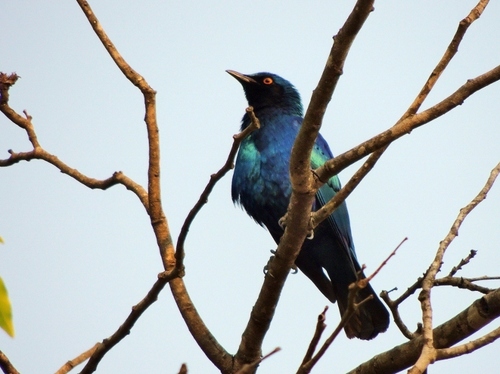 lesser blue-eared starling
 estorninho-metálico-lamurioso
Em resumo
A marca de campo mais confiável para separar o estorninho-metálico-lamurioso e o lesser blue-eared starling é a extensão da coloração azul na barriga: o estorninho-metálico-lamurioso apresenta azul se estendendo para frente das pernas até o peito inferior, enquanto a barriga azul do lesser blue-eared starling para na altura ou atrás das pernas. Ambas as espécies são azul-esverdeadas brilhantes com olhos amarelos ou laranjas marcantes, mas o estorninho-metálico-lamurioso é visivelmente mais robusto e tem uma cauda ligeiramente mais curta. Os juvenis de ambas as espécies são mais apagados, mas a fronteira da cor da barriga continua sendo uma distinção chave. A estrutura e o habitat se sobrepõem bastante, então a atenção cuidadosa à cor da barriga e ao tamanho geral é essencial, especialmente em bandos mistos.
Dicas de identificação
- A fronteira da cor da barriga é chave: No estorninho-metálico-lamurioso, o azul da barriga se estende para frente das pernas até o peito inferior; no lesser, o azul para na altura ou logo atrás das pernas. Isso funciona para todas as idades e é a marca mais confiável.
- Tamanho e estrutura: O estorninho-metálico-lamurioso é visivelmente mais pesado e um pouco mais longo, parecendo mais robusto; o lesser é mais esbelto e leve. Use isso apenas quando as aves estiverem lado a lado ou em comparação direta.
- Comprimento da cauda: O estorninho-metálico-lamurioso tem uma cauda ligeiramente mais curta em relação ao tamanho do corpo, mas isso é sutil e nem sempre óbvio.
- Plumagem juvenil: Os juvenis do estorninho-metálico-lamurioso são mais apagados no geral com partes inferiores marrom-escuro, mas a fronteira da cor da barriga ainda se aplica. O juvenil do lesser não é descrito em detalhes, mas espera-se um padrão semelhante com a mesma marca na barriga.
- Cor da íris: Ambas as espécies têm olhos amarelos ou laranjas brilhantes como adultos, então isso não é útil para separação.
- Mancha auricular: Ambas apresentam uma mancha auricular azul; não é um separador.
- Partes superiores azul-esverdeadas brilhantes: Ambas as espécies têm partes superiores azul-esverdeadas brilhantes; não confie apenas no brilho ou na tonalidade geral para separação.
- Comportamento em bandos: Ambas são gregárias e podem ser vistas em bandos mistos; o estorninho-metálico-lamurioso pode ser mais propenso a pousar em gado, mas isso não é diagnóstico.
- Sobreposição de habitat: Ambas ocorrem em florestas abertas e savanas; não use o habitat sozinho para identificação.
- Vocalizações: Apenas o chamado do estorninho-metálico-lamurioso é descrito ('squee-ar'), mas a voz não é um separador confiável sem mais informações.
- Visões de voo: Nenhuma diferença distintiva nas partes superiores ou no padrão de voo é notada; concentre-se na cor da barriga mesmo em voo, se possível.
- Armadilhas em luz fraca: Na sombra ou à distância, a fronteira da cor da barriga pode ser difícil de julgar; use o tamanho como uma pista secundária, se possível.
- Bandos mistos: Quando ambas as espécies ocorrem juntas, verifique cada indivíduo pela marca na barriga em vez de assumir com base na composição do bando.
- Sem dimorfismo sexual: Machos e fêmeas são semelhantes em ambas as espécies; não use o sexo para identificação.
- Sem mudança sazonal na plumagem: Não há evidências de mudanças sazonais significativas em nenhuma das espécies; as marcas chave se aplicam durante todo o ano.
Tamanho
O estorninho-metálico-lamurioso é distintamente mais pesado (85,8g vs 73,1g) e ligeiramente mais longo (22 cm para o estorninho-metálico-lamurioso; o lesser é um pouco menor, mas o comprimento preciso não é dado). No campo, o estorninho-metálico-lamurioso parece mais robusto e atarracado, enquanto o lesser é um pouco mais delicado. O comprimento da cauda é proporcionalmente mais curto no estorninho-metálico-lamurioso, mas isso é sutil e nem sempre confiável à distância. Ambas as espécies têm proporções semelhantes, então o tamanho é melhor usado em combinação com a plumagem.
Plumagem
Para todas as idades, a diferença de plumagem mais diagnóstica é a extensão do azul na barriga: o estorninho-metálico-lamurioso tem azul que se estende para frente das pernas até o peito inferior, enquanto no lesser blue-eared starling, a barriga azul para na altura ou logo atrás das pernas, deixando o peito superior de uma cor diferente (não descrita em detalhes, mas não azul). Ambos os adultos são azul-esverdeados brilhantes no geral, com uma mancha auricular azul e íris amarelas ou laranjas brilhantes. Os juvenis do estorninho-metálico-lamurioso são mais apagados, com partes inferiores marrom-escuro, mas a fronteira da cor da barriga continua sendo uma marca útil. Nenhuma marca distintiva de partes superiores ou de voo específica para a idade é descrita para nenhuma das espécies. Os sexos são semelhantes em ambas. Em luz fraca ou à distância, a fronteira da cor da barriga pode ser difícil de julgar, mas em boas visões, é o melhor ponto de separação.
Comportamento
Ambas as espécies são altamente gregárias, frequentemente formando grandes bandos e às vezes misturando-se com outros estorninhos. O estorninho-metálico-lamurioso é especialmente notado por seu comportamento de agrupamento e pouso comunitário, às vezes com outras espécies. Ambas forrageiam principalmente no chão por insetos, mas também consomem frutas. O estorninho-metálico-lamurioso é conhecido por pousar em gado para se alimentar de insetos ou ectoparasitas, um comportamento não especificamente notado para o lesser. Ambas nidificam em buracos, mas o estorninho-metálico-lamurioso é mencionado como usando ninhos de galhos de grandes aves também. As diferenças comportamentais são sutis e geralmente não são diagnósticas no campo.
Habitat
Ambas as espécies habitam florestas abertas e savanas em grande parte da África subsaariana, com grande sobreposição de alcance. O estorninho-metálico-lamurioso é descrito como muito comum em florestas abertas e é conhecido por realizar algumas migrações sazonais. O alcance do lesser blue-eared starling é igualmente amplo, e ambas podem ser encontradas em habitats semelhantes, então o habitat sozinho não é um separador confiável.
Voz
O estorninho-metálico-lamurioso tem uma variedade de chamadas musicais ou estridentes, sendo a mais familiar um nasal 'squee-ar.' Não há descrição específica da voz do lesser blue-eared starling nas notas fornecidas. As vocalizações não são um separador confiável no campo com base nas informações disponíveis.
lesser blue-eared starling · estorninho-metálico-lamurioso · Minhas aves difíceis