

Blauwoorglansspreeuw vs Groenstaartglansspreeuw
Lamprotornis chloropterus versus Lamprotornis chalybaeus
Speel een quiz met Blauwoorglansspreeuw en Groenstaartglansspreeuw
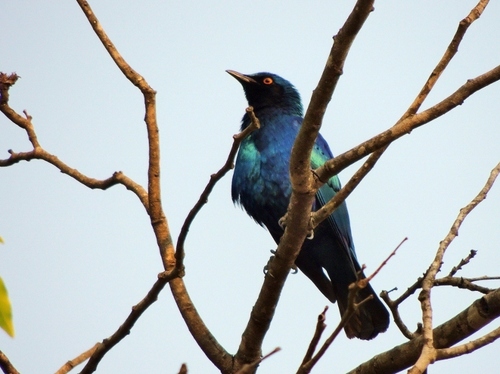 Blauwoorglansspreeuw
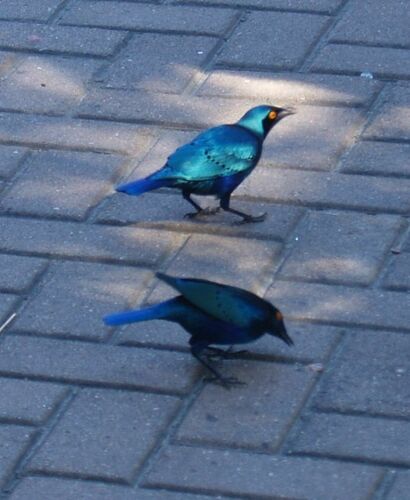 Groenstaartglansspreeuw
Kort gezegd
Het meest betrouwbare veldkenmerk voor het scheiden van Blauwoorglansspreeuw en Groenstaartglansspreeuw is de omvang van de blauwe kleur op de buik: Groenstaartglansspreeuw toont blauw dat naar voren uitstrekt van de poten naar de onderborst, terwijl de blauwe buik van de Blauwoorglansspreeuw stopt bij of achter de poten. Beide soorten zijn glanzend blauw-groen met opvallende gele of oranje ogen, maar de Groenstaart is merkbaar steviger en heeft een iets kortere staart. Juvenielen van beide zijn doffer, maar de grens van de buikkleur blijft een belangrijke onderscheid. Structuur en habitat overlappen sterk, dus zorgvuldige aandacht voor buikkleur en algehele grootte is essentieel, vooral in gemengde groepen.
Herkenningstips
- Buikkleurgrens is belangrijk: Bij Groenstaartglansspreeuw strekt het blauw van de buik zich naar voren uit van de poten naar de onderborst; bij Blauwoorglansspreeuw stopt het blauw bij of net achter de poten. Dit geldt voor alle leeftijden en is het meest betrouwbare kenmerk.
- Grootte en bouw: Groenstaart is merkbaar zwaarder en iets langer, en lijkt robuuster; Blauwoorglansspreeuw is slanker en lichter. Gebruik dit alleen wanneer de vogels naast elkaar staan of in directe vergelijking.
- Staartlengte: Groenstaart heeft een iets kortere staart in verhouding tot de lichaamsgrootte, maar dit is subtiel en niet altijd duidelijk.
- Juveniele verenkleed: Juveniele Groenstaartglansspreeuwen zijn doffer over het algemeen met zwartachtig bruine onderdelen, maar de buikkleurgrens blijft van toepassing. Juveniele Blauwoorglansspreeuw wordt niet in detail beschreven, maar verwacht een vergelijkbaar patroon met hetzelfde buikkenmerk.
- Iris kleur: Beide soorten hebben als volwassenen heldere gele of oranje ogen, dus dit is niet nuttig voor scheiding.
- Oorvlek: Beide tonen een blauwe oorvlek; geen scheidingskenmerk.
- Glanzend blauw-groene bovenzijde: Beide soorten zijn glanzend blauw-groen boven; vertrouw niet op algehele glans of tint voor scheiding.
- Groepsgedrag: Beide zijn sociaal en kunnen in gemengde groepen worden gezien; Groenstaart kan meer geneigd zijn om op vee te zitten, maar dit is niet diagnostisch.
- Habitatoverlap: Beide komen voor in open bos en savanne; gebruik habitat alleen niet voor identificatie.
- Vocalisaties: Alleen de roep van Groenstaart wordt beschreven ('squee-ar'), maar de stem is geen betrouwbare scheider zonder meer informatie.
- Vluchtzicht: Er zijn geen onderscheidende bovenvleugel- of vluchtpatroonverschillen opgemerkt; concentreer je op de buikkleur, zelfs in de vlucht als dat mogelijk is.
- Valkuilen bij slecht licht: In schaduw of op afstand kan de buikkleurgrens moeilijk te beoordelen zijn; gebruik grootte als secundaire aanwijzing indien mogelijk.
- Gemengde groepen: Wanneer beide soorten samen voorkomen, controleer dan elk individu op het buikkenmerk in plaats van aan te nemen op basis van de samenstelling van de groep.
- Geen seksuele dimorfie: Mannen en vrouwen zijn vergelijkbaar in beide soorten; gebruik geslacht niet voor identificatie.
- Geen seizoensgebonden verenkleedverandering: Er is geen bewijs van significante seizoensgebonden verandering in beide soorten; de belangrijkste kenmerken zijn het hele jaar van toepassing.
Grootte
Groenstaartglansspreeuw is duidelijk zwaarder (85,8 g vs 73,1 g) en iets langer (22 cm voor Groenstaart; Blauwoorglansspreeuw is iets kleiner, maar precieze lengte niet gegeven). In het veld lijkt Groenstaart robuuster en steviger, terwijl Blauwoorglansspreeuw iets delicater is. De staartlengte is proportioneel korter bij Groenstaart, maar dit is subtiel en niet altijd betrouwbaar op afstand. Beide soorten hebben vergelijkbare verhoudingen, dus grootte is het beste in combinatie met verenkleed te gebruiken.
Verenkleed
Voor alle leeftijden is het meest diagnostische verschil in verenkleed de omvang van blauw op de buik: Groenstaartglansspreeuw heeft blauw dat naar voren uitstrekt van de poten naar de onderborst, terwijl bij Blauwoorglansspreeuw de blauwe buik stopt bij of net achter de poten, waardoor de bovenborst een andere kleur heeft (niet in detail beschreven, maar niet blauw). Beide volwassenen zijn over het algemeen glanzend blauw-groen, met een blauwe oorvlek en heldere gele of oranje irissen. Juvenielen van Groenstaartglansspreeuw zijn doffer, met zwartachtig bruine onderdelen, maar de buikkleurgrens blijft een nuttig kenmerk. Er zijn geen onderscheidende leeftijdspecifieke bovenvleugel- of vluchtkenmerken beschreven voor beide soorten. Seksen zijn vergelijkbaar in beide. Bij slecht licht of op afstand kan de buikkleurgrens moeilijk te beoordelen zijn, maar bij goede zicht is het het beste scheidingspunt.
Gedrag
Beide soorten zijn zeer sociaal, vormen vaak grote groepen en mengen soms met andere spreeuwen. Groenstaartglansspreeuw is vooral bekend om zijn groepsgedrag en gemeenschappelijk rusten, soms met andere soorten. Beide foerageren voornamelijk op de grond voor insecten, maar zullen ook fruit nemen. Groenstaartglansspreeuw staat bekend om op vee te zitten om insecten of ectoparasieten te voeden, een gedrag dat niet specifiek voor Blauwoorglansspreeuw wordt opgemerkt. Beide nestelen in gaten, maar Groenstaart wordt ook genoemd als gebruikmakend van takkennesten van grote vogels. Gedragsverschillen zijn subtiel en meestal niet diagnostisch in het veld.
Habitat
Beide soorten bewonen open bos en savanne in een groot deel van sub-Sahara Afrika, met een grote overlap in verspreiding. Groenstaartglansspreeuw wordt beschreven als zeer algemeen in open bos en staat bekend om enige seizoensgebonden migratie. De verspreiding van Blauwoorglansspreeuw is vergelijkbaar breed, en beide kunnen in vergelijkbare habitats worden aangetroffen, dus habitat alleen is geen betrouwbare scheider.
Geluid
Groenstaartglansspreeuw heeft een reeks muzikale of schurende roepen, waarvan de meest bekende een nasale 'squee-ar' is. Er is geen specifieke beschrijving van de stem van Blauwoorglansspreeuw in de verstrekte aantekeningen. Vocalisaties zijn geen betrouwbare veldscheider op basis van beschikbare informatie.
Blauwoorglansspreeuw · Groenstaartglansspreeuw · Mijn lastige vogels