

Motmot

コセイキムクドリ 対 セイキムクドリ

Lamprotornis chloropterus 対 Lamprotornis chalybaeus

コセイキムクドリとセイキムクドリのクイズ
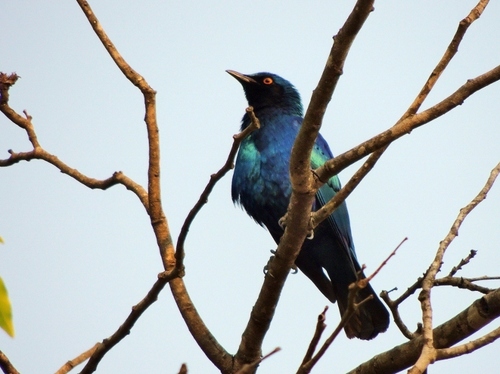
コセイキムクドリ (Lamprotornis chloropterus) コセイキムクドリ
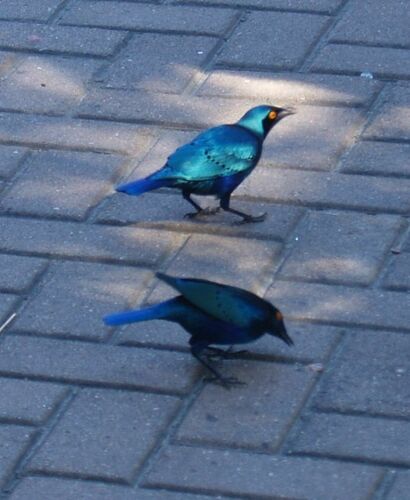
セイキムクドリ (Lamprotornis chalybaeus) セイキムクドリ

メディア

読み込み中…

要点

コセイキムクドリとセイキムクドリを区別するための最も信頼できるフィールドマークは、腹部の青色の広がりです:セイキムクドリは脚の前方に青が広がり、下胸部にまで達しますが、コセイキムクドリの青い腹部は脚の位置で止まります。両種は光沢のある青緑色で、目は印象的な黄色またはオレンジ色ですが、セイキムクドリは明らかに体が大きく、尾はやや短いです。両種の幼鳥は全体的に鈍い色合いですが、腹部の色の境界は重要な区別点です。構造と生息地は大きく重なっているため、特に混成群れでは腹部の色と全体のサイズに注意を払うことが重要です。

識別のコツ

  1. 腹部の色の境界が重要:セイキムクドリでは、腹部の青が脚の前方に広がり下胸部に達しますが、コセイキムクドリでは青が脚の位置で止まります。これはすべての年齢に当てはまり、最も信頼できるマークです。
  2. サイズと体型:セイキムクドリは明らかに重く、少し長く、より頑丈に見えます;コセイキムクドリはスリムで軽いです。これは、鳥が並んでいるときや直接比較する場合にのみ使用してください。
  3. 尾の長さ:セイキムクドリは体のサイズに対して尾がやや短いですが、これは微妙で、常に明らかではありません。
  4. 幼鳥の羽毛:幼鳥のセイキムクドリは全体的に鈍い色合いで、黒っぽい茶色の下部を持っていますが、腹部の色の境界は依然として適用されます。幼鳥のコセイキムクドリは詳細には説明されていませんが、同様のパターンと同じ腹部のマークが期待されます。
  5. 虹彩の色:両種の成鳥は明るい黄色またはオレンジ色の目を持っているため、これは区別には役立ちません。
  6. 耳の斑点:両種とも青い耳の斑点を示します;これは区別にはなりません。
  7. 光沢のある青緑色の上面:両種は上面が光沢のある青緑色です;全体の光沢や色合いに頼って区別しないでください。
  8. 群れと行動:両種は群れを作りやすく、混成群れで見られることがあります;セイキムクドリは家畜に止まる可能性が高いですが、これは診断的ではありません。
  9. 生息地の重なり:両種は開けた森林やサバンナに生息し、単独での識別には生息地を使用しないでください。
  10. 鳴き声:セイキムクドリの鳴き声のみが記載されています(「スキューアー」)、しかし声はより多くの情報がない限り信頼できる区別にはなりません。
  11. 飛行時の視点:上翼や飛行パターンの明確な違いは記載されていません;可能であれば、飛行中でも腹部の色に焦点を当ててください。
  12. 暗い場所での落とし穴:影や距離がある場合、腹部の色の境界を判断するのが難しいことがあります;可能であれば、サイズを二次的な手がかりとして使用してください。
  13. 混成群れ:両種が一緒にいる場合、群れの構成に基づいて仮定するのではなく、各個体の腹部のマークを確認してください。
  14. 性差がない:両種のオスとメスは似ています;性別を識別に使用しないでください。
  15. 季節による羽毛の変化がない:両種において重要な季節変化の証拠はありません;重要なマークは年間を通じて適用されます。

大きさ

セイキムクドリは明らかに重く(85.8g対73.1g)、わずかに長い(セイキムクドリは22 cm;コセイキムクドリはやや小さいが正確な長さは記載されていません)。フィールドでは、セイキムクドリはより頑丈でがっしりとした印象を与え、コセイキムクドリは少し繊細に見えます。尾の長さはセイキムクドリで相対的に短いですが、これは微妙で、遠くからは常に信頼できるわけではありません。両種は似たような比率を持っているため、サイズは羽毛と組み合わせて使用するのが最適です。

羽色

すべての年齢において、最も診断的な羽毛の違いは腹部の青色の広がりです:セイキムクドリは腹部の青が脚の前方に広がり下胸部に達しますが、コセイキムクドリでは青い腹部が脚の位置で止まり、上胸部は異なる色になります(詳細には説明されていませんが、青ではありません)。両方の成鳥は全体的に光沢のある青緑色で、青い耳の斑点と明るい黄色またはオレンジ色の虹彩を持っています。セイキムクドリの幼鳥は鈍い色合いで、黒っぽい茶色の下部を持っていますが、腹部の色の境界は依然として有用なマークです。両種において年齢特有の上翼や飛行のマークは記載されていません。性別は両方で似ています。暗い場所や距離がある場合、腹部の色の境界を判断するのが難しいことがありますが、良好な視界では、最も良い区別点です。

行動

両種は非常に群れを作りやすく、大きな群れを形成し、時には他のムクドリと混ざることがあります。セイキムクドリは特に群れを作る行動と共同のねぐらを持つことで知られ、時には他の種と一緒にいます。両種は主に地面で昆虫を探し、果物も食べます。セイキムクドリは昆虫や外部寄生虫を食べるために家畜に止まることが知られていますが、これはコセイキムクドリには特に記載されていません。両種は穴に巣を作りますが、セイキムクドリは大型の鳥の枝の巣を使用することも言及されています。行動の違いは微妙で、フィールドでは通常診断的ではありません。

生息環境

両種はサハラ以南のアフリカの広範囲にわたる開けた森林やサバンナに生息し、大きな範囲の重なりがあります。セイキムクドリは開けた森林で非常に一般的であり、いくつかの季節的な移動を行うことが知られています。コセイキムクドリの範囲も同様に広く、両種は似たような生息地に見られるため、生息地だけでは信頼できる区別にはなりません。

声

セイキムクドリは音楽的または耳障りな鳴き声の範囲を持ち、最も馴染みのあるものは鼻にかかった「スキューアー」です。提供されたメモにはコセイキムクドリの声の具体的な説明はありません。鳴き声は利用可能な情報に基づいて信頼できるフィールドの区別にはなりません。

より良い説明を送る

比較と同じ項目を使ってください。文章はすぐに公開されます。

The most reliable field mark for separating Lesser and Greater Blue-eared Starlings is the extent of blue coloration on the belly: Greater Blue-eared Starling shows blue extending forward of the legs onto the lower breast, while Lesser Blue-eared Starling's blue belly stops at or behind the legs. Both species are glossy blue-green with striking yellow or orange eyes, but Greater is noticeably bulkier and has a slightly shorter tail. Juveniles of both are duller, but the belly color boundary remains a key distinction. Structure and habitat overlap heavily, so careful attention to belly color and overall size is essential, especially in mixed flocks.

  1. Belly color boundary is key: In Greater Blue-eared Starling, the blue of the belly extends forward of the legs onto the lower breast; in Lesser, the blue stops at or just behind the legs. This works for all ages and is the single most reliable mark.
  2. Size and build: Greater is noticeably heavier and a bit longer, appearing more robust; Lesser is slimmer and lighter. Use this only when birds are side by side or in direct comparison.
  3. Tail length: Greater has a slightly shorter tail relative to body size, but this is subtle and not always obvious.
  4. Juvenile plumage: Juvenile Greater Blue-eared Starlings are duller overall with blackish brown underparts, but the belly color boundary still applies. Juvenile Lesser is not described in detail, but expect a similar pattern with the same belly mark.
  5. Iris color: Both species have bright yellow or orange eyes as adults, so this is not useful for separation.
  6. Ear patch: Both show a blue ear patch; not a separator.
  7. Glossy blue-green upperparts: Both species are glossy blue-green above; do not rely on overall gloss or hue for separation.
  8. Flocking and behavior: Both are gregarious and may be seen in mixed flocks; Greater may be more likely to perch on livestock, but this is not diagnostic.
  9. Habitat overlap: Both occur in open woodland and savanna; do not use habitat alone for ID.
  10. Vocalizations: Only Greater's call is described ('squee-ar'), but voice is not a reliable separator without more information.
  11. Flight views: No distinctive upperwing or flight pattern differences are noted; focus on belly color even in flight if possible.
  12. Pitfalls in poor light: In shadow or at distance, the belly color boundary can be hard to judge; use size as a secondary clue if possible.
  13. Mixed flocks: When both species occur together, check each individual for the belly mark rather than assuming based on flock composition.
  14. No sexual dimorphism: Males and females are similar in both species; do not use sex for ID.
  15. No seasonal plumage change: No evidence of significant seasonal change in either species; the key marks apply year-round.

Greater Blue-eared Starling is distinctly heavier (85.8g vs 73.1g) and slightly longer (22 cm for Greater; Lesser is somewhat smaller but precise length not given). In the field, Greater appears more robust and stockier, while Lesser is a touch more delicate. Tail length is proportionally shorter in Greater, but this is subtle and not always reliable at distance. Both species have similar proportions, so size is best used in combination with plumage.

For all ages, the most diagnostic plumage difference is the extent of blue on the belly: Greater Blue-eared Starling has blue that extends forward of the legs onto the lower breast, while in Lesser Blue-eared Starling, the blue belly stops at or just behind the legs, leaving the upper breast a different color (not described in detail, but not blue). Both adults are glossy blue-green overall, with a blue ear patch and bright yellow or orange irises. Juveniles of Greater Blue-eared Starling are duller, with blackish brown underparts, but the belly color boundary remains a useful mark. No distinctive age-specific upperwing or flight marks are described for either species. Sexes are similar in both. In poor light or at distance, the belly color boundary may be hard to judge, but in good views, it is the best separation point.

Both species are highly gregarious, often forming large flocks and sometimes mixing with other starlings. Greater Blue-eared Starling is especially noted for its flocking behavior and communal roosting, sometimes with other species. Both forage mainly on the ground for insects but will also take fruit. Greater Blue-eared Starling is known to perch on livestock to feed on insects or ectoparasites, a behavior not specifically noted for Lesser. Both nest in holes, but Greater is mentioned as using stick nests of large birds as well. Behavioral differences are subtle and not usually diagnostic in the field.

Both species inhabit open woodland and savanna across much of sub-Saharan Africa, with large range overlap. Greater Blue-eared Starling is described as very common in open woodland and is known to undertake some seasonal migration. Lesser Blue-eared Starling's range is similarly broad, and both can be found in similar habitats, so habitat alone is not a reliable separator.

Greater Blue-eared Starling has a range of musical or grating calls, with the most familiar being a nasal 'squee-ar.' There is no specific description of Lesser Blue-eared Starling's voice in the provided notes. Vocalizations are not a reliable field separator based on available information.

変更を破棄しますか?

保存していない編集があります。今離れると失われます。

コセイキムクドリ · セイキムクドリ · 苦手な鳥