

lesser antillean bullfinch vs black-faced grassquit
Loxigilla noctis versus Melanospiza bicolor
Jogue um quiz com lesser antillean bullfinch e black-faced grassquit
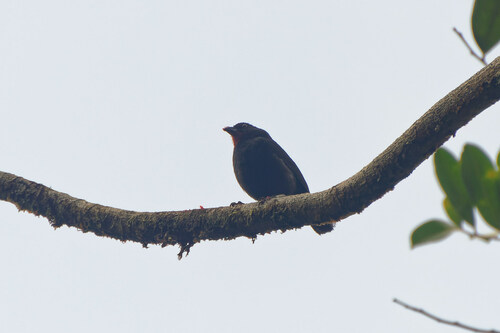 lesser antillean bullfinch
 black-faced grassquit
Em resumo
A marca de campo mais confiável para separar o lesser antillean bullfinch do black-faced grassquit é a cor e o padrão geral da plumagem, especialmente em machos adultos: os machos do bullfinch são principalmente pretos com um supercílios vermelho e garganta laranja-avermelhada, enquanto os machos do grassquit têm um rosto e garganta pretos, mas partes superiores e asas esverdeadas. As fêmeas são mais complicadas, mas as fêmeas do bullfinch são marrons quentes com bordas rusticas nas asas e na parte inferior da cauda, enquanto as fêmeas do grassquit são de um verde-oliva sem graça acima e mais opacas abaixo. Os juvenis de ambas as espécies se assemelham às suas respectivas fêmeas, então concentre-se na cor das asas e da parte inferior da cauda. O bullfinch é notavelmente mais pesado e robusto, com um bico mais grosso, enquanto o grassquit é menor e mais esbelto. Ambas as espécies podem ocorrer em habitats semelhantes, então atenção cuidadosa à estrutura e plumagem é essencial.
Dicas de identificação
- O macho adulto do bullfinch é principalmente preto com um supercílios vermelho e garganta laranja-avermelhada—procure por essa combinação, que nunca é mostrada pelos machos do grassquit.
- O macho adulto do grassquit tem um rosto, garganta e partes inferiores pretas, mas partes superiores e asas esverdeadas—a tonalidade esverdeada acima é diagnóstica e o separa do macho do bullfinch, que é todo preto.
- As fêmeas e juvenis do bullfinch são marrons quentes acima com bordas rusticas nas coberturas maiores e coberturas da parte inferior da cauda—verifique essas tonalidades ruivas, especialmente em voo ou quando empoleiradas com a cauda aberta.
- As fêmeas e juvenis do grassquit são de um verde-oliva sem graça acima, mais marrons ou acinzentadas abaixo, e não têm tons rusticos ou ruivos nas asas e na parte inferior da cauda—qualquer indício de ruivo sugere bullfinch.
- O bullfinch é maior e mais robusto, com um bico notavelmente mais pesado e cônico—se você ver um tentilhão robusto e de cabeça grande, é provável que seja o bullfinch.
- O grassquit é menor, mais leve e mais delicado em construção—frequentemente parece pequeno e ágil.
- Os machos do bullfinch podem mostrar uma mancha de garganta vermelha ou laranja e supercílios, mas o tamanho e a intensidade variam por subespécie—algumas subespécies têm manchas menores ou mais opacas, então a ausência de vermelho brilhante não exclui o bullfinch.
- Os machos do grassquit nunca mostram vermelho ou laranja no rosto ou na garganta—qualquer cor desse tipo aponta para o bullfinch.
- As fêmeas do bullfinch têm uma cabeça marrom quente com lore rusticas; as fêmeas do grassquit são de um verde-oliva simples, sem marcas faciais contrastantes.
- Em voo, procure por bordas rusticas ou ruivas nas asas e na parte inferior da cauda do bullfinch (todas as idades, exceto machos adultos, que podem ter preto na parte inferior da cauda); o grassquit mostra tons uniformes esverdeados ou de oliva, sem ruivo.
- Ambas as espécies têm íris escuras e pernas escuras, mas as pernas do bullfinch podem ser cinzentas ou pretas mais escuras, enquanto as do grassquit são de um rosa escuro—nem sempre visíveis em campo.
- A cor do bico pode ajudar: os machos do bullfinch têm um bico preto ou marrom escuro; os machos do grassquit têm um bico preto, mas as fêmeas de ambas as espécies têm uma mandíbula mais clara—nem sempre diagnóstica.
- Os machos do grassquit podem realizar voos de exibição aérea com vibração das asas e canto—comportamento não descrito para o bullfinch.
- A sobreposição de habitat é comum, então não confie apenas na localização, a menos que você esteja fora da área de uma espécie.
- Se você ouvir uma canção zumbidora e enfática, é provável que seja do grassquit; o canto do bullfinch não é descrito aqui—use com cautela, a menos que você conheça bem os cantos.
Tamanho
O lesser antillean bullfinch é significativamente maior e mais pesado, com uma média de 18,4 g de massa corporal e medindo 14–15,5 cm de comprimento. Em contraste, o black-faced grassquit é menor e mais leve, pesando 7–13 g e medindo 10,2–11,5 cm. O bullfinch parece mais robusto, com um bico mais robusto e cônico, enquanto o grassquit é mais pequeno e delicado em geral. Essa diferença de tamanho é frequentemente aparente quando ambas as espécies são vistas lado a lado, mas pode ser sutil em isolamento, a menos que você tenha uma boa noção dos tamanhos das aves locais.
Plumagem
- Juvenis e Fêmeas: Ambas as espécies são sexualmente dimórficas, mas fêmeas e juvenis podem causar confusão. As fêmeas e juvenis do bullfinch são marrons quentes acima com bordas rusticas nas coberturas maiores (asa) e coberturas da parte inferior da cauda. As fêmeas e juvenis do grassquit são de um verde-oliva sem graça acima, mais marrons ou acinzentadas abaixo, e não têm tons rusticos ou ruivos nas asas ou na parte inferior da cauda. Essa diferença na cor das asas e da parte inferior da cauda é uma marca de campo chave para não machos.
- Machos Adultos: Os machos do bullfinch são principalmente pretos com um supercílios vermelho e garganta laranja-avermelhada (a quantidade varia por subespécie), às vezes com coberturas da parte inferior da cauda de um ruivo-castanho. Os machos do grassquit têm um rosto, garganta e partes inferiores pretas, mas suas partes superiores, asas e cauda são esverdeadas (não pretas), e flancos traseiros são de um verde-escuro. Algumas subespécies de grassquit têm partes superiores de um verde-oliva mais brilhante ou mais pálido, mas nenhuma é toda preta acima.
- Variação de Subespécies: As subespécies do bullfinch diferem principalmente no tamanho e na intensidade da garganta vermelha/laranja e do supercílios e na quantidade de ruivo na parte inferior da cauda. As subespécies do grassquit variam na luminosidade das partes superiores de verde-oliva e na extensão do preto nas partes inferiores, mas todas mantêm as partes superiores esverdeadas.
Comportamento
Ambas as espécies são geralmente discretas e forrageiam baixo na vegetação ou no chão. O bullfinch, sendo maior e mais pesado, pode parecer mais deliberado e robusto em seus movimentos, frequentemente se alimentando de sementes e frutas. O grassquit é mais propenso a ser visto em pequenos bandos ou colônias soltas, especialmente durante a época de reprodução, e os machos às vezes realizam curtas exibições aéreas com vibrações das asas. Ambas as espécies podem ser vistas empoleiradas ou forrageando, mas o tamanho menor do grassquit e seu comportamento mais ativo e agitado podem ser notáveis com a experiência.
Habitat
Ambas as espécies habitam ambientes semelhantes nas Pequenas Antilhas e ilhas próximas, incluindo arbustos, jardins e florestas abertas. O grassquit é frequentemente encontrado em áreas gramadas ou infestadas de ervas daninhas, às vezes em colônias soltas, e pode nidificar no solo ou próximo a ele. O bullfinch está mais associado a habitats arbustivos ou florestais, mas também pode ser encontrado em jardins. O habitat não é um separador confiável onde as áreas se sobrepõem, então concentre-se na plumagem e na estrutura.
Voz
Apenas as vocalizações do grassquit são descritas nas notas: seu canto é uma série zumbidora e enfática, às vezes descrita como 'tse-tsee-tsee-tsizzle-tsizzle-tsizzle' ou um fino 'tsit'l, tzil'ti, ti'teet', com um suave chamado musical 'tsip'. As vocalizações do bullfinch não são detalhadas nas notas fornecidas, então a voz não é um separador confiável, a menos que você esteja familiarizado com seus cantos pela experiência.
lesser antillean bullfinch · black-faced grassquit · Minhas aves difíceis