

Semillero Gorjirrojo vs Semillero Biocolor
Loxigilla noctis frente a Melanospiza bicolor
Juega un quiz con Semillero Gorjirrojo y Semillero Biocolor
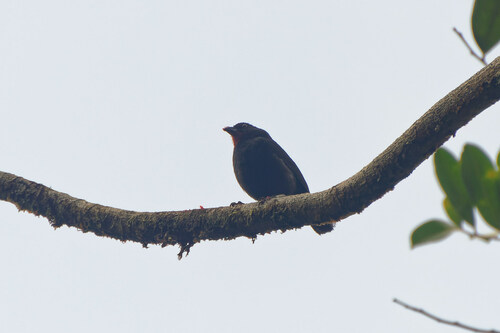 Semillero Gorjirrojo
 Semillero Biocolor
En breve
La marca de campo más confiable para separar el Semillero Gorjirrojo del Semillero Biocolor es el color y patrón del plumaje en general, especialmente en los machos adultos: los machos de semillero gorjirrojo son mayormente negros con un supercilio rojo y una garganta anaranjada-roja, mientras que los machos de semillero biocolor tienen una cara y garganta negras pero partes superiores y alas verdosas. Las hembras son más complicadas, pero las hembras de semillero gorjirrojo son de un marrón cálido con bordes oxidados en las alas y el infracobijo, mientras que las hembras de semillero biocolor son de un verde oliva apagado arriba y más opacas abajo. Los juveniles de ambas especies se parecen a sus respectivas hembras, así que concéntrate en el color de las alas y el infracobijo. El semillero gorjirrojo es notablemente más pesado y robusto, con un pico más grueso, mientras que el semillero biocolor es más pequeño y esbelto. Ambas especies pueden ocurrir en hábitats similares, por lo que es esencial prestar atención a la estructura y el plumaje.
Consejos de identificación
- El macho adulto de semillero gorjirrojo es mayormente negro con un supercilio rojo y una garganta anaranjada-roja—busca esta combinación, que nunca es mostrada por los machos de semillero biocolor.
- El macho adulto de semillero biocolor tiene una cara, garganta y partes inferiores negras pero partes superiores y alas verdosas—el tono verdoso arriba es diagnóstico y lo separa del macho de semillero gorjirrojo, que es completamente negro.
- Las hembras y juveniles de semillero gorjirrojo son de un marrón cálido arriba con bordes oxidados en las cobertoras mayores y cobertoras del infracobijo—verifica estos tonos rufos, especialmente en vuelo o cuando están posados con la cola extendida.
- Las hembras y juveniles de semillero biocolor son de un verde oliva apagado arriba, más marrones o grises abajo, y carecen de tonos oxidados o rufos en las alas y el infracobijo—cualquier indicio de rufos sugiere semillero gorjirrojo.
- El semillero gorjirrojo es más grande y robusto, con un pico notablemente más pesado y cónico—si ves un pinzón robusto y de cabeza grande, es probable que sea el semillero gorjirrojo.
- El semillero biocolor es más pequeño, ligero y más delicado en su construcción—a menudo parece pequeño y se mueve rápidamente.
- Los machos de semillero gorjirrojo pueden mostrar una mancha roja o naranja en la garganta y supercilio, pero el tamaño y la intensidad varían según la subespecie—algunas subespecies tienen manchas más pequeñas o apagadas, así que la ausencia de rojo brillante no descarta al semillero gorjirrojo.
- Los machos de semillero biocolor nunca muestran rojo o naranja en la cara o garganta—cualquier color así apunta al semillero gorjirrojo.
- Las hembras de semillero gorjirrojo tienen una cabeza marrón cálido con loretes oxidados; las hembras de semillero biocolor son de un verde oliva simple sin marcas faciales contrastantes.
- En vuelo, busca bordes oxidados o rufos en las alas y el infracobijo del semillero gorjirrojo (todas las edades excepto los machos adultos, que pueden tener negro en el infracobijo); el semillero biocolor muestra tonos uniformes verdosos o de oliva sin rufos.
- Ambas especies tienen iris oscuros y patas oscuras, pero las patas del semillero gorjirrojo pueden ser de un gris más oscuro o negro, mientras que las del semillero biocolor son de un rosa oscuro—no siempre son visibles en el campo.
- El color del pico puede ayudar: los machos de semillero gorjirrojo tienen un pico negro o marrón oscuro; los machos de semillero biocolor tienen un pico negro, pero las hembras de ambas especies tienen una mandíbula más clara—no siempre es diagnóstico.
- Los machos de semillero biocolor pueden realizar vuelos de exhibición aérea con vibración de alas y canto—comportamiento no descrito para el semillero gorjirrojo.
- La superposición de hábitats es común, así que no confíes solo en la ubicación a menos que estés fuera del rango de una especie.
- Si escuchas una canción zumbante y enfática, es probable que sea el semillero biocolor; el canto del semillero gorjirrojo no se describe aquí—úsalo con precaución a menos que conozcas bien los cantos.
Tamaño
El Semillero Gorjirrojo es significativamente más grande y pesado, promediando 18.4 g en masa corporal y midiendo 14–15.5 cm de longitud. En contraste, el Semillero Biocolor es más pequeño y ligero, pesando 7–13 g y midiendo 10.2–11.5 cm. El semillero gorjirrojo parece más robusto con un pico más robusto y cónico, mientras que el semillero biocolor es más pequeño y delicado en general. Esta diferencia de tamaño es a menudo evidente cuando ambas especies se ven una al lado de la otra, pero puede ser sutil en aislamiento a menos que tengas una buena percepción de los tamaños de las aves locales.
Plumaje
- Juveniles y Hembras: Ambas especies son sexualmente dimórficas, pero las hembras y juveniles pueden causar confusión. Las hembras y juveniles de semillero gorjirrojo son de un marrón cálido arriba con bordes oxidados en las cobertoras mayores (ala) y cobertoras del infracobijo oxidadas. Las hembras y juveniles de semillero biocolor son de un verde oliva apagado arriba, más marrones o grises abajo, y carecen de tonos oxidados o rufos en las alas o el infracobijo. Esta diferencia en el color de las alas y el infracobijo es una marca de campo clave para los no machos.
- Machos Adultos: Los machos de semillero gorjirrojo son mayormente negros con un supercilio rojo y una garganta anaranjada-roja (la cantidad varía según la subespecie), a veces con cobertoras del infracobijo de castaño rufoso. Los machos de semillero biocolor tienen una cara, garganta y partes inferiores negras, pero sus partes superiores, alas y cola son verdosas (no negras), y los flancos traseros son de un verde oscuro. Algunas subespecies de semillero biocolor tienen partes superiores de un verde oliva más brillante o pálido, pero ninguna es completamente negra arriba.
- Variación de Subespecies: Las subespecies de semillero gorjirrojo difieren principalmente en el tamaño y la intensidad de la garganta roja/naranja y el supercilio y la cantidad de rufoso en el infracobijo. Las subespecies de semillero biocolor varían en el brillo de las partes superiores de verde oliva y la extensión de negro en las partes inferiores, pero todas mantienen las partes superiores verdosas.
Comportamiento
Ambas especies son generalmente discretas y forrajean bajo en la vegetación o en el suelo. El semillero gorjirrojo, siendo más grande y pesado, puede parecer más deliberado y robusto en sus movimientos, alimentándose a menudo de semillas y frutas. El semillero biocolor es más probable que se vea en pequeños grupos o colonias sueltas, especialmente durante la temporada de cría, y los machos a veces realizan breves exhibiciones aéreas con vibraciones de alas. Ambas especies pueden ser vistas posadas o forrajeando, pero el tamaño más pequeño del semillero biocolor y su comportamiento más activo y aleteante pueden ser notables con la experiencia.
Hábitat
Ambas especies habitan ambientes similares en las Antillas Menores y las islas cercanas, incluyendo matorrales, jardines y bosques abiertos. El semillero biocolor se encuentra a menudo en áreas herbáceas o de maleza, a veces en colonias sueltas, y puede anidar en o cerca del suelo. El semillero gorjirrojo está más asociado con hábitats arbustivos o boscosos, pero también puede encontrarse en jardines. El hábitat no es un separador confiable donde los rangos se superponen, así que concéntrate en el plumaje y la estructura.
Voz
Solo se describen las vocalizaciones del semillero biocolor en las notas: su canto es una serie zumbante y enfática, a veces descrita como 'tse-tsee-tsee-tsizzle-tsizzle-tsizzle' o un delgado 'tsit'l, tzil'ti, ti'teet', con un suave llamado musical 'tsip'. Las vocalizaciones del semillero gorjirrojo no están detalladas en las notas proporcionadas, así que la voz no es un separador confiable a menos que estés familiarizado con sus cantos por experiencia.
Semillero Gorjirrojo · Semillero Biocolor · Mis aves difíciles