

noitibó-de-cauda-larga vs jerdon's nightjar
Caprimulgus macrurus versus Caprimulgus atripennis
Jogue um quiz com noitibó-de-cauda-larga e jerdon's nightjar
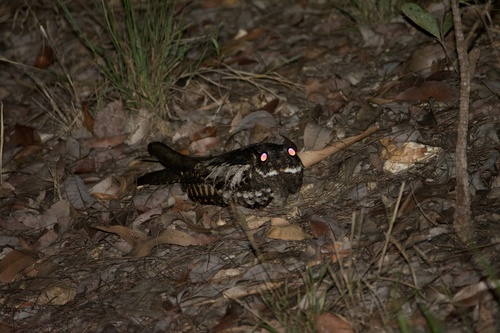 noitibó-de-cauda-larga
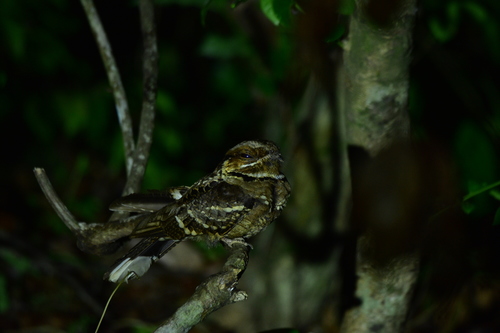 jerdon's nightjar
Em resumo
A marca de campo mais confiável para separar o noitibó-de-cauda-larga do jerdon's nightjar é a cauda: o noitibó-de-cauda-larga tem uma cauda visivelmente mais longa e mais larga, com manchas brancas proeminentes nas penas externas (especialmente em voo), enquanto o jerdon's nightjar tem uma cauda notavelmente mais curta, com menos branco extenso. Em voo, os machos adultos do noitibó-de-cauda-larga mostram grandes manchas brancas em ambas as primárias e penas externas da cauda, enquanto os machos do jerdon's nightjar têm uma mancha branca na asa, mas uma cauda mais curta e menos impressionante. Empoleirado, o noitibó-de-cauda-larga parece mais robusto e com cauda mais longa, com uma coroa pálida e um padrão escápula ousado, enquanto o jerdon's nightjar é mais compacto, com uma coroa uniforme e um colar escurinho. As vocalizações também são muito diferentes e podem ser diagnósticas se ouvidas. Ambas as espécies são crípticas e podem ser desafiadoras de separar apenas pela plumagem, especialmente fêmeas e imaturos, mas marcas estruturais e de voo são fundamentais.
Dicas de identificação
- Comprimento e estrutura da cauda: O noitibó-de-cauda-larga tem uma cauda muito mais longa e mais larga do que o jerdon's nightjar. Isso é especialmente óbvio em voo ou quando a cauda está aberta; use isso como sua primeira verificação em todas as idades e sexos.
- Padrão da cauda em voo: O macho adulto do noitibó-de-cauda-larga mostra grandes manchas brancas nas penas externas da cauda, enquanto a cauda do jerdon's nightjar é mais curta, com menos branco extenso. As fêmeas de ambas as espécies têm menos branco, mas a diferença no comprimento da cauda continua sendo confiável.
- Mancha primária em voo: Os machos do noitibó-de-cauda-larga têm grandes manchas brancas nas primárias, visíveis como flashes ousados em voo. Os machos do jerdon's nightjar têm uma mancha branca na asa, mas é menos extensa e a cauda mais curta é uma pista.
- Coroa e escápulas (empoleirado): Os machos do noitibó-de-cauda-larga têm uma coroa pálida com uma faixa mediana escura e uma linha proeminente de escápulas pretas com largas franjas amarelas ou esbranquiçadas. O jerdon's nightjar tem uma coroa mais uniforme com finas vermiculações e um colar escuro, sem o contraste ousado das escápulas.
- Gorget e colar: Ambas as espécies têm um gorget branco, mas o do jerdon's nightjar é ininterrupto e bordado por um colar escuro, enquanto o do noitibó-de-cauda-larga é destacado por uma coroa mais pálida e escápulas mais contrastantes.
- Tamanho do corpo e jizz: O noitibó-de-cauda-larga é visivelmente maior e mais robusto, com um contorno mais alongado e cauda mais longa. O jerdon's nightjar é menor, mais compacto e com cauda mais curta. Isso é aparente tanto empoleirado quanto em voo.
- Dimorfismo sexual: As fêmeas do noitibó-de-cauda-larga são mais pálidas e cinzentas com manchas de asas amarelas menores e manchas de cauda menos vibrantes, mas ainda com cauda mais longa do que as fêmeas do jerdon's nightjar. As fêmeas do jerdon's são mais apagadas e com cauda mais curta.
- Estilo de voo: Ambas as espécies têm um voo silencioso e flutuante, mas a cauda mais longa do noitibó-de-cauda-larga dá uma impressão mais languida e arrastada, enquanto o jerdon's nightjar parece mais semelhante a uma mariposa e compacto.
- Contexto de habitat: Se visto em floresta densa, plantações ou terras agrícolas no Sudeste Asiático ou Austrália, o noitibó-de-cauda-larga é mais provável. No sul da Índia ou Sri Lanka, especialmente em matas abertas ou arbustos, o jerdon's nightjar é mais provável.
- Comportamento de empoleiramento: O jerdon's nightjar é menos provável de ser encontrado em estradas à noite e pode empoleirar-se em arbustos, enquanto o noitibó-de-cauda-larga é mais frequentemente encontrado no chão ou em poleiros baixos.
- Vocalizações: A canção do noitibó-de-cauda-larga é um 'wroww' ou 'wrrrog' profundo e monótono, enquanto o jerdon's nightjar emite um chamado semelhante ao de uma tábua de madeira sendo batida ou um rápido 'ch-woo-woo.' Se você ouvir o chamado, isso é diagnóstico.
- Distribuição geográfica: Se você estiver fora do sul da Índia/Sri Lanka, o noitibó-de-cauda-larga é muito mais provável. Em áreas de sobreposição (península indiana nordeste), confie na estrutura e nas vocalizações.
- Armadilhas de plumagem: Ambas são crípticas e podem parecer semelhantes quando empoleiradas. Foque no comprimento da cauda, manchas das asas e padrão da coroa para separação confiável.
- Idade/estação: Nenhum padrão distinto de asa juvenil/imaturo é descrito para nenhuma das espécies, então use marcas de adultos para todas as idades, a menos que mais detalhes estejam disponíveis.
- Quando em dúvida: Se o pássaro estiver silencioso e parcialmente obscurecido, priorize o comprimento e a estrutura da cauda, depois procure contraste na coroa e escápulas, e finalmente considere o habitat e a distribuição.
Tamanho
O noitibó-de-cauda-larga é o maior dos dois, medindo cerca de 31,5–33 cm de comprimento [wikipedia], enquanto o jerdon's nightjar é menor, com cerca de 26 cm [wikipedia]. Essa diferença de tamanho é notável em campo, especialmente ao comparar pássaros empoleirados ou pássaros em voo lado a lado. O noitibó-de-cauda-larga também parece mais robusto e com cauda mais longa, contribuindo para um contorno mais alongado, enquanto o jerdon's nightjar é mais compacto e proporcionalmente com cauda mais curta.
Plumagem
- Juvenil/Imaturo/Primeiro-inverno (onde conhecido): Nenhuma diferença explícita de padrão de asa juvenil/imaturo é descrita para essas espécies nas fontes, então o foco recai sobre diferenças de adultos e baseadas em sexo.
- Machos adultos: Os machos do noitibó-de-cauda-larga têm uma coroa pálida com uma faixa mediana escura, uma linha proeminente de penas escápulas pretas bordadas com largas franjas amarelas ou esbranquiçadas, uma mancha branca na garganta e uma cauda longa e larga de cor marrom com barras escuras irregulares e grandes manchas brancas nas primárias e penas externas da cauda (especialmente visíveis em voo). Os machos do jerdon's nightjar têm uma coroa mais uniforme com finas vermiculações, um colar escuro, uma mancha branca na asa e uma cauda mais curta e barrada com menos branco extenso. Ambas as espécies têm plumagem críptica e variegada em marrom e amarelo, mas o noitibó-de-cauda-larga é mais marcadamente marcado no geral.
- Fêmeas adultas: As fêmeas do noitibó-de-cauda-larga são mais pálidas e cinzentas do que os machos, com manchas de asas amarelas menores e manchas de cauda menos vibrantes, dando uma aparência mais apagada. As fêmeas do jerdon's nightjar também são crípticas e variegadas, mas com cauda mais curta e menos contraste no geral. Ambas as espécies têm um gorget branco, mas o do jerdon's é ininterrupto e o colar é escuro.
- Em voo: O noitibó-de-cauda-larga mostra grandes manchas brancas nas primárias e penas externas da cauda (especialmente nos machos), enquanto o jerdon's nightjar mostra uma mancha branca na asa, mas uma cauda mais curta com menos branco. O comprimento e o padrão da cauda são as características mais confiáveis em voo.
Comportamento
Ambas as espécies são noturnas e altamente crípticas, empoleirando-se no chão durante o dia e dependendo da camuflagem. O noitibó-de-cauda-larga é mais provável de ser encontrado em florestas secundárias, bordas de florestas, plantações e até mesmo áreas agrícolas, às vezes empoleirando-se em locais abertos ou semi-abertos. O jerdon's nightjar prefere matas abertas, arbustos e áreas cultivadas, mas é menos provável de descansar em estradas à noite (diferente de alguns outros noitibós), frequentemente pousando em arbustos e chamando de árvores. Ambas as espécies se alimentam de insetos noturnos, mas o hábito do jerdon's nightjar de empoleirar-se fora do chão à noite pode ser uma pista comportamental sutil.
Habitat
O noitibó-de-cauda-larga tem uma faixa muito mais ampla, ocorrendo desde os sopés do Himalaia do sul, passando pelo Sudeste Asiático até o norte da Austrália, e é encontrado em uma variedade de florestas úmidas de planície, manguezais e montanhas, bem como bordas de florestas, plantações e até mesmo paisagens agrícolas. O jerdon's nightjar é restrito ao sul da Índia e Sri Lanka, favorecendo matas abertas, arbustos e áreas cultivadas. Se você estiver na faixa central de uma espécie, isso pode ajudar a restringir a identificação, mas há alguma sobreposição no nordeste da Índia. Ambas as espécies são nidificadoras no chão, colocando ovos diretamente sobre a camada de folhas ou solo nu.
Voz
As vocalizações são altamente diagnósticas. O noitibó-de-cauda-larga emite uma canção territorial distinta e monótona (frequentemente descrita como um 'wroww' repetido ou um rápido 'wrrrog/grrrog'), com notas profundas e de baixo tom e chamadas de grunhido ocasionais. O jerdon's nightjar, em contraste, tem um chamado único comparado a uma tábua de madeira sendo batida, cada nota terminando em um tremor; outro chamado é um rápido 'ch-woo-woo' repetitivo e um coaxar semelhante ao de um sapo. Se você ouvir o chamado, a separação é direta.
noitibó-de-cauda-larga · jerdon's nightjar · Minhas aves difíceis