

Large-tailed Nightjar vs Jerdon's Nightjar
Caprimulgus macrurus contro Caprimulgus atripennis
Fai un quiz con Large-tailed Nightjar e Jerdon's Nightjar
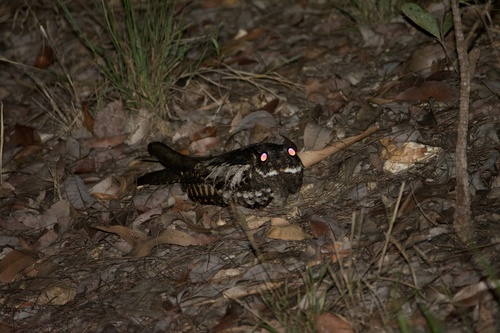 Large-tailed Nightjar
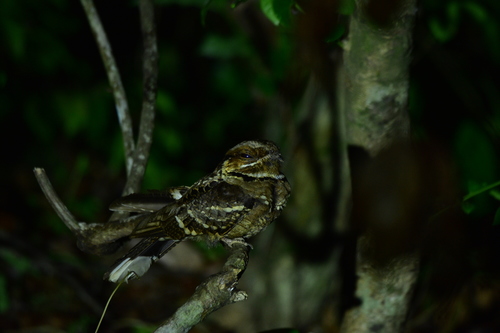 Jerdon's Nightjar
In breve
Il segno di campo più affidabile per separare il Large-tailed Nightjar dal Jerdon's Nightjar è la coda: il Large-tailed Nightjar ha una coda visibilmente più lunga e più ampia con macchie bianche prominenti sulle piume esterne (soprattutto in volo), mentre il Jerdon's Nightjar ha una coda notevolmente più corta con meno bianco esteso. In volo, i maschi adulti di Large-tailed Nightjars mostrano grandi macchie bianche su entrambe le primarie e le piume esterne della coda, mentre i maschi di Jerdon's Nightjar hanno una macchia bianca sull'ala ma una coda più corta e meno appariscente. In posizione di riposo, il Large-tailed Nightjar appare più robusto e con una coda più lunga, con una corona pallida e un audace motivo scapolare, mentre il Jerdon's Nightjar è più compatto, con una corona uniforme e un collare nerastro. Le vocalizzazioni sono anche molto diverse e possono essere diagnostiche se udite. Entrambe le specie sono criptiche e possono essere difficili da separare solo in base al piumaggio, specialmente le femmine e gli immaturi, ma i segni strutturali e di volo sono fondamentali.
Consigli di identificazione
- Lunghezza e struttura della coda: Il Large-tailed Nightjar ha una coda molto più lunga e più ampia rispetto al Jerdon's Nightjar. Questo è particolarmente evidente in volo o quando la coda è aperta; usa questo come primo controllo in tutte le età e sessi.
- Motivo della coda in volo: Il maschio adulto di Large-tailed Nightjar mostra grandi macchie bianche sulle piume esterne della coda, mentre la coda del Jerdon's Nightjar è più corta con meno bianco. Le femmine di entrambe le specie hanno meno bianco, ma la differenza di lunghezza della coda rimane affidabile.
- Macchia primaria in volo: I maschi di Large-tailed Nightjar hanno grandi macchie bianche sulle primarie, visibili come lampi audaci in volo. I maschi di Jerdon's Nightjar hanno una macchia bianca sull'ala, ma è meno estesa e la coda più corta è un indizio.
- Corona e scapolari (in posizione di riposo): I maschi di Large-tailed Nightjar hanno una corona pallida con una striscia mediana scura e una fila prominente di scapolari neri con ampie frange color crema o biancastre. Il Jerdon's Nightjar ha una corona più uniforme con fini vermicolazioni e un collare nerastro, privo del contrasto audace delle scapolari.
- Gorget e collare: Entrambe le specie hanno un gorget bianco, ma quello del Jerdon's Nightjar è interrotto e bordato da un collare nerastro, mentre quello del Large-tailed Nightjar è messo in risalto da una corona più chiara e scapolari più contrastanti.
- Dimensioni del corpo e jizz: Il Large-tailed Nightjar è visibilmente più grande e robusto, con un profilo più allungato e una coda più lunga. Il Jerdon's Nightjar è più piccolo, più compatto e con una coda più corta. Questo è evidente sia in posizione di riposo che in volo.
- Dimorfismo sessuale: Le femmine di Large-tailed Nightjars sono più chiare e grigie con macchie sulle ali di color crema più piccole e macchie sulla coda meno vivaci, ma comunque con una coda più lunga rispetto alle femmine di Jerdon's Nightjar. Le femmine di Jerdon's sono più spente e con una coda più corta.
- Stile di volo: Entrambe le specie hanno un volo silenzioso e fluttuante, ma la coda più lunga del Large-tailed Nightjar dà un'impressione più languida e trainante, mentre il Jerdon's Nightjar appare più simile a una falena e compatto.
- Contesto dell'habitat: Se viste in foreste dense, piantagioni o terreni agricoli nel sud-est asiatico o in Australia, è più probabile che si tratti di un Large-tailed Nightjar. Nel sud dell'India o nello Sri Lanka, specialmente in boschi aperti o cespugli, è più probabile che si tratti di un Jerdon's Nightjar.
- Comportamento di riposo: Il Jerdon's Nightjar è meno probabile che venga trovato sulle strade di notte e può posarsi su cespugli, mentre il Large-tailed Nightjar è più spesso trovato a terra o su posatoi bassi.
- Vocalizzazioni: Il canto del Large-tailed Nightjar è un 'wroww' o 'wrrrog' profondo e monotono, mentre il Jerdon's Nightjar emette un richiamo simile a una tavola di legno battuta o un veloce 'ch-woo-woo.' Se senti il richiamo, questo è diagnostico.
- Gamma geografica: Se sei al di fuori del sud dell'India/Sri Lanka, è molto più probabile che si tratti di un Large-tailed Nightjar. Nelle aree di sovrapposizione (penisola indiana nord-orientale), fai affidamento sulla struttura e sulle vocalizzazioni.
- Trappole del piumaggio: Entrambe sono criptiche e possono apparire simili quando si riposano. Concentrati sulla lunghezza della coda, sulle macchie delle ali e sul motivo della corona per una separazione affidabile.
- Età/stagione: Non sono descritti modelli distintivi di ali superiori per giovanili/immaturi per nessuna delle due specie, quindi utilizza i segni degli adulti per tutte le età a meno che non siano disponibili ulteriori dettagli.
- Quando hai dubbi: Se l'uccello è silenzioso e parzialmente oscurato, dai priorità alla lunghezza e alla struttura della coda, poi cerca il contrasto della corona e delle scapolari, e infine considera l'habitat e la gamma.
Taglia
Il Large-tailed Nightjar è il più grande dei due, misurando circa 31,5–33 cm di lunghezza [wikipedia], mentre il Jerdon's Nightjar è più piccolo, attorno ai 26 cm [wikipedia]. Questa differenza di dimensioni è evidente sul campo, specialmente quando si confrontano uccelli in posizione di riposo o in volo fianco a fianco. Il Large-tailed Nightjar appare anche più robusto e con una coda più lunga, contribuendo a un profilo più allungato, mentre il Jerdon's Nightjar è più compatto e proporzionalmente con una coda più corta.
Piumaggio
- Giovanile/Immature/Primo inverno (dove noto): Non sono descritte differenze esplicite nei modelli delle ali giovanili/immaturi per queste specie nelle fonti, quindi ci si concentra sulle differenze basate su adulti e sessi.
- Maschi adulti: I maschi di Large-tailed Nightjar hanno una corona pallida con una striscia mediana scura, una fila prominente di piume scapolari nere bordate di ampie frange color crema o biancastre, una macchia bianca sulla gola e una lunga e ampia coda marrone con barre scure irregolari e grandi macchie bianche sulle primarie e sulle piume esterne della coda (soprattutto visibili in volo). I maschi di Jerdon's Nightjar hanno una corona più uniforme con fini vermicolazioni, un collare nerastro, una macchia bianca sull'ala e una coda più corta e barrata con meno bianco esteso. Entrambe le specie hanno piumaggio criptico e variegato di colore marrone e crema, ma il Large-tailed Nightjar è complessivamente più audacemente contrassegnato.
- Femmine adulte: Le femmine di Large-tailed Nightjars sono più chiare e grigie rispetto ai maschi, con macchie sulle ali di color crema più piccole e macchie sulla coda meno vivaci, dando un aspetto più spento. Le femmine di Jerdon's Nightjars sono anch'esse criptiche e variegate, ma con una coda più corta e meno contrasto complessivo. Entrambe le specie hanno un gorget bianco, ma quello del Jerdon's è interrotto e il collare è nerastro.
- In volo: Il Large-tailed Nightjar mostra grandi macchie bianche sulle primarie e sulle piume esterne della coda (soprattutto nei maschi), mentre il Jerdon's Nightjar mostra una macchia bianca sull'ala ma una coda più corta con meno bianco. La lunghezza e il motivo della coda sono le caratteristiche più affidabili in volo.
Comportamento
Entrambe le specie sono notturne e altamente criptiche, riposando a terra durante il giorno e facendo affidamento sul camuffamento. Il Large-tailed Nightjar è più probabile che venga trovato in foreste secondarie, bordi forestali, piantagioni e persino aree agricole, a volte posandosi in siti aperti o semi-aperti. Il Jerdon's Nightjar preferisce boschi aperti, cespugli e coltivazioni, ma è meno probabile che si riposi sulle strade di notte (a differenza di alcuni altri nightjar), spesso posandosi su cespugli e chiamando dagli alberi. Entrambe le specie si nutrono di insetti notturni, ma l'abitudine del Jerdon's Nightjar di posarsi fuori terra di notte può essere un sottile indizio comportamentale.
Habitat
Il Large-tailed Nightjar ha un'area di distribuzione molto più ampia, che si estende dalle pendici meridionali dell'Himalaya attraverso il sud-est asiatico fino all'Australia settentrionale, ed è trovato in una varietà di foreste umide di pianura, mangrovie e montane, così come bordi forestali, piantagioni e persino paesaggi agricoli. Il Jerdon's Nightjar è ristretto al sud dell'India e allo Sri Lanka, preferendo boschi aperti, cespugli e aree coltivate. Se ti trovi nel range principale di una specie, questo può aiutare a restringere l'identificazione, ma c'è una certa sovrapposizione nel nord-est dell'India. Entrambe le specie sono nidiacee a terra, depongono uova direttamente sulla lettiera di foglie o sul terreno nudo.
Voce
Le vocalizzazioni sono altamente diagnostiche. Il Large-tailed Nightjar emette un canto territoriale distintivo e monotono (spesso descritto come un 'wroww' ripetuto o un veloce 'wrrrog/grrrog'), con note profonde e a bassa frequenza e occasionali richiami di grugnito. Il Jerdon's Nightjar, al contrario, ha un richiamo unico paragonato a una tavola di legno battuta, con ogni nota che termina in un tremolio; un altro richiamo è un veloce 'ch-woo-woo' ripetitivo e un gracidare simile a una rana. Se senti il richiamo, la separazione è semplice.
Large-tailed Nightjar · Jerdon's Nightjar · I miei uccelli difficili