

large hawk-cuckoo vs northern hawk-cuckoo
Hierococcyx sparverioides versus Hierococcyx hyperythrus
Jogue um quiz com large hawk-cuckoo e northern hawk-cuckoo
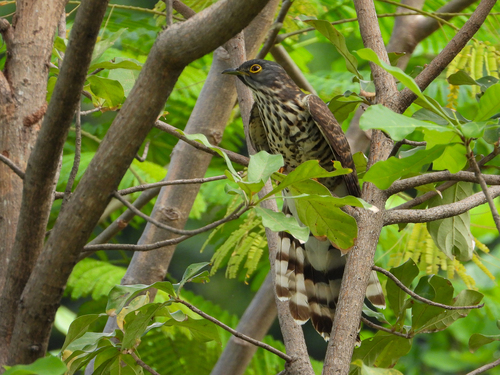 large hawk-cuckoo
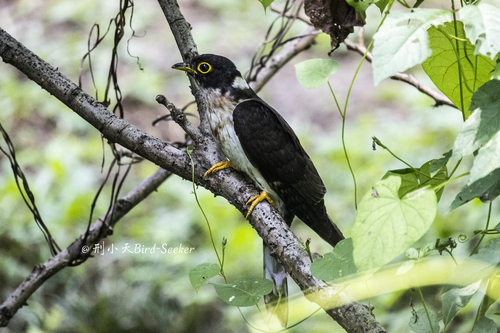 northern hawk-cuckoo
Em resumo
A marca de campo mais confiável entre o large hawk-cuckoo e o northern hawk-cuckoo é a presença de uma distinta mancha branca na asa dobrada do northern hawk-cuckoo, visível quando empoleirado e em voo, especialmente em juvenis e subadultos. O large hawk-cuckoo não possui essa mancha branca na asa. O juvenil do northern hawk-cuckoo também apresenta uma coroa marrom com manchas brancas na nuca e partes inferiores estriadas, enquanto os juvenis do large hawk-cuckoo são menos bem descritos, mas não mostram essa combinação. Estruturalmente, o northern hawk-cuckoo é ligeiramente menor e mais esbelto, mas isso é sutil no campo. Ambas as espécies podem ser confundidas devido à forma e coloração semelhantes, mas a atenção cuidadosa ao padrão da asa e à cor das partes inferiores as separará.
Dicas de identificação
- Mancha branca na asa (apenas Northern): Procure por uma mancha branca ousada na asa dobrada quando empoleirado, ou como um flash em voo. Isso está presente em todas as idades do northern hawk-cuckoo e ausente no large hawk-cuckoo.
- Padrão juvenil (Northern): O juvenil do northern hawk-cuckoo mostra uma coroa marrom com manchas brancas na nuca, estrias marrons/rufas nas costas e partes inferiores brancas com estrias e manchas pretas. Os juvenis do large hawk-cuckoo não são descritos com essas características.
- Partes inferiores rufas (Northern): Adultos e subadultos do northern hawk-cuckoo têm partes inferiores extensas de vermelho enferrujado, misturando-se a partir das bochechas inferiores. O large hawk-cuckoo não possui essa coloração rufa geral.
- Mancha preta no queixo (apenas Large): O adulto do large hawk-cuckoo tem uma distinta mancha preta no queixo, que não está presente no northern hawk-cuckoo de qualquer idade.
- Padrão da cauda: Ambos têm caudas listradas, mas a cauda do northern hawk-cuckoo termina com uma grande faixa subterminal preta e uma ponta rufa, enquanto o padrão da cauda do large hawk-cuckoo é menos distintamente descrito aqui.
- Anel ocular e cor da íris: O northern hawk-cuckoo tem um anel ocular amarelo com cor de íris variável (laranja, marrom ou branca), mas isso não é descrito para o large hawk-cuckoo e pode não ser confiável à distância.
- Cor do bico: O northern hawk-cuckoo tem uma base amarela no bico com uma ponta preta; detalhes do bico para o large hawk-cuckoo não são fornecidos.
- Coberturas da cauda inferior: O northern hawk-cuckoo mostra coberturas da cauda inferior brancas; isso não é especificado para o large hawk-cuckoo.
- Tamanho: O large hawk-cuckoo é um pouco maior e mais pesado, mas isso é sutil e não sempre útil, a menos que ambos sejam vistos juntos.
- Altura de empoleiramento: O northern hawk-cuckoo é mais propenso a ser visto empoleirado alto na copa das árvores, frequentemente tornando a observação desafiadora.
- Distribuição: No extremo leste da Ásia (Japão, Coreia, leste da China), o northern hawk-cuckoo é mais provável, mas o large hawk-cuckoo pode se sobrepor no leste da Ásia. Use a distribuição apenas como contexto de apoio.
- Voz: O chamado do large hawk-cuckoo é alto e repetitivo, mas não sobe em crescendo. A canção do northern hawk-cuckoo é diferente, mas não é descrita aqui; use com cautela.
- Estação: Ambos são migratórios, mas o northern hawk-cuckoo inverna mais ao sul (Borneu). O tempo pode ajudar, mas não é diagnóstico por si só.
- Confusão com o common hawk-cuckoo: O large hawk-cuckoo é maior e tem uma mancha preta no queixo, enquanto o northern hawk-cuckoo é mais rufoso e tem a mancha branca na asa.
- Quando em dúvida: A combinação de mancha branca na asa (Northern), mancha preta no queixo (Large) e cor das partes inferiores são as marcas de campo mais confiáveis. Os juvenis são melhor separados pela mancha branca na asa e partes inferiores estriadas no northern.
Tamanho
O northern hawk-cuckoo é um pouco menor e mais leve que o large hawk-cuckoo, com uma massa corporal registrada de 120g. Embora as medidas exatas para o large hawk-cuckoo não sejam fornecidas aqui, ele é descrito como 'um pouco maior' que seus congêneres. No campo, essa diferença é sutil e nem sempre confiável, a menos que ambas as espécies sejam vistas juntas. Ambos têm um perfil esbelto e de cauda longa, típico dos hawk-cuckoos.
Plumagem
- Juvenil e Subadulto do Northern Hawk-Cuckoo: Mostra uma proeminente mancha branca nas penas de voo internas, visível como um painel na asa dobrada quando empoleirado e em voo. Os juvenis têm uma coroa marrom com manchas brancas na nuca, estrias marrons e rufas nas costas, e partes inferiores brancas com estrias e manchas pretas. A cauda é listrada e com ponta rufa. Subadultos mantêm a mancha branca na asa e têm estrias e manchas pretas irregulares nas flancos e no peito, com algum rufoso na parte inferior das costas.
- Adulto do Northern Hawk-Cuckoo: Cabeça, costas e asas cinza ardósia, partes inferiores vermelho enferrujado, garganta branca e queixo cinza, anel ocular amarelo e uma cobertura da cauda inferior branca. A mancha branca na asa permanece visível. A cauda é listrada com faixas pretas estreitas e faixas pálidas largas, terminando com uma grande faixa subterminal preta e ponta rufa.
- Large Hawk-Cuckoo (todas as idades): Não possui a mancha branca na asa. Os adultos têm uma mancha preta no queixo, que está ausente no northern hawk-cuckoo. As partes inferiores não são descritas como vermelho enferrujado, e a coloração geral é menos rufosa que a do northern hawk-cuckoo. A plumagem juvenil não é detalhada, mas não há menção de uma mancha branca na asa ou do padrão juvenil distinto do northern hawk-cuckoo.
- Contraste chave: A mancha branca na asa (apenas Northern), partes inferiores vermelho enferrujado (Northern) e mancha preta no queixo (apenas Large, adulto) são as características de plumagem mais diagnósticas.
Comportamento
O northern hawk-cuckoo é descrito como evasivo e tende a empoleirar-se alto nas copas das árvores altas, tornando difícil a observação direta. Ambas as espécies são parasitas de ninho e compartilham comportamento de voo e empoleiramento semelhante ao de gaviões. Não há menção de diferenças comportamentais no estilo de voo ou forrageamento que separariam de forma confiável no campo.
Habitat
O large hawk-cuckoo se reproduz ao longo do Himalaia e da Ásia temperada, estendendo-se até a Ásia Oriental, e inverna mais ao sul. O northern hawk-cuckoo é encontrado na China oriental, Coreia, extremo leste da Rússia e Japão, invernando em Borneu. Embora as distribuições se sobreponham no leste da Ásia, o northern hawk-cuckoo é considerado raro e mais evasivo, frequentemente em copas mais altas. O habitat por si só não é diagnóstico onde as distribuições se sobrepõem, mas o northern é mais provável em regiões do extremo leste e em empoleiramentos mais altos.
Voz
O large hawk-cuckoo emite chamados altos e repetitivos semelhantes ao common hawk-cuckoo, mas sem um crescendo ascendente. Nenhuma descrição vocal específica é fornecida para o northern hawk-cuckoo aqui, mas é notado que diferenças na canção foram parte da divisão taxonômica. No campo, vocalizações podem ajudar, mas sem uma descrição clara para o northern, isso não é um ponto de separação primário.
large hawk-cuckoo · northern hawk-cuckoo · Minhas aves difíceis