

Cuco Grande vs Cuco Ventrirrojo
Hierococcyx sparverioides frente a Hierococcyx hyperythrus
Juega un quiz con Cuco Grande y Cuco Ventrirrojo
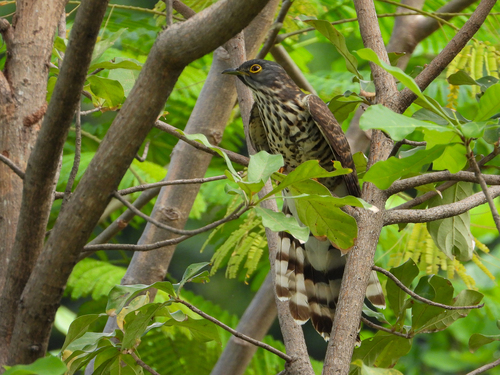 Cuco Grande
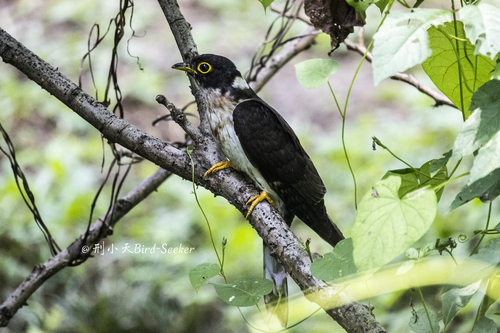 Cuco Ventrirrojo
En breve
La marca de campo más confiable entre el Cuco Grande y el Cuco Ventrirrojo es la presencia de una distintiva mancha blanca en el ala plegada del Cuco Ventrirrojo, visible cuando está posado y en vuelo, especialmente en juveniles y subadultos. El Cuco Grande carece completamente de esta mancha blanca en el ala. El juvenil Cuco Ventrirrojo también muestra una corona marrón con manchas blancas en la nuca y partes inferiores estriadas, mientras que los juveniles del Cuco Grande están menos bien descritos pero no muestran esta combinación. Estructuralmente, el Cuco Ventrirrojo es ligeramente más pequeño y esbelto, pero esto es sutil en el campo. Ambas especies pueden confundirse debido a su forma y coloración similares, pero prestar atención cuidadosa al patrón del ala y al color de las partes inferiores las separará.
Consejos de identificación
- Mancha blanca en el ala (solo Ventrirrojo): Busca una mancha blanca audaz en el ala plegada cuando está posado, o como un destello en vuelo. Esto está presente en todas las edades del Cuco Ventrirrojo y ausente en el Cuco Grande.
- Patrón juvenil (Ventrirrojo): El juvenil Cuco Ventrirrojo muestra una corona marrón con manchas blancas en la nuca, estrías marrones/rufas en la espalda, y partes inferiores blancas con estrías y manchas negras. Los juveniles del Cuco Grande no se describen con estas características.
- Partes inferiores rufas (Ventrirrojo): Los adultos y subadultos del Cuco Ventrirrojo tienen partes inferiores de un rojo oxidado extenso, que se mezclan desde las mejillas inferiores hacia abajo. El Cuco Grande carece de este lavado rufoso en general.
- Mancha negra en la barbilla (solo Grande): El adulto Cuco Grande tiene una mancha negra distinta en la barbilla, que no está presente en el Cuco Ventrirrojo de ninguna edad.
- Patrón de la cola: Ambos tienen colas con bandas, pero la cola del Cuco Ventrirrojo termina con una gran banda subterminal negra y una punta rufa, mientras que el patrón de la cola del Cuco Grande está menos descrito aquí.
- Anillo ocular y color del iris: El Cuco Ventrirrojo tiene un anillo ocular amarillo con color de iris variable (naranja, marrón o blanco), pero esto no se describe para el Cuco Grande y puede no ser confiable a distancia.
- Color del pico: El Cuco Ventrirrojo tiene una base amarilla en el pico con una punta negra; los detalles del pico para el Cuco Grande no se proporcionan.
- Cubiertas de la cola inferiores: El Cuco Ventrirrojo muestra cubiertas de la cola inferiores blancas; esto no se especifica para el Cuco Grande.
- Tamaño: El Cuco Grande es algo más grande y pesado, pero esto es sutil y no siempre útil a menos que ambas se vean juntas.
- Altura de posado: Es más probable que el Cuco Ventrirrojo se vea posado alto en el dosel, lo que a menudo dificulta la observación.
- Distribución: En el extremo oriental de Asia (Japón, Corea, este de China), es más probable encontrar al Cuco Ventrirrojo, pero el Cuco Grande puede superponerse en el este de Asia. Usa la distribución solo como contexto de apoyo.
- Voz: El llamado del Cuco Grande es fuerte y repetitivo pero no aumenta en crescendo. El canto del Cuco Ventrirrojo es diferente pero no se describe aquí; úsalo con precaución.
- Temporada: Ambas son migratorias, pero el Cuco Ventrirrojo inverna más al sur (Borneo). El momento puede ayudar pero no es diagnóstico por sí solo.
- Confusión con el Cuco Chikra: El Cuco Grande es más grande y tiene una mancha negra en la barbilla, mientras que el Cuco Ventrirrojo es más rufoso y tiene la mancha blanca en el ala.
- Cuando haya dudas: La combinación de la mancha blanca en el ala (Ventrirrojo), la mancha negra en la barbilla (Grande) y el color de las partes inferiores son las marcas de campo más confiables. Los juveniles se separan mejor por la mancha blanca en el ala y las partes inferiores estriadas en el Ventrirrojo.
Tamaño
El Cuco Ventrirrojo es algo más pequeño y ligero que el Cuco Grande, con una masa corporal registrada de 120g. Si bien no se proporcionan aquí medidas exactas para el Cuco Grande, se describe como 'algo más grande' que sus congéneres. En el campo, esta diferencia es sutil y no siempre confiable a menos que ambas especies se vean juntas. Ambos tienen un perfil esbelto y de cola larga típico de los cucos halcones.
Plumaje
- Juvenil y Subadulto Cuco Ventrirrojo: Muestra una prominente mancha blanca en las plumas de vuelo internas, visible como un panel en el ala plegada cuando está posado y en vuelo. Los juveniles tienen una corona marrón con manchas blancas en la nuca, estrías marrones y rufas en la espalda, y partes inferiores blancas con estrías y manchas negras. La cola es bandada y con punta rufa. Los subadultos retienen la mancha blanca en el ala y tienen estrías y manchas negras irregulares en los flancos y el pecho, con algo de rufoso en la parte baja de la espalda.
- Adulto Cuco Ventrirrojo: Cabeza, espalda y alas de color gris pizarra, partes inferiores de un rojo oxidado, garganta blanca y barbilla gris, anillo ocular amarillo y una cubierta de la cola inferior blanca. La mancha blanca en el ala sigue siendo visible. La cola es bandada con bandas negras estrechas y bandas pálidas anchas, terminando con una gran banda subterminal negra y punta rufa.
- Cuco Grande (todas las edades): Carece completamente de la mancha blanca en el ala. Los adultos tienen una mancha negra en la barbilla, que está ausente en el Cuco Ventrirrojo. Las partes inferiores no se describen como de un rojo oxidado, y la coloración general es menos rufosa que la del Cuco Ventrirrojo. El plumaje juvenil no se detalla, pero no se menciona una mancha blanca en el ala ni el patrón juvenil distintivo del Cuco Ventrirrojo.
- Contraste clave: La mancha blanca en el ala (solo Ventrirrojo), las partes inferiores de un rojo oxidado (Ventrirrojo) y la mancha negra en la barbilla (solo Grande, adulto) son las características de plumaje más diagnósticas.
Comportamiento
El Cuco Ventrirrojo se describe como esquivo y tiende a posarse alto en las copas de los árboles altos, lo que dificulta la observación directa. Ambas especies son parásitas de cría y comparten un comportamiento de vuelo y posado similar al de los halcones. No se menciona diferencias de comportamiento en el estilo de vuelo o forrajeo que separarían de manera confiable en el campo.
Hábitat
El Cuco Grande cría a lo largo del Himalaya y Asia templada, extendiéndose hacia el este de Asia, e inverna más al sur. El Cuco Ventrirrojo se encuentra en el este de China, Corea, el extremo oriental de Rusia y Japón, invernando en Borneo. Si bien las distribuciones se superponen en el este de Asia, el Cuco Ventrirrojo se considera raro y más esquivo, a menudo en copas más altas. El hábitat por sí solo no es diagnóstico donde las distribuciones se superponen, pero el Ventrirrojo es más probable en regiones del extremo oriental y en posaderos más altos.
Voz
El Cuco Grande emite llamados fuertes y repetitivos similares al Cuco Chikra pero sin un crescendo ascendente. No se proporciona aquí una descripción vocal específica para el Cuco Ventrirrojo, pero se señala que las diferencias en el canto fueron parte de la división taxonómica. En el campo, las vocalizaciones pueden ayudar, pero sin una descripción clara para el Ventrirrojo, este no es un punto de separación principal.