

hartlaub's gull vs garajau-de-bico-amarelo
Chroicocephalus hartlaubii versus Thalasseus bergii
Jogue um quiz com hartlaub's gull e garajau-de-bico-amarelo
 hartlaub's gull
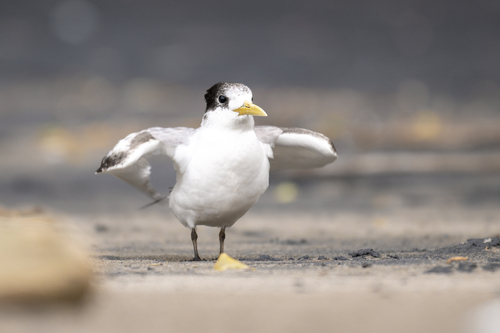 garajau-de-bico-amarelo
Em resumo
A marca de campo mais confiável para separar o hartlaub's gull do garajau-de-bico-amarelo é a estrutura geral e o bico: o hartlaub's gull é uma gaivota compacta e pequena com um bico vermelho escuro e esbelto, enquanto o garajau-de-bico-amarelo é muito maior e com asas mais longas, com um bico longo, reto e amarelo e uma crista negra desgrenhada. Os juvenis de hartlaub's gull apresentam uma faixa marrom nas asas e não têm uma faixa preta na cauda, enquanto os juvenis de garajau-de-bico-amarelo têm uma asa superior variegada com barras escuras e uma barra escura nas penas de voo internas. Em voo, as longas e pontudas asas do garajau e a cauda profundamente bifurcada contrastam com as asas mais largas e a cauda mais curta da gaivota. O hartlaub's adulto tem a cabeça branca com um capuz fraco durante a reprodução, enquanto o garajau tem uma testa branca e uma crista preta. Essas espécies raramente se confundem, exceto em locais costeiros, mas aves imaturas em voo podem confundir até mesmo observadores experientes.
Dicas de identificação
- Tamanho e forma: O garajau-de-bico-amarelo é muito maior e com asas mais longas do que o hartlaub's gull. Se a ave parecer longa, esbelta e pontuda em voo, é provável que seja um garajau.
- Cor e forma do bico: O hartlaub's gull tem um bico vermelho escuro e esbelto; o garajau-de-bico-amarelo tem um bico longo, reto e amarelo-esverdeado. A cor do bico é diagnóstica em todas as idades.
- Cor das pernas: O hartlaub's gull apresenta pernas vermelho-escuro; o garajau-de-bico-amarelo tem pernas pretas. Isso é melhor visto quando as aves estão empoleiradas.
- Padrão da cabeça (adulto em reprodução): O hartlaub's gull tem um capuz cinza-lavanda fraco (frequentemente mal visível), caso contrário, uma cabeça branca simples. O garajau-de-bico-amarelo tem uma testa branca e uma crista negra desgrenhada que se estende atrás da cabeça.
- Padrão da cabeça (não-reprodução/imutável): O hartlaub's gull permanece com a cabeça branca; a coroa do garajau-de-bico-amarelo torna-se branca com uma crista e máscara pretas salpicadas. A crista do garajau está sempre presente, mesmo que reduzida.
- Padrão das asas de juvenis/imaturos: O juvenil do hartlaub's gull apresenta uma faixa marrom nas asas e não tem uma faixa preta na cauda. O juvenil do garajau-de-bico-amarelo tem uma asa superior variegada com barras escuras e uma barra escura nas penas de voo internas. Procure por esses padrões em voo ou quando as asas estão abertas.
- Forma da cauda: O garajau-de-bico-amarelo tem uma cauda profundamente bifurcada, especialmente óbvia em voo. O hartlaub's gull tem uma cauda mais curta e quadrada.
- Forma das asas em voo: As asas do garajau são longas, estreitas e pontudas; as asas da gaivota são mais largas e arredondadas. O voo do garajau é mais leve e ágil.
- Cor dos olhos: O hartlaub's gull tem olhos escuros; a cor dos olhos não é uma marca chave para o garajau.
- Cor das partes superiores: O hartlaub's gull tem um dorso e asas superiores cinza-claro; as partes superiores do garajau-de-bico-amarelo são mais escuras, 'cinza-batalha'.
- Pontas das asas: Ambos têm pontas de asas pretas, mas o hartlaub's gull mostra 'espelhos' brancos conspícuos (manchas) nas primárias, enquanto as pontas das asas do garajau são menos contrastantes.
- Habitat: O hartlaub's gull é frequentemente encontrado em áreas urbanas, lagoas e estuários, às vezes longe do mar. O garajau-de-bico-amarelo é estritamente costeiro ou marinho, raramente no interior.
- Comportamento: O hartlaub's gull é frequentemente visto se alimentando perto de pessoas, em telhados ou em parques. O garajau-de-bico-amarelo é mais propenso a ser visto voando sobre o mar ou descansando em bancos de areia.
- Vocalizações: Ambos são barulhentos, mas o chamado do hartlaub's gull é um 'kaaarrh' prolongado; o garajau-de-bico-amarelo emite um 'kerrak' mais agudo e outros chamados abruptos. Ouça a qualidade do chamado se visto de forma ruim.
- Estrutura do bando: O hartlaub's gull forma bandos densos e barulhentos em ambientes urbanos e costeiros. Os bandos de garajau-de-bico-amarelo são mais propensos a serem encontrados em praias ou ilhas, frequentemente misturados com outros garajaus.
Tamanho
O hartlaub's gull é muito menor: 37–39 cm de comprimento, envergadura de 89–92 cm, peso de 235–340 g [wikipedia]. O garajau-de-bico-amarelo é substancialmente maior: 46–49 cm de comprimento, envergadura de 125–130 cm, peso de 325–397 g [wikipedia]. As asas e o corpo mais longos do garajau são óbvios em comparação direta, e ele parece mais volumoso e mais alongado, especialmente em voo. O hartlaub's é uma gaivota pequena e compacta, enquanto o garajau é uma grande ave marinha esguia.
Plumagem
As aves juvenis e imaturas são mais facilmente separadas por seus padrões de asas e cauda. O juvenil do hartlaub's gull apresenta uma faixa marrom nas asas, não tem uma faixa terminal preta na cauda e tem uma cabeça branca; suas asas são menos escuras em geral do que os garajaus da mesma idade. O juvenil do garajau-de-bico-amarelo tem uma asa superior fortemente variegada com barras escuras e uma barra escura distinta nas penas de voo internas, e seu padrão de cabeça é semelhante ao adulto de inverno (branco com uma máscara e crista pretas). Nos adultos, o hartlaub's gull é principalmente branco com um dorso e asas superiores cinza-claro, pontas de asas pretas com 'espelhos' brancos, e um capuz cinza-lavanda fraco durante a reprodução; fora da reprodução, a cabeça é branca simples. Os adultos do garajau-de-bico-amarelo têm uma testa e partes inferiores brancas, partes superiores cinza mais escuras, e uma crista negra desgrenhada; na não-reprodução, a coroa torna-se branca com uma crista e máscara pretas salpicadas. O bico do garajau é sempre amarelo-esverdeado, nunca vermelho. Ambas as espécies têm pontas de asas pretas, mas as do hartlaub's são mais compactas e mostram espelhos brancos, enquanto as asas do garajau são mais longas e pontudas.
Comportamento
O hartlaub's gull é altamente gregário, especialmente no inverno, e é frequentemente visto em bandos barulhentos em áreas urbanas, estuários e praias. É um animal de rapina, frequentemente associando-se com humanos e se alimentando de restos. O garajau-de-bico-amarelo também é colonial, especialmente em locais de reprodução, mas é menos provável de ser encontrado no interior ou em ambientes urbanos. O garajau é mais aéreo, frequentemente visto voando baixo sobre o mar ou mergulhando para pescar, e raramente se alimenta em lixões ou lagoas urbanas. Em voo, o garajau é rápido e leve com asas longas e pontudas, enquanto a gaivota tem um voo mais estável e direto.
Habitat
O hartlaub's gull é residente ao longo da costa atlântica da África do Sul e Namíbia, fortemente associado a habitats costeiros e estuarinos, mas frequentemente encontrado em áreas urbanas, lagoas e até mesmo em locais interiores perto da costa. Raramente é visto longe do mar. O garajau-de-bico-amarelo se reproduz em costas e ilhas em todo o Velho Mundo tropical e subtropical, dispersando-se amplamente após a reprodução. É estritamente marinho ou costeiro, raramente aventurando-se para o interior, e é tipicamente visto ao longo de praias, bancos de areia e ilhas offshore. A sobreposição é mais provável em praias costeiras ou estuários.
Voz
Ambas as espécies são barulhentas, mas seus chamados diferem. O hartlaub's gull emite um 'kaaarrh' rouco, semelhante ao de um corvo, especialmente em colônias e locais urbanos. O chamado principal do garajau-de-bico-amarelo é um 'kerrak' alto e rouco, semelhante ao de um corvo, com chamados adicionais 'korrkorrkorr' e 'wep wep' no ninho ou em voo. Embora ambos possam soar ásperos e semelhantes a gaivotas, os chamados do garajau são geralmente mais agudos e abruptos, enquanto os da gaivota são mais prolongados.
hartlaub's gull · garajau-de-bico-amarelo · Minhas aves difíceis