

Motmot

アフリカギンカモメ 対 オオアジサシ

Chroicocephalus hartlaubii 対 Thalasseus bergii

アフリカギンカモメとオオアジサシのクイズ

アフリカギンカモメ (Chroicocephalus hartlaubii) アフリカギンカモメ
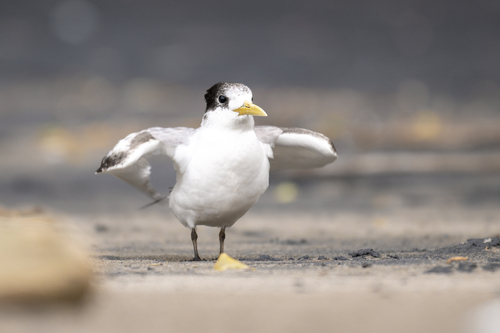
オオアジサシ (Thalasseus bergii) オオアジサシ

メディア

読み込み中…

要点

The most reliable field mark to separate Hartlaub's Gull from Great Crested Tern is the overall structure and bill: Hartlaub's Gull is a compact, small gull with a dark red, slender bill, while Great Crested Tern is much larger and longer-winged, with a long, straight, yellow bill and a shaggy black crest. Juvenile Hartlaub's Gulls show a brown wing band and lack a black tail band, while juvenile Great Crested Terns have a variegated upperwing with dark bars and a dark bar on the inner flight feathers. In flight, the tern's long, pointed wings and deeply forked tail contrast with the gull's broader wings and shorter tail. Adult Hartlaub's is white-headed with a faint hood in breeding, while the tern has a white forehead and black crest. These species rarely overlap in confusion except at coastal sites, but immature birds in flight can trip up even experienced birders.

識別のコツ

  1. Size and shape: Great Crested Tern is much larger and longer-winged than Hartlaub's Gull. If the bird looks long, slim, and pointed in flight, it's likely a tern.
  2. Bill color and shape: Hartlaub's Gull has a dark red, slender bill; Great Crested Tern has a long, straight, yellowish-green bill. Bill color is diagnostic at all ages.
  3. Leg color: Hartlaub's Gull shows deep red legs; Great Crested Tern has black legs. This is best seen when birds are perched.
  4. Head pattern (adult breeding): Hartlaub's Gull has a faint lavender-grey hood (often barely visible), otherwise a plain white head. Great Crested Tern has a white forehead and a shaggy black crest extending behind the head.
  5. Head pattern (non-breeding/immature): Hartlaub's Gull remains white-headed; Great Crested Tern's crown becomes white with a peppered black crest and mask. The tern's crest is always present, even if reduced.
  6. Juvenile/immature wing pattern: Juvenile Hartlaub's Gull shows a brown band across the wings and lacks a black tail band. Juvenile Great Crested Tern has a variegated upperwing with dark bars and a dark bar on the inner flight feathers. Look for these patterns in flight or when wings are spread.
  7. Tail shape: Great Crested Tern has a deeply forked tail, especially obvious in flight. Hartlaub's Gull has a shorter, squarer tail.
  8. Wing shape in flight: Tern's wings are long, narrow, and pointed; gull's wings are broader and more rounded. Tern's flight is more buoyant and agile.
  9. Eye color: Hartlaub's Gull has dark eyes; eye color is not a key mark for the tern.
  10. Upperparts color: Hartlaub's Gull has a pale grey back and upperwings; Great Crested Tern's upperparts are darker, 'battleship-grey'.
  11. Wingtips: Both have black wingtips, but Hartlaub's Gull shows conspicuous white 'mirrors' (spots) in the primaries, while the tern's wingtips are less contrasting.
  12. Habitat: Hartlaub's Gull is often found in urban areas, ponds, and estuaries, sometimes far from the sea. Great Crested Tern is strictly coastal or marine, rarely inland.
  13. Behavior: Hartlaub's Gull is often seen scavenging near people, on rooftops, or in parks. Great Crested Tern is more likely to be seen flying over the sea or resting on sandbars.
  14. Vocalizations: Both are noisy, but Hartlaub's Gull's call is a drawn-out 'kaaarrh'; Great Crested Tern gives a sharper 'kerrak' and other abrupt calls. Listen for call quality if seen poorly.
  15. Flock structure: Hartlaub's Gull forms dense, noisy flocks in urban and coastal settings. Great Crested Tern flocks are more likely on beaches or islands, often mixed with other terns.

大きさ

Hartlaub's Gull is much smaller: 37–39 cm long, wingspan 89–92 cm, weight 235–340 g [wikipedia]. Great Crested Tern is substantially larger: 46–49 cm long, wingspan 125–130 cm, weight 325–397 g [wikipedia]. The tern's longer wings and body are obvious in direct comparison, and it appears bulkier and more elongated, especially in flight. Hartlaub's is a small, compact gull, while the tern is a large, rangy seabird.

羽色

Juvenile and immature birds are most easily separated by their wing and tail patterns. Juvenile Hartlaub's Gull shows a brown band across the wings, lacks a black terminal tail band, and has a white head; its wings are less dark overall than same-age terns. Juvenile Great Crested Tern has a strongly variegated upperwing with dark bars and a distinct dark bar on the inner flight feathers, and its head pattern is similar to winter adult (white with a black mask and crest). In adults, Hartlaub's Gull is mainly white with a pale grey back and upperwings, black wingtips with white 'mirrors', and a faint lavender-grey hood in breeding; outside breeding, the head is plain white. Great Crested Tern adults have a white forehead and underparts, darker grey upperparts, and a shaggy black crest; in non-breeding, the crown becomes white with a peppered black crest and mask. The tern's bill is always yellowish-green, never red. Both species have black wingtips, but the gull's are more compact and show white mirrors, while the tern's wings are longer and more pointed.

行動

Hartlaub's Gull is highly gregarious, especially in winter, and is often seen in noisy flocks around urban areas, estuaries, and beaches. It is a scavenger, frequently associating with humans and feeding on scraps. Great Crested Tern is also colonial, especially at breeding sites, but is less likely to be found inland or in urban settings. The tern is more aerial, often seen flying low over the sea or plunge-diving for fish, and rarely scavenges at dumps or urban ponds. In flight, the tern is fast and buoyant with long, pointed wings, while the gull has a steadier, more direct flight.

生息環境

Hartlaub's Gull is a resident along the Atlantic coast of South Africa and Namibia, strongly associated with coastal and estuarine habitats but often found in urban areas, ponds, and even inland sites near the coast. It is rarely seen far out at sea. Great Crested Tern breeds on coastlines and islands throughout the tropical and subtropical Old World, dispersing widely after breeding. It is strictly marine or coastal, rarely venturing inland, and is typically seen along beaches, sandbars, and offshore islands. Overlap is most likely at coastal beaches or estuaries.

声

Both species are noisy, but their calls differ. Hartlaub's Gull gives a raucous, crow-like 'kaaarrh', especially at colonies and urban roosts. Great Crested Tern's main call is a loud, raucous, crow-like 'kerrak', with additional 'korrkorrkorr' and 'wep wep' calls at the nest or in flight. While both can sound harsh and gull-like, the tern's calls are generally sharper and more abrupt, while the gull's are more drawn-out.

より良い説明を送る

比較と同じ項目を使ってください。文章はすぐに公開されます。

The most reliable field mark to separate Hartlaub's Gull from Great Crested Tern is the overall structure and bill: Hartlaub's Gull is a compact, small gull with a dark red, slender bill, while Great Crested Tern is much larger and longer-winged, with a long, straight, yellow bill and a shaggy black crest. Juvenile Hartlaub's Gulls show a brown wing band and lack a black tail band, while juvenile Great Crested Terns have a variegated upperwing with dark bars and a dark bar on the inner flight feathers. In flight, the tern's long, pointed wings and deeply forked tail contrast with the gull's broader wings and shorter tail. Adult Hartlaub's is white-headed with a faint hood in breeding, while the tern has a white forehead and black crest. These species rarely overlap in confusion except at coastal sites, but immature birds in flight can trip up even experienced birders.

  1. Size and shape: Great Crested Tern is much larger and longer-winged than Hartlaub's Gull. If the bird looks long, slim, and pointed in flight, it's likely a tern.
  2. Bill color and shape: Hartlaub's Gull has a dark red, slender bill; Great Crested Tern has a long, straight, yellowish-green bill. Bill color is diagnostic at all ages.
  3. Leg color: Hartlaub's Gull shows deep red legs; Great Crested Tern has black legs. This is best seen when birds are perched.
  4. Head pattern (adult breeding): Hartlaub's Gull has a faint lavender-grey hood (often barely visible), otherwise a plain white head. Great Crested Tern has a white forehead and a shaggy black crest extending behind the head.
  5. Head pattern (non-breeding/immature): Hartlaub's Gull remains white-headed; Great Crested Tern's crown becomes white with a peppered black crest and mask. The tern's crest is always present, even if reduced.
  6. Juvenile/immature wing pattern: Juvenile Hartlaub's Gull shows a brown band across the wings and lacks a black tail band. Juvenile Great Crested Tern has a variegated upperwing with dark bars and a dark bar on the inner flight feathers. Look for these patterns in flight or when wings are spread.
  7. Tail shape: Great Crested Tern has a deeply forked tail, especially obvious in flight. Hartlaub's Gull has a shorter, squarer tail.
  8. Wing shape in flight: Tern's wings are long, narrow, and pointed; gull's wings are broader and more rounded. Tern's flight is more buoyant and agile.
  9. Eye color: Hartlaub's Gull has dark eyes; eye color is not a key mark for the tern.
  10. Upperparts color: Hartlaub's Gull has a pale grey back and upperwings; Great Crested Tern's upperparts are darker, 'battleship-grey'.
  11. Wingtips: Both have black wingtips, but Hartlaub's Gull shows conspicuous white 'mirrors' (spots) in the primaries, while the tern's wingtips are less contrasting.
  12. Habitat: Hartlaub's Gull is often found in urban areas, ponds, and estuaries, sometimes far from the sea. Great Crested Tern is strictly coastal or marine, rarely inland.
  13. Behavior: Hartlaub's Gull is often seen scavenging near people, on rooftops, or in parks. Great Crested Tern is more likely to be seen flying over the sea or resting on sandbars.
  14. Vocalizations: Both are noisy, but Hartlaub's Gull's call is a drawn-out 'kaaarrh'; Great Crested Tern gives a sharper 'kerrak' and other abrupt calls. Listen for call quality if seen poorly.
  15. Flock structure: Hartlaub's Gull forms dense, noisy flocks in urban and coastal settings. Great Crested Tern flocks are more likely on beaches or islands, often mixed with other terns.

Hartlaub's Gull is much smaller: 37–39 cm long, wingspan 89–92 cm, weight 235–340 g [wikipedia]. Great Crested Tern is substantially larger: 46–49 cm long, wingspan 125–130 cm, weight 325–397 g [wikipedia]. The tern's longer wings and body are obvious in direct comparison, and it appears bulkier and more elongated, especially in flight. Hartlaub's is a small, compact gull, while the tern is a large, rangy seabird.

Juvenile and immature birds are most easily separated by their wing and tail patterns. Juvenile Hartlaub's Gull shows a brown band across the wings, lacks a black terminal tail band, and has a white head; its wings are less dark overall than same-age terns. Juvenile Great Crested Tern has a strongly variegated upperwing with dark bars and a distinct dark bar on the inner flight feathers, and its head pattern is similar to winter adult (white with a black mask and crest). In adults, Hartlaub's Gull is mainly white with a pale grey back and upperwings, black wingtips with white 'mirrors', and a faint lavender-grey hood in breeding; outside breeding, the head is plain white. Great Crested Tern adults have a white forehead and underparts, darker grey upperparts, and a shaggy black crest; in non-breeding, the crown becomes white with a peppered black crest and mask. The tern's bill is always yellowish-green, never red. Both species have black wingtips, but the gull's are more compact and show white mirrors, while the tern's wings are longer and more pointed.

Hartlaub's Gull is highly gregarious, especially in winter, and is often seen in noisy flocks around urban areas, estuaries, and beaches. It is a scavenger, frequently associating with humans and feeding on scraps. Great Crested Tern is also colonial, especially at breeding sites, but is less likely to be found inland or in urban settings. The tern is more aerial, often seen flying low over the sea or plunge-diving for fish, and rarely scavenges at dumps or urban ponds. In flight, the tern is fast and buoyant with long, pointed wings, while the gull has a steadier, more direct flight.

Hartlaub's Gull is a resident along the Atlantic coast of South Africa and Namibia, strongly associated with coastal and estuarine habitats but often found in urban areas, ponds, and even inland sites near the coast. It is rarely seen far out at sea. Great Crested Tern breeds on coastlines and islands throughout the tropical and subtropical Old World, dispersing widely after breeding. It is strictly marine or coastal, rarely venturing inland, and is typically seen along beaches, sandbars, and offshore islands. Overlap is most likely at coastal beaches or estuaries.

Both species are noisy, but their calls differ. Hartlaub's Gull gives a raucous, crow-like 'kaaarrh', especially at colonies and urban roosts. Great Crested Tern's main call is a loud, raucous, crow-like 'kerrak', with additional 'korrkorrkorr' and 'wep wep' calls at the nest or in flight. While both can sound harsh and gull-like, the tern's calls are generally sharper and more abrupt, while the gull's are more drawn-out.

変更を破棄しますか?

保存していない編集があります。今離れると失われます。

アフリカギンカモメ · オオアジサシ · 苦手な鳥