

Hartlaub's Gull vs Great Crested Tern
Chroicocephalus hartlaubii contro Thalasseus bergii
Fai un quiz con Hartlaub's Gull e Great Crested Tern
 Hartlaub's Gull
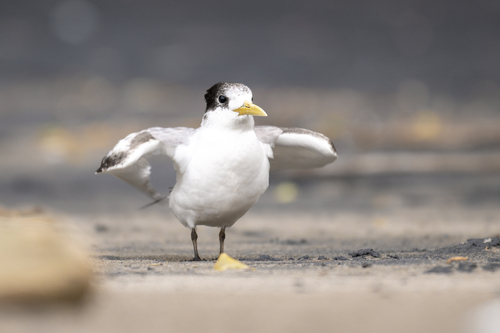 Great Crested Tern
In breve
Il segno di campo più affidabile per separare Hartlaub's Gull da Great Crested Tern è la struttura complessiva e il becco: Hartlaub's Gull è un gabbiano compatto e piccolo con un becco sottile di un rosso scuro, mentre Great Crested Tern è molto più grande e con ali più lunghe, con un becco lungo, dritto e giallo e una cresta nera e arruffata. Gli Hartlaub's Gull juvenili mostrano una banda alare marrone e mancano di una banda nera sulla coda, mentre i Great Crested Tern juvenili hanno un'ala superiore variegata con barre scure e una barra scura sulle piume di volo interne. In volo, le ali lunghe e appuntite del gabbiano e la coda profondamente biforcuta contrastano con le ali più larghe e la coda più corta del gabbiano. L'Hartlaub's adulto ha la testa bianca con un leggero cappuccio in riproduzione, mentre il gabbiano ha una fronte bianca e una cresta nera. Queste specie raramente si sovrappongono in confusione, tranne che in siti costieri, ma gli uccelli immaturi in volo possono ingannare anche i birdwatcher più esperti.
Consigli di identificazione
- Size and shape: Great Crested Tern è molto più grande e con ali più lunghe rispetto a Hartlaub's Gull. Se l'uccello appare lungo, snello e appuntito in volo, è probabile che sia un gabbiano.
- Bill color and shape: Hartlaub's Gull ha un becco sottile di un rosso scuro; Great Crested Tern ha un becco lungo, dritto e giallo-verde. Il colore del becco è diagnostico in tutte le età.
- Leg color: Hartlaub's Gull mostra zampe di un rosso profondo; Great Crested Tern ha zampe nere. Questo è meglio visibile quando gli uccelli sono in posa.
- Head pattern (adult breeding): Hartlaub's Gull ha un leggero cappuccio grigio-lavanda (spesso appena visibile), altrimenti ha una testa bianca semplice. Great Crested Tern ha una fronte bianca e una cresta nera arruffata che si estende dietro la testa.
- Head pattern (non-breeding/immature): Hartlaub's Gull rimane con la testa bianca; la corona di Great Crested Tern diventa bianca con una cresta e una maschera nera maculata. La cresta del gabbiano è sempre presente, anche se ridotta.
- Juvenile/immature wing pattern: Hartlaub's Gull juvenili mostrano una banda marrone sulle ali e mancano di una banda nera sulla coda. Great Crested Tern juvenili hanno un'ala superiore variegata con barre scure e una barra scura sulle piume di volo interne. Cerca questi modelli in volo o quando le ali sono spiegate.
- Tail shape: Great Crested Tern ha una coda profondamente biforcuta, particolarmente evidente in volo. Hartlaub's Gull ha una coda più corta e squadrata.
- Wing shape in flight: Le ali del gabbiano sono lunghe, strette e appuntite; le ali del gabbiano sono più larghe e più arrotondate. Il volo del gabbiano è più galleggiante e agile.
- Eye color: Hartlaub's Gull ha occhi scuri; il colore degli occhi non è un segno chiave per il gabbiano.
- Upperparts color: Hartlaub's Gull ha un dorso e ali superiori grigio chiaro; le parti superiori di Great Crested Tern sono più scure, 'grigio corazzato'.
- Wingtips: Entrambi hanno punte delle ali nere, ma Hartlaub's Gull mostra 'specchi' bianchi (macchie) nelle primarie, mentre le punte delle ali del gabbiano sono meno contrastanti.
- Habitat: Hartlaub's Gull si trova spesso in aree urbane, stagni e estuari, a volte lontano dal mare. Great Crested Tern è strettamente costiero o marino, raramente nell'entroterra.
- Behavior: Hartlaub's Gull è spesso visto a cercare cibo vicino alle persone, sui tetti o nei parchi. Great Crested Tern è più probabile che venga visto volare sopra il mare o riposare su banchi di sabbia.
- Vocalizations: Entrambi sono rumorosi, ma il richiamo di Hartlaub's Gull è un 'kaaarrh' prolungato; Great Crested Tern emette un 'kerrak' più acuto e altri richiami bruschi. Ascolta la qualità del richiamo se visti male.
- Flock structure: Hartlaub's Gull forma stormi densi e rumorosi in ambienti urbani e costieri. Great Crested Tern forma stormi più probabili su spiagge o isole, spesso mescolati con altri gabbiani.
Taglia
Hartlaub's Gull è molto più piccolo: 37–39 cm di lunghezza, apertura alare 89–92 cm, peso 235–340 g [wikipedia]. Great Crested Tern è sostanzialmente più grande: 46–49 cm di lunghezza, apertura alare 125–130 cm, peso 325–397 g [wikipedia]. Le ali e il corpo più lunghi del gabbiano sono evidenti in un confronto diretto, e appare più massiccio e allungato, specialmente in volo. Hartlaub's è un piccolo gabbiano compatto, mentre il gabbiano è un grande uccello marino slanciato.
Piumaggio
Gli uccelli juvenili e immaturi sono più facilmente separabili dai loro modelli di ali e coda. Hartlaub's Gull juvenili mostrano una banda marrone sulle ali, mancano di una banda terminale nera sulla coda e hanno una testa bianca; le loro ali sono complessivamente meno scure rispetto ai gabbiani della stessa età. Great Crested Tern juvenili hanno un'ala superiore fortemente variegata con barre scure e una barra scura distintiva sulle piume di volo interne, e il loro modello di testa è simile a quello degli adulti in inverno (bianco con una maschera e cresta nera). Negli adulti, Hartlaub's Gull è principalmente bianco con un dorso e ali superiori grigio chiaro, punte delle ali nere con 'specchi' bianchi, e un leggero cappuccio grigio-lavanda in riproduzione; al di fuori della riproduzione, la testa è bianca semplice. Gli adulti di Great Crested Tern hanno una fronte e parti inferiori bianche, parti superiori grigie più scure e una cresta nera arruffata; in non riproduzione, la corona diventa bianca con una cresta e una maschera nera maculata. Il becco del gabbiano è sempre giallo-verde, mai rosso. Entrambe le specie hanno punte delle ali nere, ma quelle del gabbiano sono più compatte e mostrano specchi bianchi, mentre le ali del gabbiano sono più lunghe e appuntite.
Comportamento
Hartlaub's Gull è altamente gregario, specialmente in inverno, ed è spesso visto in stormi rumorosi attorno ad aree urbane, estuari e spiagge. È un spazzino, frequentemente associato agli esseri umani e si nutre di avanzi. Great Crested Tern è anche coloniale, specialmente nei siti di riproduzione, ma è meno probabile trovarlo nell'entroterra o in ambienti urbani. Il gabbiano è più aereo, spesso visto volare basso sopra il mare o tuffandosi per pesci, e raramente cerca cibo in discariche o stagni urbani. In volo, il gabbiano è veloce e galleggiante con ali lunghe e appuntite, mentre il gabbiano ha un volo più stabile e diretto.
Habitat
Hartlaub's Gull è residente lungo la costa atlantica del Sudafrica e della Namibia, fortemente associato a habitat costieri ed estuarini ma spesso trovato in aree urbane, stagni e persino siti interni vicino alla costa. È raramente visto lontano in mare. Great Crested Tern nidifica lungo le coste e le isole in tutto il mondo tropicale e subtropicale, disperdendosi ampiamente dopo la riproduzione. È strettamente marino o costiero, raramente avventurandosi nell'entroterra, e viene tipicamente visto lungo spiagge, banchi di sabbia e isole al largo. La sovrapposizione è più probabile sulle spiagge costiere o negli estuari.
Voce
Entrambe le specie sono rumorose, ma i loro richiami differiscono. Hartlaub's Gull emette un 'kaaarrh' rauco, simile a un corvo, specialmente nelle colonie e nei posatoi urbani. Il richiamo principale di Great Crested Tern è un 'kerrak' forte e rauco, con richiami aggiuntivi 'korrkorrkorr' e 'wep wep' al nido o in volo. Anche se entrambi possono suonare aspri e simili a gabbiani, i richiami del gabbiano sono generalmente più acuti e bruschi, mentre quelli del gabbiano sono più prolungati.
Hartlaub's Gull · Great Crested Tern · I miei uccelli difficili