

balança-rabo-guianense vs garrinchão-de-barriga-vermelha
Polioptila guianensis versus Cantorchilus leucotis
Jogue um quiz com balança-rabo-guianense e garrinchão-de-barriga-vermelha
 balança-rabo-guianense
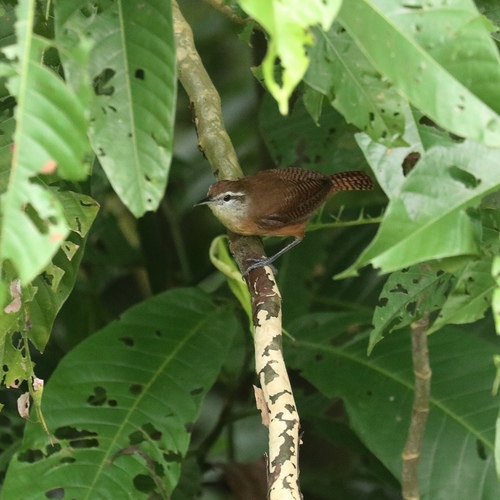 garrinchão-de-barriga-vermelha
Em resumo
A maneira mais confiável de separar o balança-rabo-guianense do garrinchão-de-barriga-vermelha é pelo tamanho e estrutura: o balança-rabo é um pássaro pequeno e esbelto, com uma cauda longa e fina e um bico delicado, enquanto o garrinchão é muito maior, mais robusto e tem uma cauda curta e fortemente barrada. Em plumagem, o balança-rabo é cinza azulado por cima, com um anel ocular branco quebrado e um padrão de cauda preto e branco impressionante, enquanto o garrinchão é rufo a marrom-cinza por cima, com um ventre amarelo ou canela e uma cauda barrada. Fêmeas e imaturos de ambas as espécies podem ser confusos, mas os tons de cinza mais claros do balança-rabo e o supercílio branco (nas fêmeas) contrastam com os marrons mais ricos e o amarelo do garrinchão. Ambas as espécies ocorrem juntas nas Guianas, então atenção cuidadosa à estrutura e ao padrão da cauda é essencial.
Dicas de identificação
- Tamanho e estrutura: O balança-rabo-guianense é pequeno e esbelto, com uma cauda longa e fina e um bico pequeno e delicado. O garrinchão-de-barriga-vermelha é muito maior, mais arredondado e tem uma cauda proporcionalmente mais curta e robusta, além de um bico mais pesado. Esta é a dica de campo mais rápida se visto bem.
- Padrão da cauda: O balança-rabo apresenta uma cauda preto e branco impressionante (penas centrais pretas, penas externas brancas), frequentemente aberta ou balançada. O garrinchão-de-barriga-vermelha tem uma cauda que é fortemente barrada em toda a sua extensão, nunca com o contraste nítido preto e branco do balança-rabo.
- Comportamento da cauda: Os balança-rabos frequentemente balançam e abrem suas caudas acima do corpo, enquanto os garrinchões levantam suas caudas, mas não as abrem da mesma forma.
- Plumagem acima: Os machos do balança-rabo são cinza azulado por cima; as fêmeas são cinza mais claro com um supercílio branco. Os garrinchões-de-barriga-vermelha são rufo a marrom-cinza por cima, sem tons azulados.
- Partes inferiores: O balança-rabo é branco por baixo (garganta e ventre), enquanto o garrinchão-de-barriga-vermelha tem um peito e ventre amarelo ou canela, muito mais quentes em tom.
- Marcas faciais: Os machos do balança-rabo têm um anel ocular branco quebrado; as fêmeas adicionam um supercílio branco. O garrinchão-de-barriga-vermelha tem um supercílio pálido variável, mas nunca um anel ocular completo; o rosto é mais padronizado e pode parecer acinzentado ou marronzado.
- Bico: O bico do balança-rabo é fino e semelhante a uma agulha, adequado para pegar pequenos insetos. O bico do garrinchão é mais pesado e ligeiramente curvado para baixo.
- Confusão juvenil: Jovens garrinchões-de-barriga-vermelha são mais apagados, mas ainda mostram uma cauda barrada e partes inferiores amarelas; imaturos do balança-rabo não são bem descritos, mas devem carecer de barrados e mostrar tons de cinza mais claros.
- Uso do habitat: O balança-rabo é frequentemente encontrado no dossel ou em ramos externos; o garrinchão está em emaranhados densos ou arbustos baixos.
- Comportamento: O balança-rabo é inquieto, acrobático e frequentemente encontrado em bandos mistos; o garrinchão é mais metódico, frequentemente em pares ou grupos familiares, e pode ser visto perto de seus ninhos globulares.
- Voz: Não descrita nas notas, então não confie em canto ou chamado para separação com base nesses dados.
- Estação e sexo: Ambas as espécies ocorrem durante todo o ano nas Guianas; as fêmeas do balança-rabo são mais claras com um supercílio branco, enquanto machos e fêmeas do garrinchão são semelhantes, exceto por pequenas diferenças de peso.
- Armadilhas: Em luz fraca, o cinza do balança-rabo pode parecer acastanhado, e o amarelo do garrinchão pode parecer mais claro. Sempre verifique o padrão da cauda e o tamanho antes de confiar apenas na cor.
- Visões de voo: O balança-rabo em voo é esbelto e balança sua cauda; o garrinchão é mais robusto e voa com um movimento mais saltitante e direto.
- Quando em dúvida: Se o pássaro é pequeno, acinzentado, com uma cauda preto e branco, é um balança-rabo. Se é maior, acastanhado, com uma cauda barrada e partes inferiores amarelas, é um garrinchão.
Tamanho
O balança-rabo-guianense é muito menor e mais leve (cerca de 6 g, 10–11 cm de comprimento) do que o garrinchão-de-barriga-vermelha (machos 18,5–22,8 g, fêmeas 16,0–19,5 g). O balança-rabo é um pássaro delicado, quase semelhante a um chapim, enquanto o garrinchão é visivelmente mais robusto e robusto, com um corpo mais arredondado e cauda proporcionalmente mais curta. No campo, a diferença de tamanho é impressionante se ambos forem vistos em rápida sucessão.
Plumagem
- Juvenis e imaturos: Filhotes de garrinchão-de-barriga-vermelha são mais apagados do que os adultos, com um peito amarelo mais claro, mas ainda mostram a cauda barrada característica e tons marrons gerais. Nenhuma plumagem juvenil específica é descrita para o balança-rabo-guianense, mas os pássaros jovens provavelmente são semelhantes aos adultos, apenas mais claros nas fêmeas.
- Adultos: Machos do balança-rabo-guianense são cinza azulado por cima, com um anel ocular branco quebrado, partes inferiores brancas e uma cauda com penas centrais pretas e penas externas brancas. As fêmeas são cinza mais claro e têm um supercílio branco. Os garrinchões-de-barriga-vermelha são rufo a marrom-cinza por cima, com um peito e ventre amarelo ou canela, e uma cauda fortemente barrada. Seus rostos são variáveis, mas variam de esbranquiçado a marrom-cinza, com um supercílio pálido. A barragem da cauda do garrinchão e as partes inferiores quentes nunca são igualadas pelo balança-rabo, enquanto a cauda nítida preto e branco do balança-rabo e os tons azulados estão ausentes no garrinchão.
Comportamento
O balança-rabo-guianense é tipicamente ativo e acrobático, forrageando por insetos na folhagem externa, frequentemente alto nas árvores e se movendo rapidamente com um comportamento inquieto e agitado. O garrinchão-de-barriga-vermelha é mais frequentemente visto mais baixo em emaranhados densos ou arbustos, movendo-se de forma metódica e frequentemente levantando sua cauda. Os garrinchões podem ser vistos em pares ou grupos familiares, às vezes perto de seus ninhos globulares distintos. Os balança-rabos são mais solitários ou em bandos de espécies mistas, raramente parando por muito tempo.
Habitat
Ambas as espécies se sobrepõem nas Guianas e no norte da Amazônia, mas suas preferências de microhabitat diferem. O balança-rabo-guianense prefere o dossel e as bordas de florestas úmidas, frequentemente na folhagem externa de árvores altas. O garrinchão-de-barriga-vermelha é mais provável de ser encontrado em sub-bosques densos, emaranhados de cipós ou bordas arbustivas, frequentemente perto de água ou clareiras na floresta. Se o pássaro estiver baixo em vegetação densa, é mais provável que seja um garrinchão; se estiver alto e exposto, o balança-rabo é favorecido.
balança-rabo-guianense · garrinchão-de-barriga-vermelha · Minhas aves difíceis