

Guianan Gnatcatcher vs Buff-breasted Wren
Polioptila guianensis contro Cantorchilus leucotis
Fai un quiz con Guianan Gnatcatcher e Buff-breasted Wren
 Guianan Gnatcatcher
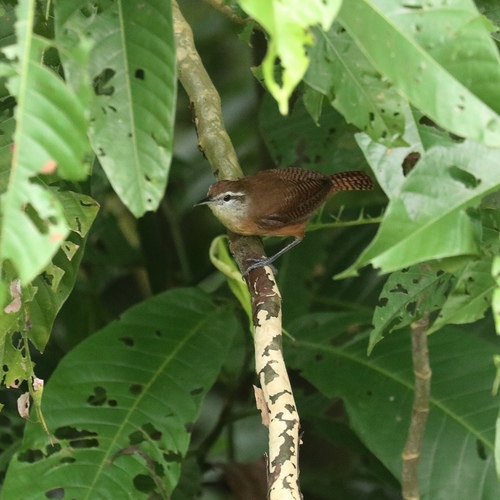 Buff-breasted Wren
In breve
Il modo più affidabile per separare il Guianan Gnatcatcher dal Buff-breasted Wren è per dimensione e struttura: il gnatcatcher è un uccello piccolo e snello con una lunga coda sottile e un becco delicato, mentre il wren è molto più grande, più robusto e ha una coda corta e pesantemente barrata. Nella livrea, il gnatcatcher è grigio bluastro sopra con un anello oculare bianco spezzato e un sorprendente motivo di coda bianco e nero, mentre il wren è rufescente a grigio-marrone sopra con un ventre color buff o cannella e una coda barrata. Le femmine e gli immaturi di entrambe le specie possono essere confusi, ma le tonalità grigie più chiare del gnatcatcher e il sopracciglio bianco (nelle femmine) contrastano con i marroni più ricchi e il color buff del wren. Entrambe le specie si trovano insieme nelle Guiane, quindi è essenziale prestare attenzione alla struttura e al motivo della coda.
Consigli di identificazione
- Size and structure: Il Guianan Gnatcatcher è piccolo e snello, con una lunga coda sottile e un becco piccolo e delicato. Il Buff-breasted Wren è molto più grande, più rotondo e ha una coda proporzionalmente più corta e robusta e un becco più pesante. Questo è il più veloce indizio sul campo se visto bene.
- Tail pattern: Il gnatcatcher mostra una coda bianco e nero sorprendente (penne centrali nere, penne esterne bianche), spesso aperta o scossa. Il Buff-breasted Wren ha una coda che è pesantemente barrata in tutto, mai con il contrasto netto bianco e nero del gnatcatcher.
- Tail behavior: I gnatcatcher spesso scotono e aprono le loro code sopra il corpo, mentre i wren alzano le loro code ma non le aprono allo stesso modo.
- Plumage above: I maschi del gnatcatcher sono grigio bluastro sopra; le femmine sono grigio più chiaro con un sopracciglio bianco. I Buff-breasted Wrens sono rufous a grigio-marrone sopra, privi di qualsiasi tonalità bluastre.
- Underparts: Il gnatcatcher è bianco sotto (gola e ventre), mentre il Buff-breasted Wren ha un petto e un ventre color buff o cannella, molto più caldi nel tono.
- Facial markings: I maschi del gnatcatcher hanno un anello oculare bianco spezzato; le femmine aggiungono un sopracciglio bianco. Il Buff-breasted Wren ha un sopracciglio pallido variabile ma mai un anello oculare completo; il viso è più patternizzato e può apparire grigiastro o marrone.
- Bill: Il becco del gnatcatcher è sottile e simile a un ago, adatto per raccogliere piccoli insetti. Il becco del wren è più pesante e leggermente ricurvo verso il basso.
- Juvenile confusion: I giovani Buff-breasted Wrens sono più opachi ma mostrano ancora una coda barrata e parti inferiori color buff; gli immaturi del gnatcatcher non sono ben descritti ma dovrebbero mancare di barrature e mostrare tonalità grigie più chiare.
- Habitat use: Il gnatcatcher è spesso nella chioma o nei rami esterni; il wren è in grovigli densi e bassi o cespugli.
- Behavior: Il gnatcatcher è irrequieto, acrobatico e spesso in stormi misti; il wren è più metodico, spesso in coppie o gruppi familiari, e può essere visto vicino ai loro globulari nidi.
- Voice: Non descritto nelle note, quindi non fare affidamento sul canto o sul richiamo per la separazione basata su questi dati.
- Season and sex: Entrambe le specie si trovano tutto l'anno nelle Guiane; le femmine di gnatcatcher sono più chiare con un sopracciglio bianco, mentre i maschi e le femmine di wren sono simili tranne per lievi differenze di peso.
- Pitfalls: In scarsa luce, il grigio del gnatcatcher può apparire marrone, e il buff del wren può sembrare più chiaro. Controlla sempre il motivo della coda e la dimensione prima di fare affidamento solo sul colore.
- Flight views: Il gnatcatcher in volo è snello e scotta la sua coda; il wren è più robusto e vola con un movimento più rimbalzante e diretto.
- When in doubt: Se l'uccello è piccolo, grigiastro, con una coda bianco e nera, è un gnatcatcher. Se è più grande, marrone, con una coda barrata e parti inferiori color buff, è un wren.
Taglia
Il Guianan Gnatcatcher è molto più piccolo e leggero (circa 6 g, 10–11 cm di lunghezza) rispetto al Buff-breasted Wren (maschi 18.5–22.8 g, femmine 16.0–19.5 g). Il gnatcatcher è un uccello delicato, quasi simile a un warbler, mentre il wren è notevolmente più robusto e robusto, con un corpo più rotondo e una coda proporzionalmente più corta. Sul campo, il divario di dimensione è sorprendente se entrambi sono visti in rapida successione.
Piumaggio
- Juveniles and immatures: I pulcini di Buff-breasted Wren sono più opachi rispetto agli adulti, con un petto color buff più chiaro, ma mostrano ancora la caratteristica coda barrata e tonalità complessive marroni. Non è descritta alcuna livrea giovanile specifica per il Guianan Gnatcatcher, ma gli uccelli giovani sono probabilmente simili agli adulti, solo più chiari nelle femmine.
- Adults: I maschi del Guianan Gnatcatcher sono grigio bluastro sopra con un anello oculare bianco spezzato, parti inferiori bianche e una coda con penne centrali nere e penne esterne bianche. Le femmine sono grigio più chiaro e hanno un sopracciglio bianco. I Buff-breasted Wrens sono rufescente a grigio-marrone sopra, con un petto e un ventre color buff o cannella, e una coda pesantemente barrata. Il loro viso è variabile ma va dal biancastro al grigio-marrone, con un sopracciglio pallido. La barratura della coda del wren e le parti inferiori calde non sono mai eguagliate dal gnatcatcher, mentre la coda netta bianco e nero del gnatcatcher e le tonalità bluastre sono assenti nel wren.
Comportamento
Il Guianan Gnatcatcher è tipicamente attivo e acrobatico, cercando insetti nel fogliame esterno, spesso in alto sugli alberi e muovendosi rapidamente con un comportamento irrequieto e nervoso. Il Buff-breasted Wren è più spesso visto più in basso in grovigli densi o cespugli, muovendosi metodicamente e spesso alzando la sua coda. I wren possono essere visti in coppie o gruppi familiari, a volte vicino ai loro distintivi nidi globulari. I gnatcatcher sono più solitari o in stormi misti, raramente si fermano a lungo.
Habitat
Entrambe le specie si sovrappongono nelle Guiane e nell'Amazonia settentrionale, ma le loro preferenze microhabitat differiscono. Il Guianan Gnatcatcher favorisce la chioma e i margini delle foreste umide, spesso nel fogliame esterno di alberi alti. Il Buff-breasted Wren è più probabile che si trovi in sottoboschi densi, grovigli di vite o margini cespugliosi, spesso vicino all'acqua o a spazi forestali. Se l'uccello è basso in folta vegetazione, è più probabile che sia un wren; se è alto ed esposto, è favorito il gnatcatcher.
Guianan Gnatcatcher · Buff-breasted Wren · I miei uccelli difficili