

gray trembler vs black-faced grassquit
Cinclocerthia gutturalis versus Melanospiza bicolor
Jogue um quiz com gray trembler e black-faced grassquit
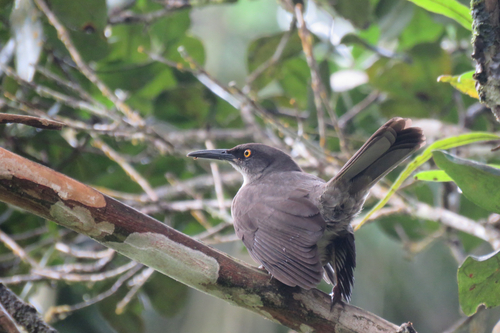 gray trembler
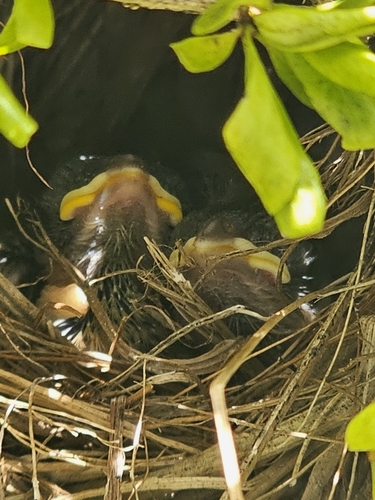 black-faced grassquit
Em resumo
A maneira mais confiável de separar o gray trembler do black-faced grassquit é pelo tamanho e estrutura: o trembler é um pássaro grande, de cauda longa, semelhante a um tordo, com um bico ligeiramente curvado para baixo, enquanto o grassquit é um pequeno e compacto comedor de sementes com um bico curto e cônico. Os machos adultos do black-faced grassquit têm o rosto strikingly escuro e esverdeado, mas as fêmeas e os juvenis são de um oliva sem graça e podem ser confundidos com os jovens gray tremblers, mais marrons e manchados. Em voo ou empoleirados, concentre-se na robustez geral, na forma do bico e no comprimento da cauda. A plumagem juvenil é uma possível armadilha, mas mesmo assim, o tamanho e a estrutura do trembler devem se destacar.
Dicas de identificação
- O tamanho é a marca mais confiável: O gray trembler é massivo em comparação ao black-faced grassquit—mais de cinco vezes mais pesado e duas vezes mais longo. Mesmo à distância ou em luz fraca, a robustez e a longa cauda do trembler são óbvias.
- Forma do bico: O trembler tem um bico longo e ligeiramente curvado para baixo (o da fêmea é mais longo que o do macho), adequado para sondar e rasgar. O grassquit tem um bico curto, grosso e cônico, clássico para tentilhões comedor de sementes. A forma do bico é diagnóstica em qualquer idade ou sexo.
- Comprimento e forma da cauda: A cauda do trembler é longa e muitas vezes parece ligeiramente arredondada ou leque, enquanto a cauda do grassquit é curta e quadrada. Em voo ou empoleirados, a diferença é marcante.
- Plumagem—machos adultos: O macho do black-faced grassquit é de rosto escuro e preto por baixo, com partes superiores esverdeadas—sem confusão com o trembler. O trembler nunca é de rosto escuro ou barriga preta.
- Plumagem—fêmeas e juvenis adultos: As fêmeas e juvenis do grassquit são de um verde oliva simples, às vezes mais marrons ou acinzentados por baixo. Os juvenis do trembler são mais marrons com um peito manchado, mas sempre maiores e com cauda mais longa. Em luz fraca, grassquits sem graça podem parecer mais marrons, mas a estrutura e o tamanho ainda os separam.
- Padrão facial: O trembler tem um rosto um pouco mais escuro do que o resto da cabeça, mas nunca uma máscara preta bem definida como o macho do grassquit. Fêmeas/juvenis do grassquit têm rostos simples, sem marcas fortes.
- Partes inferiores: O trembler tem uma garganta e barriga brancas, com flancos marrons e tingidos de oliva. Machos do grassquit são pretos por baixo; fêmeas/juvenis são de um oliva simples ou acinzentado. Nenhum grassquit mostra o centro branco do trembler.
- Comportamento: Observe o 'tremor' único do trembler—asas caídas e vibradas rapidamente, especialmente quando agitado ou forrageando. Grassquits nunca mostram isso; suas vibrações de asas ocorrem apenas em voos de exibição breves.
- Habitat: O trembler é um especialista em florestas, frequentemente em cobertura densa ou dossel. O grassquit é encontrado em áreas abertas, gramadas ou arbustivas, raramente em florestas densas. O contexto pode ajudar se a visão for ruim.
- Altura de forrageio: O trembler varia do solo ao dossel, frequentemente visto sondando em emaranhados ou epífitas. O grassquit está quase sempre baixo ou no chão, alimentando-se de sementes.
- Vocalizações: Se você ouvir uma canção zumbidora e enfática ou um suave 'tsip', é um grassquit. A canção do trembler não é descrita, então o silêncio não é útil para a identificação do trembler.
- Cor das pernas: Ambos têm pernas rosadas escuras, não úteis para separação.
- Cor da íris: Ambos têm íris escuras; não é uma marca separadora.
- Variação de subespécies: Algumas subespécies de grassquit são mais claras ou mais brilhantes em oliva, mas nenhuma se aproxima do tamanho ou estrutura do trembler. As subespécies do trembler diferem ligeiramente na cor do peito e flancos, mas permanecem muito maiores e estruturalmente distintas.
- Armadilhas: A principal confusão é entre grassquits juvenis/fêmeas e tremblers juvenis. Sempre verifique primeiro o tamanho, bico e comprimento da cauda—esses nunca são semelhantes.
Tamanho
O gray trembler é dramaticamente maior, pesando cerca de 69 g e medindo 23–26 cm de comprimento. Em contraste, o black-faced grassquit é minúsculo, pesando apenas 7–13 g e medindo 10,2–11,5 cm. O trembler é quase duas vezes mais longo e mais de cinco vezes mais pesado. Essa diferença de tamanho é óbvia em campo, mesmo à distância ou em bandos mistos.
Plumagem
-
Juvenis: Os jovens gray tremblers são mais marrons no geral com um peito manchado, enquanto os juvenis do black-faced grassquit se assemelham às fêmeas adultas—simplesmente verde-oliva por cima e por baixo, às vezes mais marrons ou acinzentados por baixo. Ambos podem parecer sem graça e indistintos, mas o trembler é sempre muito maior e com cauda mais longa.
-
Adultos: Os gray tremblers adultos são de um cinza-marrom quente por cima com um rosto e asas mais escuras, garganta e barriga brancas, e flancos mais marrons com um toque de oliva. Os machos adultos do black-faced grassquit são inconfundíveis: cabeça, garganta e partes inferiores pretas com partes superiores, asas e cauda esverdeadas. As fêmeas adultas são de um verde-oliva sem graça por cima e por baixo, sem qualquer preto no rosto ou partes inferiores. A variação de subespécies em grassquits pode afetar o brilho e a cor das partes inferiores, mas nunca se aproxima do tamanho ou estrutura do trembler.
-
Padrão de voo/asas: Nenhuma marca distintiva de padrão de asa superior ou de voo é descrita para qualquer uma das espécies em qualquer idade; a separação depende da estrutura e da coloração geral.
Comportamento
O gray trembler frequentemente forrageia rasgando emaranhados e sondando epífitas do solo ao dossel, e é famoso por seu comportamento de 'tremor': asas caídas e vibradas rapidamente. Esse movimento único não é visto em grassquits. Os black-faced grassquits se alimentam principalmente no chão ou em vegetação baixa, frequentemente em colônias soltas, e os machos podem realizar voos curtos de cortejo aéreo com vibrações de asas, mas esses são breves e associados à exibição, não à forrageação.
Habitat
O gray trembler é restrito a habitats florestais em Martinica e Santa Lúcia, variando do nível do solo ao dossel. O black-faced grassquit é muito mais disseminado nas Índias Ocidentais e prefere áreas abertas, campos gramados e bordas arbustivas, frequentemente perto de habitações humanas. A sobreposição é possível em habitats de borda, mas o trembler é um pássaro de floresta, enquanto o grassquit prefere o campo aberto.
Voz
O black-faced grassquit tem uma canção zumbidora e enfática distinta e um suave chamado 'tsip'. As vocalizações do gray trembler não são descritas nas notas fornecidas, então a voz é útil apenas para confirmar a presença do grassquit, não para identificar o trembler.
gray trembler · black-faced grassquit · Minhas aves difíceis