

batuiruçu-de-axila-preta vs batuiruçu
Pluvialis squatarola versus Pluvialis dominica
Jogue um quiz com batuiruçu-de-axila-preta e batuiruçu
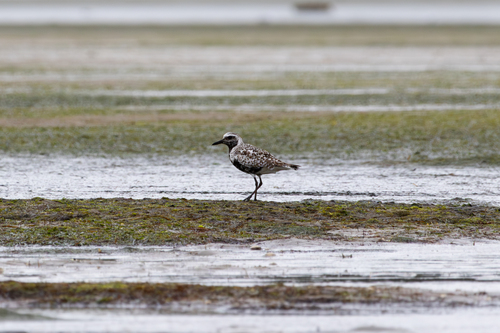 batuiruçu-de-axila-preta
 batuiruçu
Em resumo
A única marca de campo mais confiável entre o batuiruçu-de-axila-preta e o batuiruçu é a cor da parte inferior da asa em voo: o batuiruçu-de-axila-preta de todas as idades apresenta axilas pretas marcantes, enquanto o batuiruçu tem axilas cinza pálido. Essa marca é visível em voo e é diagnóstica para todas as idades e estações. Estruturalmente, o batuiruçu-de-axila-preta é visivelmente mais robusto, com um bico maior e mais pesado, enquanto o batuiruçu é mais esbelto e delicado. Na plumagem de reprodução, ambos têm rostos e barrigas pretas, mas o batuiruçu-de-axila-preta tem um rabo e cauda brancos com listras pretas, enquanto o batuiruçu apresenta partes superiores manchadas de ouro e uma coroa e nuca brancas. As aves não reprodutoras e imaturas são mais semelhantes, mas o padrão da parte inferior da asa e o tamanho do bico permanecem confiáveis.
Dicas de identificação
- Cor da parte inferior da asa em voo (todas as idades): O batuiruçu-de-axila-preta sempre mostra axilas pretas (penas da axila) e parte interna da asa; o batuiruçu tem axilas cinza pálido. Esta é a marca de campo mais confiável, especialmente para imaturos e aves não reprodutoras.
- Tamanho e forma do bico: O batuiruçu-de-axila-preta tem um bico visivelmente maior e mais pesado (24–34 mm) que parece grosso e com ponta arredondada; o bico do batuiruçu é menor e mais fino. Isso é visível tanto em repouso quanto em voo.
- Estrutura geral: O batuiruçu-de-axila-preta é mais robusto e robusto, com um pescoço mais grosso e corpo mais pesado. O batuiruçu é mais esbelto, mais delicado e relativamente mais longo nas pernas para seu tamanho.
- Plumagem de reprodução (primavera/verão): Ambos têm rostos, pescoços, peitos e barrigas pretas, mas o preto do batuiruçu-de-axila-preta é contornado por branco e o rabo e cauda são brancos com listras pretas. O batuiruçu tem uma coroa e nuca brancas, partes superiores manchadas de ouro, e o preto nas partes inferiores é mais sólido e extenso nos machos.
- Plumagem não reprodutora/juvenil: Ambos se tornam mais simples acima e mais claros abaixo, mas o batuiruçu-de-axila-preta permanece maior e mostra axilas pretas em voo. O batuiruçu mostra uma sobrancelha esbranquiçada e é mais uniformemente marronzado acima.
- Cauda e rabo: O rabo e cauda brancos do batuiruçu-de-axila-preta com listras pretas são visíveis em voo e quando se limpam; o batuiruçu não apresenta esse forte contraste de rabo/cauda.
- Projeção primária: Não detalhado nas fontes para esses dois, mas o batuiruçu é descrito como tendo uma projeção primária relativamente longa em comparação com a tarambola-dourada.
- Cor das pernas: Ambos têm pernas escuras; não é útil para separação.
- Contexto de habitat: Nas costas eurasiáticas, um grande pilrito em bancos de lama é mais provável que seja o batuiruçu-de-axila-preta; o batuiruçu é mais frequentemente encontrado em áreas interiores ou em solo mais seco, especialmente durante a migração.
- Tempos de migração: O batuiruçu troca de penas mais tarde (setembro-outubro) do que a tarambola-dourada-siberiana, mas isso não é uma separação do batuiruçu-de-axila-preta.
- Dimorfismo sexual: A fêmea reprodutora do batuiruçu é menos extensivamente preta abaixo do que o macho; os sexos do batuiruçu-de-axila-preta são semelhantes na plumagem de reprodução.
- Armadilhas com imaturos: As plumagens do primeiro inverno e juvenil são muito semelhantes em ambas as espécies, especialmente no chão. Sempre tente ver a parte inferior da asa em voo para confirmação.
- Tamanho em bandos mistos: Se ambas as espécies estiverem presentes, o batuiruçu-de-axila-preta se destacará como a ave maior e mais robusta.
- Bordas da plumagem em juvenis: O juvenil do batuiruçu-de-axila-preta tem partes superiores mais escuras com bordas de penas cremosas; os juvenis do batuiruçu são mais marrons e manchados de ouro acima.
- Voz: Não coberto nas fontes, portanto não é confiável para separação aqui.
Tamanho
O batuiruçu-de-axila-preta é a ave maior e mais pesada: mede 27–30 cm de comprimento com uma envergadura de 71–83 cm e pode pesar até 280 g (às vezes mais antes da migração). O batuiruçu é menor e mais leve, com 24–28 cm de comprimento, envergadura de 65–67 cm e massa típica em torno de 145 g. O batuiruçu-de-axila-preta parece mais robusto e grosso, com um bico visivelmente mais forte. O batuiruçu é mais esbelto, com um bico menor e mais fino e pernas relativamente mais longas para seu tamanho.
Plumagem
- Juvenil e Primeiro-inverno (todas as idades em voo): O batuiruçu-de-axila-preta sempre mostra axilas pretas e parte interna da asa, uma característica única entre os pilritos do gênero Pluvialis. O batuiruçu tem axilas cinza pálido. Esta é a marca mais confiável em voo para todas as aves não adultas.
- Plumagem de reprodução (primavera/verão): Ambas as espécies têm rostos, pescoços, peitos e barrigas pretas. O batuiruçu-de-axila-preta tem uma borda branca no rosto preto e um rabo e cauda brancos com listras pretas. O batuiruçu tem uma coroa e nuca brancas que se estendem pela lateral do pescoço, e suas costas são marcadas com manchas douradas. A fêmea do batuiruçu é menos extensivamente preta abaixo.
- Plumagem não reprodutora (inverno): Ambas as espécies se tornam mais simples acima e mais claras abaixo. O batuiruçu-de-axila-preta é cinza simples acima com um peito cinza salpicado e barriga branca; o batuiruçu é cinza-marronzado acima e claro abaixo, com uma sobrancelha esbranquiçada distinta. O juvenil do batuiruçu-de-axila-preta é mais escuro acima com bordas de penas cremosas, mas ainda mostra axilas pretas em voo.
- Cauda e rabo: O batuiruçu-de-axila-preta tem um rabo e cauda brancos com listras pretas; o batuiruçu não mostra um contraste tão acentuado de rabo/cauda.
Comportamento
Nenhuma diferença comportamental forte é observada nas fontes para separação em campo. Ambas as espécies são migrantes de longa distância e podem ser vistas sozinhas ou em grupos soltos em terrenos abertos ou bancos de lama. O batuiruçu-de-axila-preta pode parecer mais deliberado e menos ativo do que o mais ágil e esbelto batuiruçu, mas isso é sutil.
Habitat
O batuiruçu-de-axila-preta é quase mundial em bancos de lama costeiros e estuários fora da estação de reprodução, enquanto o batuiruçu é mais provável de ser encontrado em tundras abertas e secas durante a reprodução e migra através de campos de gramíneas ou agrícolas. Durante a migração e nos locais de invernada, ambos podem ocorrer em planícies abertas, mas o batuiruçu-de-axila-preta é mais estritamente costeiro, especialmente na Eurásia.