

Motmot

ダイゼン 対 アメリカムナグロ

Pluvialis squatarola 対 Pluvialis dominica

ダイゼンとアメリカムナグロのクイズ
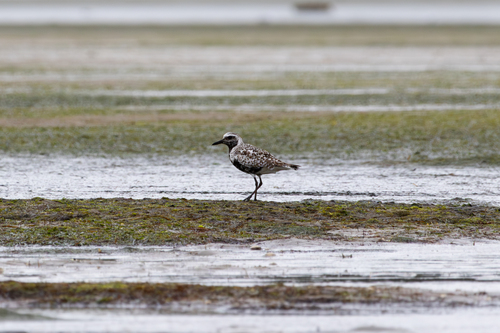
ダイゼン (Pluvialis squatarola) ダイゼン
アメリカムナグロ (Pluvialis dominica) アメリカムナグロ

メディア

読み込み中…

要点

ダイゼンとアメリカムナグロの間で最も信頼できるフィールドマークは、飛行中の下翼の色です:すべての年齢のダイゼンは目を引く黒い脇羽(腋の羽)を示しますが、アメリカムナグロは淡い灰色の脇羽を持っています。このマークは飛行中に見え、すべての年齢と季節において診断的です。構造的には、ダイゼンは明らかにずっしりとしており、より大きくて重いくちばしを持っていますが、アメリカムナグロはスリムでより繊細です。繁殖羽では、両者ともに黒い顔と腹部を持っていますが、ダイゼンは白い尾と尾羽に黒い縞模様があり、アメリカムナグロは金色の斑点がある上面と白い冠と後頭部を示します。非繁殖期および未成熟の鳥はより似ていますが、下翼のパターンとくちばしのサイズは信頼できます。

識別のコツ

  1. Underwing color in flight (all ages): ダイゼンは常に黒い脇羽(腋の羽)と内側の下翼を示し、アメリカムナグロは淡い灰色の脇羽を持っています。これは特に未成熟や非繁殖の鳥にとって最も信頼できるフィールドマークです。
  2. Bill size and shape: ダイゼンは明らかに大きくて重いくちばし(24–34 mm)を持ち、厚くて鈍い先端に見えます;アメリカムナグロのくちばしは小さくて繊細です。これは静止時と飛行中の両方で見えます。
  3. Overall structure: ダイゼンはずっしりとしており、より頑丈で、首が太く、体が重いです。アメリカムナグロはスリムで、より繊細で、サイズに対して相対的に脚が長いです。
  4. Breeding plumage (spring/summer): 両者ともに黒い顔、首、胸、腹部を持っていますが、ダイゼンの黒は白で縁取られ、尾と尾羽は白で黒い縞模様があります。アメリカムナグロは白い冠と後頭部を持ち、金色の斑点がある上面を持ち、腹部の黒はオスでより固体で広範囲です。
  5. Non-breeding/juvenile plumage: 両者は上面がよりシンプルになり、下面がより淡くなりますが、ダイゼンはより大きく、飛行中に黒い脇羽を示します。アメリカムナグロは白っぽい眉を示し、上面はより均一に茶色がかっています。
  6. Tail and rump: ダイゼンの白い尾と尾羽に黒い縞模様は、飛行中や羽繕いの際に見えます;アメリカムナグロはこの強い尾/尾羽のコントラストを欠いています。
  7. Primary projection: これら2種の情報は詳細に記載されていませんが、アメリカムナグロはヨーロッパムナグロと比較して相対的に長い初級羽の突出を持つと説明されています。
  8. Leg color: 両者ともに暗い脚を持っています;分離には役立ちません。
  9. Habitat context: ユーラシアの沿岸で、泥干潟にいる大きなムナグロはダイゼンである可能性が高いです;アメリカムナグロは内陸や乾燥した地面にいることが多く、特に移動中に見られます。
  10. Migration timing: アメリカムナグロは太平洋ムナグロよりも後(9月–10月)に換羽しますが、これはダイゼンとの分離にはなりません。
  11. Sexual dimorphism: 繁殖期の雌アメリカムナグロはオスよりも下部が黒くないです;ダイゼンの性別は繁殖羽で似ています。
  12. Pitfalls with immatures: 初冬と幼鳥の羽衣は両種で非常に似ており、特に地上ではそうです。常に確認のために飛行中の下翼を見るようにしてください。
  13. Size in mixed flocks: 両種が存在する場合、ダイゼンはより大きく、頑丈な鳥として目立ちます。
  14. Plumage edges in juveniles: 幼鳥のダイゼンは黒い上面にクリーム色の羽の縁を持ち、アメリカムナグロの幼鳥はより茶色がかり、金色の斑点があります。
  15. Voice: 情報源ではカバーされていないため、ここでの分離には信頼できません。

大きさ

ダイゼンはより大きく、重い鳥です:体長は27–30 cm、翼開長は71–83 cmで、体重は最大280 g(時には移動前にもっと重くなることもあります)。アメリカムナグロは小さくて軽く、体長は24–28 cm、翼開長は65–67 cm、典型的な体重は約145 gです。ダイゼンはより頑丈で厚みがあり、明らかに太いくちばしを持っています。アメリカムナグロはスリムで、より小さく、繊細なくちばしとサイズに対して相対的に長い脚を持っています。

羽色

行動

フィールド分離のための情報源には強い行動の違いは記載されていません。両種は長距離移動を行い、開けた地面や泥干潟で単独または緩やかな群れで見られることがあります。ダイゼンはより慎重で、より敏捷でスリムなアメリカムナグロよりも活動的でないように見えることがありますが、これは微妙です。

生息環境

ダイゼンは繁殖シーズン外で沿岸の泥干潟や河口にほぼ世界中に分布していますが、アメリカムナグロは繁殖中に乾燥した開けたツンドラで見つかる可能性が高く、草原や農地を通って移動します。移動中や越冬地では、両者は開けた平地に出現することがありますが、ダイゼンは特にユーラシアではより厳密に沿岸に生息しています。

より良い説明を送る

比較と同じ項目を使ってください。文章はすぐに公開されます。

The single most reliable field mark between Grey Plover and American Golden Plover is the color of the underwing in flight: Grey Plover of all ages shows striking black axillaries (armpit feathers), while American Golden Plover has pale gray axillaries. This mark is visible in flight and is diagnostic for all ages and seasons. Structurally, Grey Plover is noticeably bulkier with a larger, heavier bill, while American Golden Plover is slimmer and more delicate. In breeding plumage, both have black faces and bellies, but Grey Plover has a white rump and tail with black barring, while American Golden Plover shows gold-spotted upperparts and a white crown and nape. Non-breeding and immature birds are more similar, but the underwing pattern and bill size remain reliable.

  1. Underwing color in flight (all ages): Grey Plover always shows black axillaries (armpit feathers) and inner underwing; American Golden Plover has pale gray axillaries. This is the most reliable field mark, especially for immatures and non-breeding birds.
  2. Bill size and shape: Grey Plover has a noticeably larger, heavier bill (24–34 mm) that looks thick and blunt-tipped; American Golden Plover's bill is smaller and finer. This is visible both at rest and in flight.
  3. Overall structure: Grey Plover is bulkier and more robust, with a thicker neck and heavier body. American Golden Plover is slimmer, more delicate, and relatively longer-legged for its size.
  4. Breeding plumage (spring/summer): Both have black faces, necks, breasts, and bellies, but Grey Plover's black is bordered by white and the rump and tail are white with black barring. American Golden Plover has a white crown and nape, gold-spotted upperparts, and the black on the underparts is more solid and extensive in males.
  5. Non-breeding/juvenile plumage: Both become plainer above and paler below, but Grey Plover remains larger and shows black axillaries in flight. American Golden Plover shows a whitish eyebrow and is more uniformly brownish above.
  6. Tail and rump: Grey Plover's white rump and tail with black barring are visible in flight and when preening; American Golden Plover lacks this strong rump/tail contrast.
  7. Primary projection: Not detailed in the sources for these two, but American Golden Plover is described as having a relatively long primary projection compared to European Golden Plover.
  8. Leg color: Both have dark legs; not useful for separation.
  9. Habitat context: On Eurasian coasts, a large plover on mudflats is more likely Grey Plover; American Golden Plover is more often inland or on drier ground, especially on migration.
  10. Migration timing: American Golden Plover molts later (September–October) than Pacific Golden Plover, but this is not a separation from Grey Plover.
  11. Sexual dimorphism: Breeding female American Golden Plover is less extensively black below than the male; Grey Plover sexes are similar in breeding plumage.
  12. Pitfalls with immatures: First-winter and juvenile plumages are very similar in both species, especially on the ground. Always try to see the underwing in flight for confirmation.
  13. Size in mixed flocks: If both species are present, Grey Plover will stand out as the larger, more robust bird.
  14. Plumage edges in juveniles: Juvenile Grey Plover has blacker upperparts with creamy feather edges; American Golden Plover juveniles are more brownish and gold-spotted above.
  15. Voice: Not covered in the sources, so not reliable for separation here.

Grey Plover is the larger, heavier bird: it measures 27–30 cm in length with a wingspan of 71–83 cm and can weigh up to 280 g (sometimes more before migration). American Golden Plover is smaller and lighter, at 24–28 cm long, wingspan 65–67 cm, and typical mass around 145 g. Grey Plover appears more robust and thickset, with a noticeably stouter bill. American Golden Plover is slimmer, with a smaller, finer bill and relatively longer legs for its size.

  • Juvenile and First-winter (all ages in flight): Grey Plover always shows black axillaries and inner underwing, a unique feature among Pluvialis plovers. American Golden Plover has pale gray axillaries. This is the most reliable mark in flight for all non-adult-plumaged birds.
  • Breeding plumage (spring/summer): Both species have black faces, necks, breasts, and bellies. Grey Plover has a white border to the black face and a white rump and tail with black barring. American Golden Plover has a white crown and nape extending down the side of the neck, and its back is marked with gold spots. The female American Golden Plover is less extensively black below.
  • Non-breeding (winter) plumage: Both species become plainer above and paler below. Grey Plover is plain grey above with a grey-speckled breast and white belly; American Golden Plover is grey-brown above and pale below, with a distinct whitish eyebrow. Juvenile Grey Plover is darker above with creamy feather edges, but still shows black axillaries in flight.
  • Tail and rump: Grey Plover has a white rump and tail with black barring; American Golden Plover does not show such a marked rump/tail contrast.

No strong behavioral differences are noted in the sources for field separation. Both species are long-distance migrants and may be seen singly or in loose groups on open ground or mudflats. Grey Plover may appear more deliberate and less active than the more agile, slimmer American Golden Plover, but this is subtle.

Grey Plover is nearly worldwide on coastal mudflats and estuaries outside the breeding season, while American Golden Plover is more likely to be found on drier, open tundra during breeding and migrates through grasslands or agricultural fields. On migration and wintering grounds, both can occur on open flats, but Grey Plover is more strictly coastal, especially in Eurasia.

変更を破棄しますか?

保存していない編集があります。今離れると失われます。

ダイゼン · アメリカムナグロ · 苦手な鳥