

gray cuckooshrike vs southern black-tit
Ceblepyris caesius versus Melaniparus niger
Jogue um quiz com gray cuckooshrike e southern black-tit
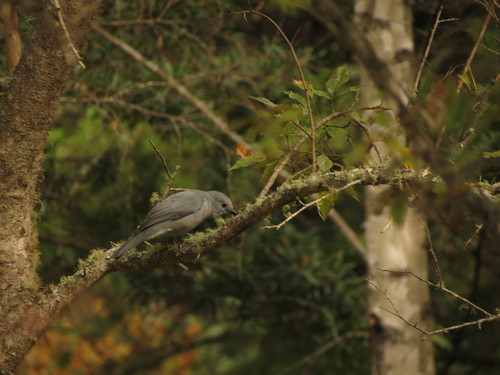 gray cuckooshrike
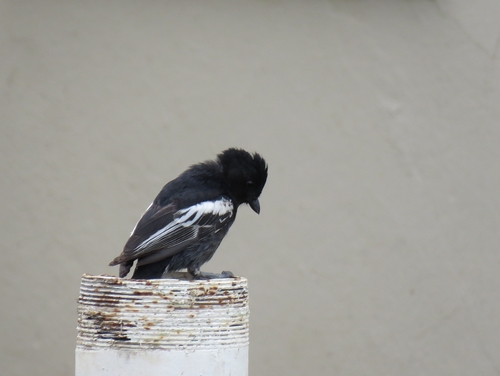 southern black-tit
Em resumo
A marca de campo mais confiável para separar o gray cuckooshrike do southern black-tit é o tamanho e a estrutura geral: o gray cuckooshrike é muito maior e mais longo, com uma coloração azul-acinzentada e um olho preto proeminente com um fino anel ocular branco, enquanto o southern black-tit é muito menor, compacto e quase totalmente preto ou acinzentado, dependendo do sexo. Os juvenis de gray cuckooshrikes apresentam listras distintas marrons e brancas na parte superior e partes inferiores brancas com listras marrons, nunca igualadas pelo tit. Em voo ou empoleirado, a cauda mais longa do cuckooshrike e as batidas de asa lentas e pesadas contrastam com a cauda curta e arredondada do tit e os movimentos mais ativos e ágeis. Se você ver um pássaro de tamanho médio, azul-acinzentado, com um grande olho preto na copa, é o cuckooshrike; se for um pássaro pequeno, monotônico, preto ou acinzentado em uma floresta, é o tit.
Dicas de identificação
- Tamanho e estrutura: O gray cuckooshrike é muito maior e com cauda mais longa (25–27 cm, 53–68 g) do que o southern black-tit (16 cm, 21 g). Use isso como sua primeira verificação, especialmente em bandos mistos ou quando próximo a outras espécies para escala.
- Plumagem juvenil: Os juvenis de gray cuckooshrikes são marrons na parte superior com listras cinza-brancas e têm partes inferiores brancas com listras marrons, além de caudas pretas com bordas brancas—essas características nunca são mostradas pelo tit em nenhuma idade.
- Coloração adulta: Os cuckooshrikes adultos são azul-acinzentados com um grande olho preto e um fino anel ocular branco; os machos têm uma mancha loreal cinza escura, as fêmeas uma mais clara. Os machos do southern black-tit são azul-preto, as fêmeas acinzentadas, mas ambos carecem dos tons azul-acinzentados e do anel ocular branco do cuckooshrike.
- Padrão da cauda e asas: O cuckooshrike tem uma cauda mais longa e graduada e, nos juvenis, bordas brancas na cauda e penas de voo. A cauda do tit é curta, não tem branco e não é graduada.
- Bico e face: O cuckooshrike tem um bico relativamente robusto e preto e um olho preto strikingmente grande com um fino anel branco. O bico do tit é mais curto e menos robusto, e ele não tem o anel ocular branco.
- Dimorfismo sexual: Ambas as espécies mostram algum dimorfismo sexual, mas no tit, os machos são distintamente azul-preto e as fêmeas acinzentadas; no cuckooshrike, ambos os sexos são azul-acinzentados, com apenas diferenças sutis na mancha loreal e na tonalidade geral.
- Comportamento e movimento: O cuckooshrike se move lentamente e de forma metódica na copa superior, muitas vezes sozinho ou em pares, com batidas de asa lentas e pesadas em voo. O tit é muito mais ativo, ágil e frequentemente visto em bandos mistos, forrageando energeticamente em níveis mais baixos.
- Habitat: O cuckooshrike é um especialista em florestas, geralmente em manchas de floresta de alta altitude ou bordas; o tit é uma espécie de floresta e floresta aberta, raramente em florestas densas.
- Vocalizações: O cuckooshrike é silencioso, com chamadas suaves e agudas; o tit é provavelmente mais vocal, mas chamadas específicas não estão detalhadas aqui.
- Postura empoleirada: O cuckooshrike frequentemente aparece ereto e alongado quando empoleirado, enquanto o tit é mais compacto e horizontal.
- Estilo de voo: O voo do cuckooshrike é lento e nivelado com batidas de asa pesadas; o voo do tit é mais rápido e mais saltitante, típico de pequenos parídeos.
- Simplicidade da plumagem: O tit é quase totalmente monotônico (preto ou acinzentado), sem listras, bordas brancas ou sombreamento sutil; o cuckooshrike é mais suavemente padronizado e mais claro no geral.
- Branco na cauda/asas: Apenas o juvenil cuckooshrike mostra bordas brancas na cauda e penas de voo; o tit nunca mostra branco na cauda ou asas.
- Cor dos olhos: O grande olho preto do cuckooshrike com um anel branco é distintivo; o olho do tit é menos proeminente e não tem anel.
- Dicas contextuais: Se visto forrageando alto na copa da floresta, especialmente sozinho ou em pares, o cuckooshrike é mais provável; se em floresta aberta ou em um bando misto de pequenos pássaros, o tit é mais provável.
Tamanho
O gray cuckooshrike é substancialmente maior, com um comprimento corporal de 25–27 cm e pesando 53–68 g [wikipedia], em comparação com o southern black-tit que tem apenas cerca de 16 cm e 21 g [wikidata]. O cuckooshrike parece ter um corpo longo e uma cauda longa, enquanto o tit é compacto e de cauda curta. Essa diferença de tamanho é óbvia mesmo à distância, especialmente em bandos mistos ou quando visto próximo a outros pássaros para escala.
Plumagem
Os juvenis de gray cuckooshrikes são marrons escuros na parte superior com listras cinza-brancas, partes inferiores brancas com listras marrons e caudas pretas com bordas brancas nas pontas e nas penas de voo—essas características nunca são mostradas pelo southern black-tit de qualquer idade. Os gray cuckooshrikes adultos (ambos os sexos) são azul-acinzentados com um grande olho preto e um fino anel ocular branco; os machos têm uma mancha loreal cinza escura, as fêmeas uma mais clara. Os machos do southern black-tit são distintamente azul-preto por toda parte, enquanto as fêmeas são mais acinzentadas, mas ambos carecem dos tons azul-acinzentados e do anel ocular branco do cuckooshrike. O tit não tem branco na cauda ou asas, e sua plumagem é quase monotônica, sem listras ou bordas de penas contrastantes. Em todas as idades, a coloração do tit é mais simples e mais escura, enquanto o cuckooshrike é mais sutilmente padronizado e mais claro.
Comportamento
O gray cuckooshrike é tipicamente discreto, movendo-se lentamente e deliberadamente na copa superior da floresta, muitas vezes sozinho ou em pares, às vezes em pequenos grupos ou bandos mistos. Seu voo é lento, nivelado e marcado por batidas de asa pesadas. O southern black-tit é muito mais ativo e ágil, típico dos tits, forrageando energeticamente na floresta, muitas vezes em bandos mistos, e mostrando movimentos rápidos e repentinos. O tit é mais provável de ser visto pulando e voando através de ramos e folhagens mais baixas, enquanto o cuckooshrike permanece mais alto e se move de forma mais metódica.
Habitat
O gray cuckooshrike é uma espécie de floresta, encontrada em manchas de floresta em altitudes mais elevadas no sul e centro da África, geralmente na copa superior ou nas bordas da floresta. O southern black-tit prefere habitats de floresta, não florestas densas, e é mais amplamente distribuído em florestas abertas e savanas. Se você estiver em uma floresta densa e de alta altitude, o cuckooshrike é mais provável; em floresta aberta, especialmente em altitudes mais baixas, espere pelo tit.
Voz
O gray cuckooshrike é relativamente silencioso, com um 'tseeeeep' suave e agudo enquanto forrageia, um chamado 'seeeeea' no ninho e ocasionais conversas semelhantes a tecelões ou sons de espirro como 'chi-ooo'. As vocalizações do southern black-tit não estão descritas nas notas fornecidas, mas os tits em geral são mais vocais e variados em seus chamados. Se você ouvir apenas chamadas suaves, agudas ou baixas, o cuckooshrike é possível; uma conversa mais variada ou típica de tit sugeriria o tit.
gray cuckooshrike · southern black-tit · Minhas aves difíceis