

andorinha-grande vs andorinha-serradora
Progne chalybea versus Stelgidopteryx ruficollis
Jogue um quiz com andorinha-grande e andorinha-serradora
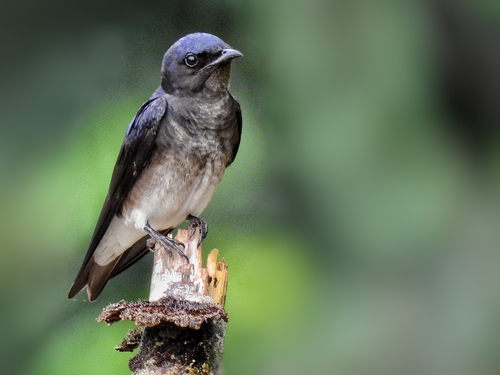 andorinha-grande
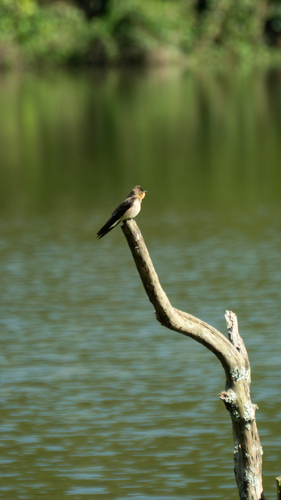 andorinha-serradora
Em resumo
A marca de campo mais confiável para separar a andorinha-grande da andorinha-serradora é o tamanho e a estrutura geral: a andorinha-grande é muito maior e mais robusta, com uma aparência de peito largo e pesado e uma cauda distintamente bifurcada, enquanto a andorinha-serradora é visivelmente menor, mais esbelta e tem uma cauda quadrada. Em voo ou empoleirada, a andorinha-grande mostra um forte contraste entre seu peito cinza-marrom e o ventre branco, enquanto a andorinha-serradora é mais uniformemente marronácea embaixo, com uma garganta canela ou tawny e carece de um contraste nítido nas partes inferiores. Os juvenis de ambas as espécies são mais apagados, mas o tamanho maior da andorinha e a cauda bifurcada permanecem claros. Tenha cuidado com aves distantes ou contra a luz, pois ambas as espécies podem parecer marronáceas e semelhantes em forma à primeira vista.
Dicas de identificação
- O tamanho é a pista mais imediata: A andorinha-grande é muito maior e mais robusta do que a andorinha-serradora. Se você ver uma ave do tamanho de uma andorinha que parece visivelmente grande e de peito largo, suspeite da andorinha.
- Forma da cauda: A andorinha-grande tem uma cauda distintamente bifurcada, visível tanto em voo quanto quando empoleirada. A andorinha-serradora tem uma cauda quadrada. Isso é confiável, exceto em aves muito desgastadas ou em muda.
- Contraste nas partes inferiores: As andorinhas adultas mostram uma divisão nítida entre o peito cinza-marrom e o ventre branco, enquanto a andorinha-serradora é mais uniformemente marronácea embaixo, com apenas uma transição sutil do peito para o ventre.
- Cor da garganta: A andorinha-serradora tem uma garganta canela ou tawny (especialmente em algumas subespécies), contrastando com a garganta cinza-marrom da andorinha. Isso é mais útil em distâncias curtas ou em boa luz.
- Brilho das partes superiores: Os machos adultos da andorinha são azul-preto brilhante acima, enquanto a andorinha-serradora é sempre um cinza-marrom escuro simples acima. Fêmeas e juvenis de ambas são mais apagados, mas a andorinha nunca é tão uniformemente marronácea quanto a andorinha-serradora.
- Marcas juvenis: Os juvenis da andorinha são marrons apagados acima, mas permanecem grandes e com cauda bifurcada; os juvenis das andorinhas têm bordas de penas pálidas nas costas e uma garganta mais apagada, mas são sempre pequenos e com cauda quadrada.
- Estilo de voo: As andorinhas voam com batidas de asas poderosas e diretas e frequentemente planam ou deslizam; as andorinhas-serradoras têm um voo mais leve e mais flutuante e frequentemente forrageiam mais perto do chão ou da água.
- Formação de bandos: As andorinhas podem formar grandes bandos conspícuos, especialmente fora da temporada de reprodução. As andorinhas-serradoras são mais frequentemente vistas em pequenos grupos ou agregações soltas.
- Bico e cabeça: O bico da andorinha é mais robusto e a cabeça parece maior e mais robusta do que o bico mais fino e a cabeça menor da andorinha-serradora.
- Variação entre subespécies: Algumas subespécies da andorinha-serradora têm uma região inferior mais clara ou partes inferiores listradas, mas nenhuma mostra o forte contraste nas partes inferiores ou o tamanho da andorinha.
- Sobreposição de habitat: Ambas as espécies podem ocorrer juntas perto da água ou em áreas abertas, mas as andorinhas-serradoras são mais prováveis em clareiras de florestas e em elevações mais altas.
- Voz: Se ouvida, o chamado gorgolejante da andorinha pode ajudar, mas não confie na voz para separação, a menos que esteja familiarizado com ambas.
- Postura empoleirada: As andorinhas frequentemente se empoleiram eretas em fios ou galhos expostos, parecendo grandes e pesadas. As andorinhas-serradoras se empoleiram mais horizontalmente e parecem esbeltas.
- Armadilhas: Aves distantes ou contra a luz podem fazer com que ambas as espécies pareçam semelhantes em cor e forma. Use o tamanho, a forma da cauda e o comportamento de formação de bandos como pistas primárias em luz fraca.
- Contexto sazonal: Ambas as espécies podem estar presentes durante todo o ano em grande parte de sua área de distribuição, mas a andorinha-serradora é uma migrante parcial e pode ser mais numerosa em algumas áreas durante a migração ou a temporada não reprodutiva.
Tamanho
A andorinha-grande é significativamente maior, pesando cerca de 42 g e medindo 16–18 cm de comprimento. Seu corpo é robusto, com asas largas e um peito profundo, dando-lhe uma aparência pesada e poderosa. Em contraste, a andorinha-serradora é muito menor e mais leve (13 cm, 14–18 g), com uma construção esbelta e delicada e asas e cauda proporcionalmente mais curtas. Essa diferença de tamanho é frequentemente óbvia quando ambas as espécies são vistas juntas ou com outras andorinhas para escala.
Plumagem
- Juvenis e imaturos: Ambas as espécies têm partes superiores mais apagadas como juvenis, mas os juvenis da andorinha-grande são overall marrons acima e ainda maiores com cauda bifurcada, enquanto os juvenis da andorinha-serradora mostram bordas pálidas nas penas das costas e uma garganta mais apagada.
- Adultos: Os machos adultos da andorinha-grande são azul-preto brilhante acima com uma garganta e peito cinza-marrom que contrastam nitidamente com as partes inferiores brancas; as fêmeas são mais apagadas, mas ainda mostram esse contraste. Os adultos da andorinha-serradora são cinza-marrom escuro acima com uma garganta canela ou tawny, um peito cinza-marrom e um ventre amarelado ou marronáceo—carecendo do contraste nítido das partes inferiores da andorinha. As coberturas da cauda da andorinha são brancas, mas o resto das partes inferiores é mais misturado em tom. A cauda bifurcada da andorinha também contrasta com a cauda quadrada da andorinha-serradora.
- Subespécies: Algumas subespécies da andorinha-serradora (por exemplo, S. r. uropygialis) têm uma região inferior esbranquiçada, mas isso não se aproxima do forte contraste das partes inferiores da andorinha.
Comportamento
Ambas as espécies são insetívoras aéreas, mas a andorinha-grande frequentemente forrageia em bandos maiores, voando mais alto e de forma mais conspícua, às vezes com outras andorinhas. A andorinha-serradora tipicamente forrageia mais baixo sobre a água ou o solo aberto, frequentemente em grupos menores ou bandos soltos. O voo da andorinha é mais forte e direto, enquanto o da andorinha-serradora é mais leve e mais flutuante. Ambas podem ser gregárias, especialmente fora da temporada de reprodução, mas o tamanho e os hábitos de formação de bandos da andorinha a tornam mais óbvia em áreas abertas.
Habitat
Ambas as espécies ocorrem em habitats abertos, frequentemente perto da água, mas a andorinha-serradora é mais provável de ser encontrada em uma gama mais ampla de paisagens abertas, incluindo clareiras dentro de florestas e em elevações mais altas (até 3.600 m em algumas regiões). A andorinha-grande prefere áreas abertas, cidades e regiões próximas à água, mas geralmente é menos provável de ser encontrada nas elevações mais altas ou profundamente dentro de clareiras florestais. A sobreposição é comum em áreas abertas de planície, especialmente perto da água.
Voz
A andorinha-grande emite um chamado gorgolejante, semelhante ao da andorinha-do-caribe. A voz da andorinha-serradora não é descrita em detalhes nas notas, portanto, as vocalizações não são um ponto de separação confiável com base nas informações atuais.
andorinha-grande · andorinha-serradora · Minhas aves difíceis