

Gray-breasted Martin vs Southern Rough-winged Swallow
Progne chalybea contro Stelgidopteryx ruficollis
Fai un quiz con Gray-breasted Martin e Southern Rough-winged Swallow
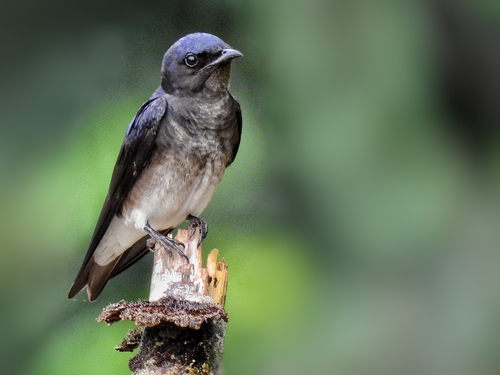 Gray-breasted Martin
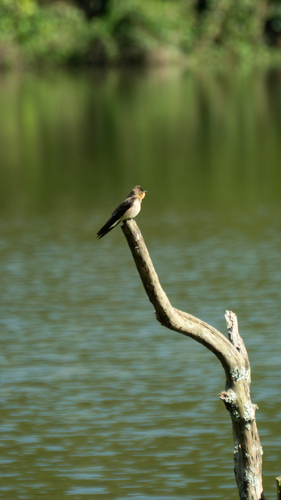 Southern Rough-winged Swallow
In breve
Il segno di campo più affidabile per separare il Gray-breasted Martin dal Southern Rough-winged Swallow è la dimensione e la struttura complessiva: il Gray-breasted Martin è molto più grande e massiccio, con un aspetto robusto e un corpo largo e un caratteristico codino forked, mentre il Southern Rough-winged Swallow è notevolmente più piccolo, snello e ha una coda quadrata. In volo o posato, il Gray-breasted Martin mostra un forte contrasto tra il suo petto grigio-marrone e il ventre bianco, mentre il Southern Rough-winged Swallow è più uniformemente marrone sotto con una gola cannella o fulva e manca di un contrasto netto nelle parti inferiori. I giovani di entrambe le specie sono più opachi, ma la dimensione maggiore del martin e la coda forked rimangono chiare. Fai attenzione con gli uccelli lontani o retroilluminati, poiché entrambe le specie possono apparire marroni e simili nella forma a colpo d'occhio.
Consigli di identificazione
- La dimensione è l'indizio più immediato: Il Gray-breasted Martin è molto più grande e massiccio del Southern Rough-winged Swallow. Se vedi un uccello delle dimensioni di una rondine che sembra notevolmente grande e con il petto largo, sospetta il martin.
- Forma della coda: Il Gray-breasted Martin ha una coda distintamente forked, visibile sia in volo che quando è posato. Il Southern Rough-winged Swallow ha una coda quadrata. Questo è affidabile tranne che in uccelli molto usurati o in muta.
- Contrasto delle parti inferiori: I martini adulti mostrano una netta divisione tra il petto grigio-marrone e il ventre bianco, mentre il Southern Rough-winged Swallow è più uniformemente marrone sotto, con solo una sottile transizione dal petto al ventre.
- Colore della gola: Il Southern Rough-winged Swallow ha una gola cannella o fulva (specialmente in alcune sottospecie), in contrasto con la gola grigio-marrone del martin. Questo è più utile a distanza ravvicinata o in buona luce.
- Lucentezza delle parti superiori: I martini maschi adulti sono blu-neri lucidi sopra, mentre il Southern Rough-winged Swallow è sempre di un grigio-marrone scuro uniforme sopra. Le femmine e i giovani di entrambi sono più opachi, ma il martin non è mai così uniformemente marrone come la rondine.
- Segni giovanili: I giovani martini sono marroni opachi sopra ma rimangono grandi e con la coda forked; i giovani rondini hanno bordi delle piume chiari sulle piume della schiena e una gola più opaca, ma sono sempre piccoli e con la coda quadrata.
- Stile di volo: I martini volano con battiti d'ala potenti e diretti e spesso planano o si librano; le rondini hanno un volo più leggero e più fluttuante e spesso cercano cibo più in basso, vicino al suolo o all'acqua.
- Flocking: I martini possono formare grandi stormi evidenti, specialmente al di fuori della stagione riproduttiva. Le rondini sono più spesso viste in piccoli gruppi o aggregazioni sparse.
- Becco e testa: Il becco del martin è più robusto e la testa appare più grande e robusta rispetto al becco più fine e alla testa più piccola della rondine.
- Variazione delle sottospecie: Alcune sottospecie di Southern Rough-winged Swallow hanno un sopracciglio più chiaro o parti inferiori striate, ma nessuna mostra il forte contrasto delle parti inferiori o la dimensione del martin.
- Sovrapposizione dell'habitat: Entrambe le specie possono verificarsi insieme vicino all'acqua o in campagna aperta, ma le rondini sono più probabili in radure forestali e a quote più elevate.
- Voce: Se sentito, il gurgolio del martin può aiutare, ma non fare affidamento sulla voce per la separazione a meno che non si sia familiari con entrambi.
- Postura posata: I martini spesso si posano eretti su fili o rami esposti, apparendo grandi e pesanti. Le rondini si posano più orizzontalmente e sembrano snelle.
- Trappole: Gli uccelli lontani o retroilluminati possono far apparire entrambe le specie simili nel colore e nella forma. Usa la dimensione, la forma della coda e il comportamento di stormo come indizi principali in condizioni di scarsa illuminazione.
- Contesto stagionale: Entrambe le specie possono essere presenti tutto l'anno in gran parte del loro areale, ma il Southern Rough-winged Swallow è un migratore parziale e può essere più numeroso in alcune aree durante la migrazione o la stagione non riproduttiva.
Taglia
Il Gray-breasted Martin è significativamente più grande, pesando circa 42 g e misurando 16–18 cm di lunghezza. Il suo corpo è robusto, con ali larghe e un petto profondo, conferendogli un aspetto pesante e potente. Al contrario, il Southern Rough-winged Swallow è molto più piccolo e leggero (13 cm, 14–18 g), con una struttura snella e delicata e ali e coda proporzionalmente più corte. Questa differenza di dimensione è spesso ovvia quando entrambe le specie sono viste insieme o con altre rondini per scala.
Piumaggio
- Giovani e immaturi: Entrambe le specie hanno parti superiori più opache da giovani, ma i giovani Gray-breasted Martin sono complessivamente marroni sopra e ancora più grandi con una coda forked, mentre i giovani Southern Rough-winged Swallow mostrano bordi chiari sulle piume della schiena e una gola più opaca.
- Adulti: I maschi adulti di Gray-breasted Martin sono blu-neri lucidi sopra con una gola e un petto grigio-marrone che contrastano nettamente con le parti inferiori bianche; le femmine sono più opache ma mostrano comunque questo contrasto. Gli adulti di Southern Rough-winged Swallow sono di un grigio-marrone scuro sopra con una gola cannella o fulva, un petto grigio-marrone e un ventre giallastro o marrone—mancando del contrasto netto delle parti inferiori del martin. Le copritrici della coda della rondine sono bianche, ma il resto delle parti inferiori è più mescolato nel tono. La coda forked del martin contrasta anche con la coda quadrata della rondine.
- Sottospecie: Alcune sottospecie di Southern Rough-winged Swallow (ad es., S. r. uropygialis) hanno un sopracciglio biancastro, ma questo non si avvicina al forte contrasto delle parti inferiori del martin.
Comportamento
Entrambe le specie sono insetti aerei, ma il Gray-breasted Martin spesso cerca cibo in stormi più grandi, più alti e più evidenti, a volte con altri martini. Il Southern Rough-winged Swallow cerca tipicamente cibo più in basso sopra l'acqua o il terreno aperto, spesso in gruppi più piccoli o stormi sciolti. Il volo del martin è più forte e diretto, mentre quello della rondine è più leggero e fluttuante. Entrambi possono essere gregari, specialmente al di fuori della stagione riproduttiva, ma la dimensione e le abitudini di stormo del martin lo rendono più evidente in aree aperte.
Habitat
Entrambe le specie si trovano in habitat aperti, spesso vicino all'acqua, ma il Southern Rough-winged Swallow è più probabile che venga trovato in una gamma più ampia di paesaggi aperti, comprese le radure all'interno delle foreste e a quote più elevate (fino a 3.600 m in alcune regioni). Il Gray-breasted Martin predilige il paese aperto, le città e le aree vicino all'acqua, ma è generalmente meno probabile che venga trovato alle quote più elevate o in profondità nelle radure forestali. La sovrapposizione è comune in aree aperte di pianura, specialmente vicino all'acqua.
Voce
Il Gray-breasted Martin emette un richiamo gurgolante chew-chew, simile al Caribbean Martin. La voce del Southern Rough-winged Swallow non è descritta in dettaglio nelle note, quindi le vocalizzazioni non sono un punto di separazione affidabile basato sulle informazioni attuali.
Gray-breasted Martin · Southern Rough-winged Swallow · I miei uccelli difficili