

greenish yellow-finch vs canário-da-terra
Sicalis olivascens versus Sicalis flaveola
Jogue um quiz com greenish yellow-finch e canário-da-terra
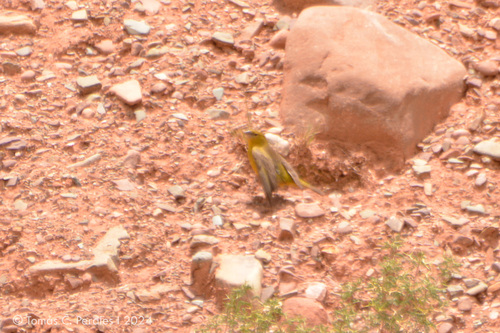 greenish yellow-finch
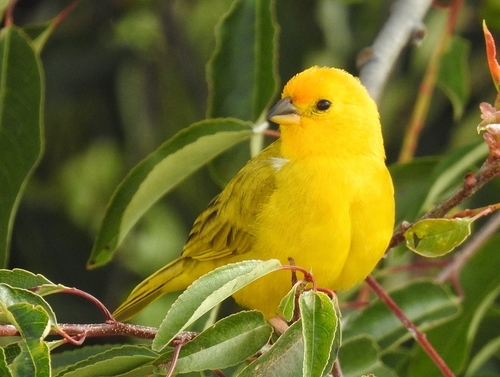 canário-da-terra
Em resumo
Para separar o greenish yellow-finch do canário-da-terra, concentre-se primeiro no habitat e na altitude: o greenish yellow-finch é uma espécie de alta Andean, enquanto o canário-da-terra é amplamente encontrado em áreas abertas de planície e encosta. Ambos são tentilhões amarelados do mesmo gênero, mas o canário-da-terra é tipicamente mais brilhante e amarelo mais saturado, especialmente em machos adultos, enquanto o greenish yellow-finch apresenta um tom mais opaco, mais amarelo-oliva. As diferenças estruturais são sutis, mas o greenish yellow-finch é ligeiramente mais pesado. Se você encontrar um Sicalis amarelo em um terreno arbustivo de alta altitude andina, é muito mais provável que seja um greenish yellow-finch; em áreas de planície ou urbanas, o canário-da-terra domina. As aves imaturas e fêmeas de ambas as espécies podem ser confusas, então o contexto e a saturação geral da cor são fundamentais.
Dicas de identificação
- Habitat e elevação: Sempre verifique sua localização. O greenish yellow-finch é uma espécie de alta Andean; o canário-da-terra é uma ave de planície de áreas abertas e semi-abertas. Se você estiver acima da linha das árvores ou em um terreno arbustivo de alta altitude, o greenish yellow-finch é muito mais provável.
- Saturação geral da cor: O canário-da-terra (especialmente machos adultos) é um amarelo vívido e saturado, às vezes com laranja na cabeça. O greenish yellow-finch é mais opaco, com um tom amarelo-oliva ou amarelo-esverdeado.
- Cor da cabeça: Procure tons laranja ou amarelo profundo na cabeça dos machos do canário-da-terra; o greenish yellow-finch não possui isso, permanecendo mais uniformemente amarelo-oliva.
- Partes inferiores: O canário-da-terra geralmente tem partes inferiores mais limpas e brilhantes. O greenish yellow-finch é mais suave e oliva por baixo.
- Partes superiores: O greenish yellow-finch apresenta um tom esverdeado ou oliva nas partes superiores, enquanto o canário-da-terra é mais uniformemente amarelo.
- Variação de sexo e idade: Fêmeas e imaturos de ambas as espécies são mais opacos, mas o canário-da-terra geralmente mantém um amarelo mais brilhante por baixo do que o greenish yellow-finch da mesma idade/sexo.
- Ambientes urbanos/antropogênicos: O canário-da-terra é comum em cidades, jardins e campos, muitas vezes perto de pessoas. O greenish yellow-finch evita essas áreas, preferindo encostas arbustivas selvagens.
- Distribuição geográfica: O canário-da-terra tem uma distribuição muito mais ampla na América do Sul, incluindo a Argentina de planície, Brasil e até populações introduzidas em ilhas do Caribe. O greenish yellow-finch é restrito aos Andes centrais.
- Comportamento: Ambas as espécies forrageiam no chão, mas o canário-da-terra é mais provável de ser visto em bandos soltos em áreas abertas.
- Diferença sutil de tamanho: O greenish yellow-finch é ligeiramente mais pesado, mas essa não é uma marca de campo confiável sem comparação direta.
- Sem diferenças fortes no padrão das asas: Não há marcas documentadas específicas de idade nas asas superiores ou padrões de voo para separar essas espécies em campo.
- Voz: Nenhuma diferença vocal diagnóstica é fornecida nas fontes; não confie em canto ou chamada para separação.
- Contexto sazonal: Ambas as espécies são residentes em suas respectivas áreas, então a estação é menos importante do que o habitat e a localização.
- Armadilhas com imaturos: Jovens canários-da-terra podem parecer opacos, mas geralmente ainda mostram um amarelo mais brilhante por baixo do que o greenish yellow-finch.
- Abordagem de lista de verificação: Se você ver um Sicalis amarelo em um parque urbano de planície, é quase certamente um canário-da-terra; se em um arbustivo andino alto, espera-se que seja um greenish yellow-finch.
Tamanho
O greenish yellow-finch é marginalmente mais pesado (22,0g) do que o canário-da-terra (19,2g) [wikidata], mas essa diferença é leve e não é provável que seja óbvia em campo. Ambas as espécies são semelhantes em tamanho e estrutura geral, sem diferenças fortes no comprimento do bico ou forma da cauda observadas nas fontes disponíveis. Use o tamanho apenas como uma pista de apoio, não como uma marca de campo primária.
Plumagem
Nenhuma diferença detalhada específica de idade no padrão das asas ou de voo é documentada nas fontes disponíveis; ambas as espécies são geralmente tentilhões amarelados, mas o canário-da-terra (especialmente machos adultos) é um amarelo muito mais brilhante e saturado, às vezes com tons laranja na cabeça. O greenish yellow-finch é mais suave, com um tom amarelo-oliva ou esverdeado no geral. Fêmeas e imaturos de ambas as espécies são mais opacos, mas o canário-da-terra geralmente mantém um amarelo mais limpo por baixo, enquanto o greenish yellow-finch é mais uniformemente oliva ou esverdeado. Na ausência de diferenças fortes no padrão das asas, confie na cor geral e no contexto.
Comportamento
Ambas as espécies são típicos tentilhões Sicalis, frequentemente vistos forrageando no chão ou em vegetação baixa. O canário-da-terra é mais provável de ser visto em áreas abertas e modificadas pelo homem, como jardins, parques e campos, às vezes em bandos soltos. O greenish yellow-finch tende a favorecer ambientes arbustivos de alta altitude e pode ser menos confiante ao redor de pessoas. O estilo de voo não é descrito como um forte separador nas fontes.
Habitat
O habitat é um separador chave: o greenish yellow-finch é encontrado nos Andes centrais da Argentina, Bolívia, Chile e Peru, especificamente em arbustos de alta altitude subtropicais ou tropicais e florestas degradadas [wikipedia]. O canário-da-terra é amplamente encontrado em áreas abertas de planície e encosta fora da Bacia Amazônica, incluindo ambientes urbanos e agrícolas, e está ausente dos Andes altos. Se você estiver em um arbustivo andino de alta altitude, espera-se que seja um greenish yellow-finch; em cidades de planície, campos ou jardins, o canário-da-terra é muito mais provável.
greenish yellow-finch · canário-da-terra · Minhas aves difíceis