

green-throated carib vs suiriri-cinza
Eulampis holosericeus versus Tyrannus dominicensis
Jogue um quiz com green-throated carib e suiriri-cinza
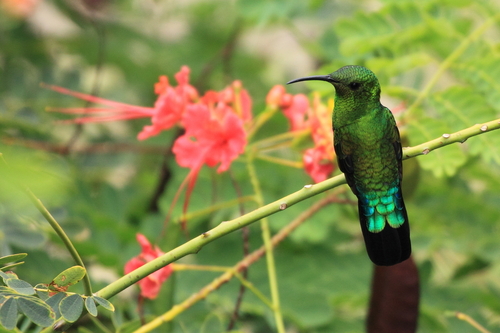 green-throated carib
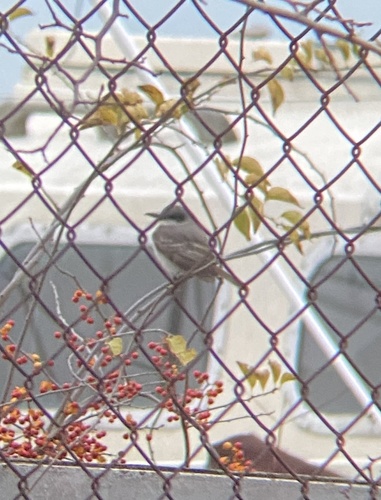 suiriri-cinza
Em resumo
A marca de campo mais confiável para separar o green-throated carib do suiriri-cinza é a estrutura geral e a plumagem: o carib é um beija-flor pequeno, compacto e verde metálico com um bico delgado e curvado para baixo, enquanto o suiriri-cinza é um pega-vagalume muito maior e robusto, com um bico pesado e reto e plumagem cinza e branca. Os suiriris-cinza juvenis podem mostrar bordas ruivas nas asas e na cauda, mas mesmo assim, seu tamanho, postura ereta e forma de pega-vagalume são inconfundíveis em comparação com qualquer beija-flor. Em voo ou empoleirado, as partes inferiores pálidas do suiriri-cinza e as partes superiores cinzas contrastam fortemente com a coloração verde brilhante e preta do carib. A forma e o tamanho do bico são imediatamente diagnósticos em qualquer idade ou estação. A confusão é mais provável à distância ou em luz fraca, mas a comparação direta de tamanho, estrutura e cor resolverá quase todas as confusões.
Dicas de identificação
- O tamanho é a verificação mais rápida: O green-throated carib é minúsculo (6,2 g), enquanto o suiriri-cinza é grande e robusto (43,8 g). Mesmo à distância, o suiriri-cinza ofusca o carib.
- A forma do bico é diagnóstica: O carib tem um bico delgado, ligeiramente a fortemente curvado para baixo (mais longo e mais curvado nas fêmeas); o suiriri-cinza tem um bico grosso, reto e pesado. Essa diferença é óbvia em qualquer ângulo.
- Cor da plumagem: O carib é verde metálico por cima com uma garganta verde brilhante e barriga preta; o suiriri-cinza é cinza por cima, branco por baixo, sem cores verdes ou metálicas.
- Aviso sobre o suiriri-cinza juvenil: Os jovens suiriris-cinza têm bordas ruivas nas asas e na cauda, mas ainda mostram cores base cinzas/brancas e nunca qualquer verde metálico. Os imaturos do carib se parecem com adultos mais apagados, nunca mostrando partes inferiores ruivas ou pálidas.
- Estrutura da cauda e das asas: O carib tem uma cauda curta, azul-preta e estreita, e asas pontudas; o suiriri-cinza tem uma cauda longa, acastanhada e asas largas e arredondadas.
- Estilo de voo: O carib paira e se lança, frequentemente se alimentando em flores; o suiriri-cinza voa com batidas de asas fortes e diretas e se empoleira ereto para capturar insetos.
- Postura empoleirada: O suiriri-cinza se senta ereto e alerta, frequentemente alto e exposto; o carib se empoleira mais horizontalmente, mais próximo da vegetação.
- Padrão facial: O suiriri-cinza tem uma máscara escura através do olho e às vezes uma faixa oculta amarela na coroa; o carib não tem máscara ou faixa na coroa.
- Partes inferiores: O carib tem uma barriga preta e um ventrículo verde; o suiriri-cinza é branco por baixo com um peito acinzentado.
- Contexto de habitat: O carib geralmente está perto de flores e vegetação baixa; o suiriri-cinza prefere áreas abertas, fios e copas de árvores.
- Vocalizações: O carib emite notas agudas e simples 'chup!'; o trinado alto e rolante do suiriri-cinza 'pipiri, pipiri' é distinto.
- Diferenças sexuais: As fêmeas do carib têm um bico mais longo e mais curvado e um verde ligeiramente mais apagado; os sexos do suiriri-cinza são semelhantes.
- Confusão sazonal: Ambas as espécies são residentes ou comuns em suas áreas, mas apenas os juvenis do suiriri-cinza mostram ruivo nas asas/cauda; o carib nunca mostra.
- Armadilhas de iluminação: Em luz fraca, a cauda do carib pode parecer preta; a cauda acastanhada do suiriri-cinza e as partes superiores cinzas permanecem não iridescentes.
- Sinais comportamentais: O suiriri-cinza pode ser visto atacando aves maiores; o carib defende áreas de flores e raramente interage com aves maiores.
Tamanho
O green-throated carib é dramaticamente menor, pesando cerca de 6,2 g e medindo 10,5–12 cm de comprimento [wikidata, wikipedia]. Em contraste, o suiriri-cinza é um grande passeriforme, pesando cerca de 43,8 g e medindo 23 cm de comprimento—quase quatro vezes a massa e duas vezes o comprimento do carib. O volume do suiriri-cinza, sua cauda longa e corpo robusto são óbvios mesmo à distância, enquanto o carib é minúsculo, delicado e compacto. Essa diferença de tamanho é tão extrema que mesmo uma breve visão com binóculos deve tornar a confusão improvável.
Plumagem
- Juvenile/immature suiriri-cinza: Os jovens suiriris-cinza têm bordas ruivas nas coberturas das asas, rabo e cauda, o que pode adicionar um tom quente à sua plumagem cinza e branca. Isso nunca é mostrado pelo green-throated carib em qualquer idade.
- Adult Green-throated Carib: Ambos os sexos são verdes metálicos por cima com uma gorget verde brilhante, barriga preta, ventrículo verde e uma cauda azul escura (parecendo preta). As fêmeas são ligeiramente mais apagadas e têm um bico mais longo e mais curvado. Não há partes inferiores brancas ou cinzas presentes em qualquer idade.
- Adult suiriri-cinza: Partes superiores cinzas, asas e cauda acastanhadas, partes inferiores brancas com um peito acinzentado e uma máscara escura através do olho. Uma faixa oculta amarela na coroa está presente, mas raramente visível. Não há cores metálicas ou verdes presentes. A plumagem do suiriri-cinza é sempre fosca e pálida em comparação com o carib escuro e brilhante.
- Em voo: O suiriri-cinza mostra asas largas e arredondadas e uma cauda longa, enquanto as asas do carib são estreitas e pontudas, típicas dos beija-flores.
Comportamento
O green-throated carib paira enquanto se alimenta em flores e frequentemente faz voos rápidos e repentinos; pode defender áreas de flores, especialmente os machos. O suiriri-cinza se empoleira ereto em galhos ou fios expostos, saindo para capturar insetos de maneira típica de pega-vagalume. Os suiriris-cinza atacam agressivamente aves maiores e são conspícuos em sua defesa territorial, enquanto os caribs estão mais focados em defender fontes de néctar. O voo do carib é rápido e semelhante ao de um beija-flor, enquanto o voo do suiriri-cinza é direto, com batidas de asas fortes e constantes.
Habitat
Ambas as espécies podem ser encontradas em habitats modificados pelo homem, mas suas preferências diferem: o green-throated carib frequenta jardins, crescimento secundário e vegetação próxima a casas, especialmente onde plantas floridas são abundantes. O suiriri-cinza prefere áreas abertas com árvores dispersas, bordas e fios, frequentemente visto em ambientes costeiros ou suburbanos. O suiriri-cinza é mais propenso a ser visto empoleirado alto e conspicuamente, enquanto o carib geralmente está mais próximo de flores e vegetação baixa.
Voz
O green-throated carib emite chamadas agudas 'chup!' ou 'chuwp!', e pode produzir estalidos ou zumbidos de asas durante disputas. O suiriri-cinza tem um trinado alto e rolante 'pipiri, pipiri', que é distinto e a origem de muitos nomes locais. O chamado do suiriri-cinza é muito mais alto e complexo do que as notas simples e agudas do carib.