

Green-throated Carib vs Gray Kingbird
Eulampis holosericeus contro Tyrannus dominicensis
Fai un quiz con Green-throated Carib e Gray Kingbird
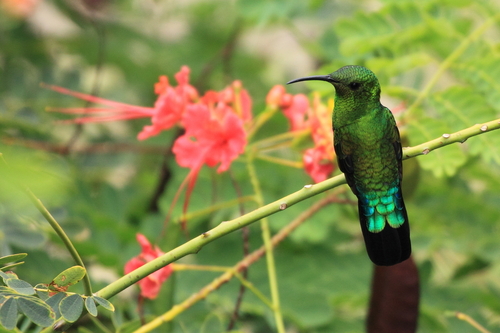 Green-throated Carib
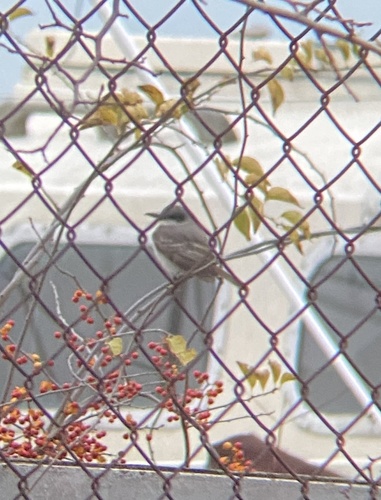 Gray Kingbird
In breve
Il segno di campo più affidabile per separare il Green-throated Carib dal Gray Kingbird è la struttura complessiva e il piumaggio: il carib è un piccolo colibrì compatto di colore verde metallico con un becco sottile e ricurvo, mentre il kingbird è un molto più grande e robusto catturatore di insetti con un becco pesante e dritto e piumaggio grigio e bianco. I giovani Gray Kingbirds possono mostrare bordi rugginosi sulle ali e sulla coda, ma anche in quel caso, la loro dimensione, postura eretta e forma da catturatore di insetti sono inconfondibili rispetto a qualsiasi colibrì. In volo o appollaiato, le parti inferiori chiare del kingbird e le parti superiori grigie contrastano nettamente con la colorazione verde lucido e nera del carib. La forma e la dimensione del becco sono immediatamente diagnostiche a qualsiasi età o stagione. La confusione è più probabile a distanza o in scarsa illuminazione, ma il confronto diretto di dimensione, struttura e colore risolverà quasi tutti i malintesi.
Consigli di identificazione
- La dimensione è il controllo più veloce: il Green-throated Carib è piccolo (6,2 g), mentre il Gray Kingbird è grande e massiccio (43,8 g). Anche a distanza, il kingbird sovrasta il carib.
- La forma del becco è diagnostica: il carib ha un becco sottile, leggermente o fortemente ricurvo (più lungo e più ricurvo nelle femmine); il kingbird ha un becco spesso, dritto e pesante. Questa differenza è ovvia in qualsiasi vista.
- Colore del piumaggio: il carib è verde metallico sopra con una gola verde brillante e un ventre nero; il kingbird è grigio sopra, bianco sotto, senza colori verdi o metallici.
- Avviso sui giovani kingbird: i giovani kingbirds hanno bordi rugginosi sulle ali e sulla coda, ma mostrano ancora colori di base grigi/bianchi e mai verde metallico. I giovani carib sembrano adulti più opachi, senza mai mostrare parti inferiori rugginose o chiare.
- Struttura della coda e delle ali: il carib ha una coda corta, blu-nera scura e ali strette e appuntite; il kingbird ha una coda lunga, marrone e ali larghe e arrotondate.
- Stile di volo: il carib fluttua e si muove rapidamente, spesso nutrendosi ai fiori; il kingbird vola con battiti d'ala forti e diretti e si appollaia eretto per catturare insetti.
- Postura appollaiata: il kingbird si siede eretto e all'erta, spesso in alto e esposto; il carib si appollaia più orizzontalmente, più vicino alla vegetazione.
- Schema facciale: il kingbird ha una maschera scura attraverso l'occhio e a volte una striscia gialla della corona nascosta; il carib non ha alcuna maschera o striscia della corona.
- Parti inferiori: il carib ha un ventre nero e un vent verde; il kingbird è bianco sotto con un petto grigiastro.
- Contesto dell'habitat: il carib è solitamente vicino ai fiori e alla vegetazione bassa; il kingbird preferisce aree aperte, fili e cime degli alberi.
- Vocalizzazioni: il carib emette note acute e semplici 'chup!'; il kingbird's loud, rolling trill 'pipiri, pipiri' è distintivo.
- Differenze sessuali: le femmine di carib hanno un becco più lungo e più ricurvo e un verde leggermente più opaco; i sessi del kingbird sono simili.
- Confusione stagionale: entrambe le specie sono residenti o comuni nei loro areali, ma solo i giovani kingbird mostrano rugginoso nelle ali/nella coda; il carib non lo fa mai.
- Trappole di illuminazione: in scarsa luce, la coda del carib può apparire nera; la coda marrone del kingbird e le parti superiori grigie rimangono non iridescenti.
- Indizi comportamentali: il kingbird può essere visto molestando uccelli più grandi; il carib difende i gruppi di fiori e raramente interagisce con uccelli più grandi.
Taglia
Il Green-throated Carib è drammaticamente più piccolo, pesando circa 6,2 g e misurando 10,5–12 cm di lunghezza [wikidata, wikipedia]. Al contrario, il Gray Kingbird è un grande passeriforme, circa 43,8 g e 23 cm di lunghezza—quasi quattro volte la massa e due volte la lunghezza del carib. La massa del kingbird, la coda lunga e il corpo robusto sono evidenti anche a distanza, mentre il carib è piccolo, delicato e compatto. Questa differenza di dimensione è così estrema che anche una breve vista con il binocolo dovrebbe rendere improbabile la confusione.
Piumaggio
- Giovane/immaturo Gray Kingbird: I giovani kingbirds hanno bordi rugginosi sulle copritrici delle ali, sul dorso e sulla coda, che possono aggiungere un tono caldo al loro piumaggio altrimenti grigio e bianco. Questo non è mai mostrato dal Green-throated Carib a qualsiasi età.
- Adulto Green-throated Carib: Entrambi i sessi sono verdi metallici sopra con un gorget verde brillante, ventre nero, vent verde e una coda blu scura (che appare nera). Le femmine sono leggermente più opache e hanno un becco più lungo e più ricurvo. Non ci sono parti inferiori bianche o grigie presenti a qualsiasi età.
- Adulto Gray Kingbird: Parti superiori grigie, ali e coda marroni, parti inferiori bianche con un petto grigiastro e una maschera scura attraverso l'occhio. Una striscia gialla della corona nascosta è presente ma raramente visibile. Non ci sono colori metallici o verdi presenti. Il piumaggio del kingbird è sempre opaco e pallido rispetto al carib lucido e scuro.
- In volo: Il kingbird mostra ali larghe e arrotondate e una coda lunga, mentre le ali del carib sono strette e appuntite, tipiche dei colibrì.
Comportamento
Il Green-throated Carib fluttua mentre si nutre ai fiori e spesso compie voli rapidi e fulminei; può difendere i gruppi di fiori, specialmente i maschi. Il Gray Kingbird si appollaia eretto su rami o fili esposti, lanciandosi per catturare insetti in tipico stile da catturatore di insetti. I kingbirds molestano aggressivamente uccelli più grandi e sono conspicui nella loro difesa territoriale, mentre i caribs sono più concentrati sulla difesa delle fonti di nettare. Il volo del carib è rapido e simile a quello di un colibrì, mentre il volo del kingbird è diretto, con battiti d'ala forti e costanti.
Habitat
Entrambe le specie possono essere trovate in habitat modificati dall'uomo, ma le loro preferenze differiscono: il Green-throated Carib frequenta giardini, vegetazione secondaria e vegetazione vicino alle case, specialmente dove le piante fiorite sono abbondanti. Il Gray Kingbird preferisce aree aperte con alberi sparsi, bordi e fili, spesso visto in ambienti costieri o suburbani. Il kingbird è più probabile che venga visto appollaiato in alto e in modo conspicuo, mentre il carib è solitamente più vicino ai fiori e alla vegetazione bassa.
Voce
Il Green-throated Carib emette chiamate acute 'chup!' o 'chuwp!', e può produrre rumori o fruscii delle ali durante le dispute. Il Gray Kingbird ha un trill forte e rotolante 'pipiri, pipiri,' che è distintivo e l'origine di molti nomi locali. Il richiamo del kingbird è molto più forte e complesso rispetto alle semplici e acute note del carib.
Green-throated Carib · Gray Kingbird · I miei uccelli difficili