

martim-pescador-da-mata vs bentevizinho-de-asa-ferrugínea
Chloroceryle inda versus Myiozetetes cayanensis
Jogue um quiz com martim-pescador-da-mata e bentevizinho-de-asa-ferrugínea
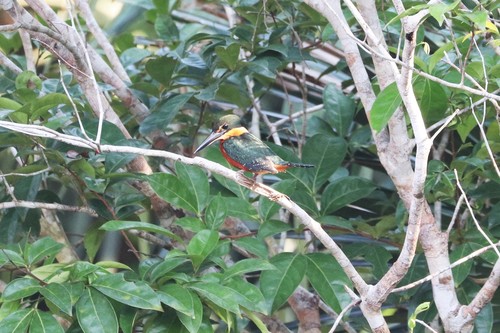 martim-pescador-da-mata
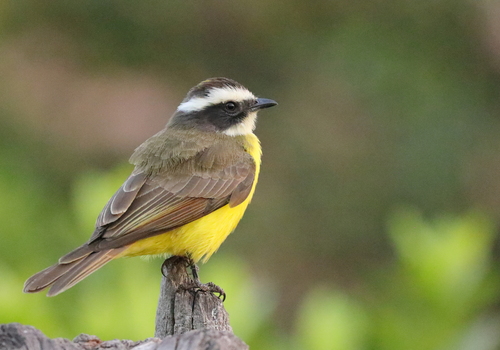 bentevizinho-de-asa-ferrugínea
Em resumo
A separação de campo mais confiável entre martim-pescador-da-mata e bentevizinho-de-asa-ferrugínea é estrutural: o martim-pescador tem um bico longo e pesado e um perfil compacto, de cabeça grande e cauda curta, enquanto o bentevizinho apresenta um bico muito mais curto e grosso e uma forma mais típica de passarinho canoro, com uma cauda mais longa e postura ereta. Os martins-pescadores juvenis têm uma faixa peitoral verde e manchas pesadas nas partes superiores, que podem ser confundidas com as bordas das asas e da cauda do bentevizinho, mas as partes inferiores ferrugíneas e as partes superiores verdes manchadas de branco do martim-pescador são únicas. Em voo ou empoleirado, procure as asas manchadas de branco e a barriga rica em ferrugem do martim-pescador em comparação com as partes inferiores amarelas brilhantes e as asas com bordas ferrugíneas do bentevizinho. Ambas as espécies ocorrem em regiões sobrepostas, mas seu comportamento e estrutura são muito diferentes.
Dicas de identificação
- Formato e tamanho do bico: O martim-pescador-da-mata tem um bico longo, pesado e em forma de adaga (preto com amarelo pálido na base), muito maior que o bico curto e preto do bentevizinho-de-asa-ferrugínea. Esta é a diferença estrutural mais confiável em qualquer idade.
- Cabeça e crista: O martim-pescador tem uma crista desgrenhada e uma cabeça proporcionalmente massiva, dando uma aparência desproporcional. A cabeça do bentevizinho é mais arredondada, com uma coroa escura e fuliginosa e uma mancha de coroa amarela oculta em adultos.
- Faixa peitoral em juvenis: Os martins-pescadores juvenis e fêmeas mostram uma faixa peitoral verde com manchas brancas; os machos têm uma faixa verde fina, mas todos têm partes inferiores ferrugíneas. O bentevizinho nunca mostra uma faixa peitoral—suas partes inferiores são sempre amarelas brilhantes, destacando-se nitidamente da garganta branca.
- Padrão da asa superior: O martim-pescador (todas as idades) tem coberturas com pontas brancas e pequenas manchas brancas nas secundárias, terciárias e cauda; o bentevizinho tem bordas ferrugíneas ou canela-ferrugínea (nunca manchas brancas) nas asas e cauda, que são mais óbvias em juvenis e algumas subespécies.
- Cor das partes inferiores: As partes inferiores do martim-pescador (exceto queixo/garganta) são de um rico ferrugem escuro; as do bentevizinho são amarelas brilhantes do peito ao ventre, com queixo e garganta brancos.
- Supercílios: O bentevizinho tem um supercílios branco ousado que se estende bem além do olho; o martim-pescador não tem supercílios, com uma cabeça verde simples e colar pálido.
- Cauda: A cauda do martim-pescador é curta e verde com manchas brancas; a do bentevizinho é mais longa, marrom escuro com bordas oliva ou ferrugíneas, nunca manchada.
- Cor das pernas: As pernas e pés do martim-pescador são rosados a cinza escuro; os do bentevizinho são pretos.
- Postura ao empoleirar: O martim-pescador se empoleira horizontalmente, muitas vezes baixo sobre a água; o bentevizinho se empoleira ereto, muitas vezes mais alto e longe da água.
- Contexto do habitat: Se visto longe da água, descarte o martim-pescador. Se empoleirado sobre um riacho ou rio, verifique a estrutura e plumagem do martim-pescador.
- Estilo de voo: O martim-pescador voa rápido e direto, geralmente baixo sobre a água; o bentevizinho tem um voo mais saltitante e ondulante, frequentemente saindo e retornando a um poleiro.
- Mancha de coroa: Os bentevizinhos adultos têm uma mancha de coroa amarela ou laranja-dourada oculta, às vezes visível quando agitados; a coroa do martim-pescador é verde simples.
- Diferenças sexuais: Apenas fêmeas e juvenis de martim-pescador mostram uma ampla faixa peitoral verde; machos de martim-pescador têm uma faixa verde fina ou nenhuma, mas todos têm partes inferiores ferrugíneas. Os sexos do bentevizinho são semelhantes.
- Confusão juvenil: Os martins-pescadores juvenis têm manchas brancas mais pesadas acima e uma faixa peitoral verde, mas nunca as partes inferiores amarelas ou o supercílios branco do bentevizinho. Os juvenis do bentevizinho têm mais canela-ferrugínea nas asas e cauda, mas sem manchas verdes ou brancas.
- Impressão de tamanho: O martim-pescador é visivelmente maior, mais robusto e com bico mais pesado do que qualquer bentevizinho, mesmo quando empoleirado à distância.
Tamanho
O martim-pescador-da-mata é maior e mais pesado (24 cm, 40–62 g) do que o bentevizinho-de-asa-ferrugínea (16.5–18 cm, 22–29.5 g). O martim-pescador parece mais robusto e compacto, com uma cabeça e bico proporcionalmente maiores, enquanto o bentevizinho é mais esguio, com uma cauda mais longa e uma construção mais delicada. Mesmo o maior bentevizinho é notavelmente mais leve e mais curto do que o menor martim-pescador.
Plumagem
- Juvenil martim-pescador-da-mata: Ambos os sexos mostram uma faixa peitoral verde e manchas brancas pesadas nas partes superiores verdes, que podem superficialmente se assemelhar às bordas ferrugíneas e oliva das asas do bentevizinho, mas o martim-pescador sempre tem uma barriga e flancos ricos em ferrugem, e asas e cauda verdes manchadas de branco. A faixa peitoral verde é fina em machos jovens e mais larga em fêmeas e juvenis.
- Adulto martim-pescador-da-mata: Machos têm partes superiores verdes brilhantes com coberturas com pontas brancas e pequenas manchas brancas nas asas e cauda, um colar amarelo pálido, e partes inferiores totalmente escuras e ferrugíneas. Fêmeas são semelhantes, mas com uma ampla faixa peitoral verde com manchas brancas e mais manchas pálidas acima. Ambos os sexos têm uma garganta e queixo ferrugíneos.
- Bentevizinho-de-asa-ferrugínea (todas as idades): Nunca mostra partes inferiores verdes ou ferrugíneas. Adultos e juvenis têm uma coroa escura e fuliginosa (com uma mancha de coroa amarela oculta em adultos), um supercílios branco ousado, partes superiores marrons a marrons-oliva simples, e partes inferiores amarelas brilhantes. As asas têm bordas finas ferrugíneas ou canela-ferrugínea (mais ousadas em algumas subespécies e juvenis), mas nunca manchas brancas. Juvenis não têm a mancha de coroa amarela e têm mais canela-ferrugínea nas asas e cauda.
- Contraste chave: Apenas o martim-pescador tem asas e cauda verdes manchadas de branco, e partes inferiores ricas em ferrugem; apenas o bentevizinho tem partes inferiores amarelas brilhantes e um supercílios branco.
Comportamento
O martim-pescador-da-mata é tipicamente visto empoleirado baixo sobre a água, muitas vezes em galhos ou raízes perto de riachos, escaneando em busca de peixes e mergulhando de cabeça. Ele se senta horizontalmente, com uma cabeça e bico grandes, e raramente balança a cauda. Em voo, é direto e rápido, frequentemente baixo sobre a água. O bentevizinho-de-asa-ferrugínea é geralmente encontrado mais alto, frequentemente em florestas abertas ou bordas de florestas, empoleirando-se ereto em galhos expostos, saindo para pegar insetos e retornando ao mesmo poleiro. Ele frequentemente balança a cauda e muda de posição, e seu voo é mais saltitante e menos direto do que o do martim-pescador.
Habitat
Ambas as espécies ocorrem em grande parte da América Central e do Sul, mas o martim-pescador-da-mata está estritamente ligado à água—riachos, rios e áreas úmidas florestadas—onde caça presas aquáticas. O bentevizinho-de-asa-ferrugínea é encontrado em uma gama mais ampla de habitats, incluindo florestas abertas, bordas de florestas, jardins e até parques urbanos, e não está ligado à água. Se o pássaro estiver longe da água, é quase certamente não um martim-pescador-da-mata.
martim-pescador-da-mata · bentevizinho-de-asa-ferrugínea · Minhas aves difíceis