

Motmot

アカハラミドリヤマセミ 対 キバラヒタキモドキ

Chloroceryle inda 対 Myiozetetes cayanensis

アカハラミドリヤマセミとキバラヒタキモドキのクイズ
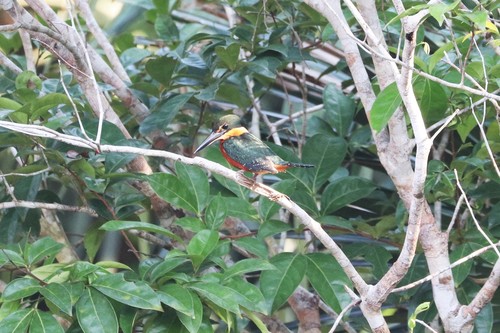
アカハラミドリヤマセミ (Chloroceryle inda) アカハラミドリヤマセミ
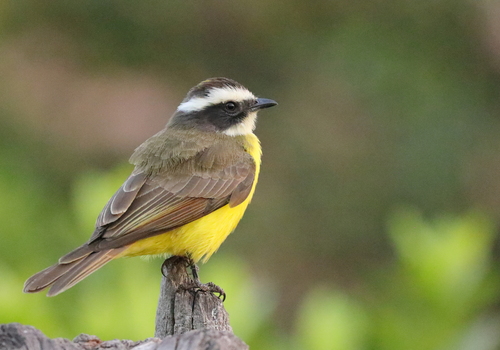
キバラヒタキモドキ (Myiozetetes cayanensis) キバラヒタキモドキ

メディア

読み込み中…

要点

アカハラミドリヤマセミとキバラヒタキモドキの最も信頼できるフィールドでの識別は構造的なものである:アカハラミドリヤマセミは長くて重いくちばしと、コンパクトで大きな頭、短い尾のプロファイルを持っているのに対し、キバラヒタキモドキはずっと短くて太いくちばしと、より典型的な歌鳥の形状を持ち、長い尾と直立した姿勢を示す。幼鳥のアカハラミドリヤマセミは緑の胸帯と重い上部の斑点を持ち、これはキバラヒタキモドキの翼と尾の縁と混同されることがあるが、アカハラミドリヤマセミの赤褐色の腹部と白斑のある緑の上部は独特である。飛んでいるときや止まっているときは、アカハラミドリヤマセミの白斑のある翼と豊かな赤褐色の腹部と、キバラヒタキモドキの明るい黄色の腹部と錆色の縁のある翼を探す。両種は重複する地域に生息しているが、その行動と構造は非常に異なる。

識別のコツ

  1. Bill shape and size: アカハラミドリヤマセミは長くて重い、ダガーのようなくちばし(基部が淡い黄色の黒色)を持ち、キバラヒタキモドキのずんぐりした黒いくちばしよりもはるかに大きい。これはどの年齢でも最も信頼できる構造的な違いである。
  2. Head and crest: アカハラミドリヤマセミは毛羽立った冠羽と比例的に大きな頭を持ち、上重心の外観を与える。キバラヒタキモドキの頭はより丸みを帯びており、暗いすすけた冠と成鳥には隠れた黄色の冠斑がある。
  3. Breastband in juveniles: 幼鳥と雌のアカハラミドリヤマセミは白い斑点のある緑の胸帯を示す;雄は薄い緑の帯を持つが、すべて赤褐色の腹部を持つ。キバラヒタキモドキは胸帯を持たず、その腹部は常に明るい黄色で、白い喉と鮮やかに区別される。
  4. Upperwing pattern: アカハラミドリヤマセミ(すべての年齢)は白い先端のあるカバー羽と小さな白い斑点を持つ;キバラヒタキモドキは翼と尾に錆色またはシナモン赤褐色の縁(白い斑点は決してない)を持ち、これは幼鳥やいくつかの亜種でより明らかである。
  5. Underparts color: アカハラミドリヤマセミの腹部(顎/喉を除く)は豊かな暗赤褐色である;キバラヒタキモドキの腹部は胸から肛門まで明るい黄色で、白い顎と喉を持つ。
  6. Supercilium: キバラヒタキモドキは目を超えてよく伸びる大胆な白い眉斑を持つ;アカハラミドリヤマセミは眉斑を持たず、平坦な緑の頭と淡い襟を持つ。
  7. Tail: アカハラミドリヤマセミの尾は短く緑色で白い斑点がある;キバラヒタキモドキの尾は長く、暗い茶色でオリーブまたは錆色の縁があり、決して斑点はない。
  8. Leg color: アカハラミドリヤマセミの脚と足は淡い灰色から暗い灰色である;キバラヒタキモドキの脚は黒い。
  9. Perching posture: アカハラミドリヤマセミは水平に座り、しばしば水面近くにいる;キバラヒタキモドキは直立して止まり、しばしば高い位置にあり、水から離れている。
  10. Habitat context: 水から離れて見られた場合、アカハラミドリヤマセミを除外する。小川や川の上に止まっている場合は、アカハラミドリヤマセミの構造と羽毛を確認する。
  11. Flight style: アカハラミドリヤマセミは速くて直接的に飛び、通常は水面近くを飛ぶ;キバラヒタキモドキはよりバウンドし、波打つような飛行をし、しばしば出て行って昆虫を捕まえ、同じ止まり木に戻る。
  12. Crown patch: 成熟したキバラヒタキモドキは隠れた黄色または金色の冠斑を持ち、時には興奮したときに見えることがある;アカハラミドリヤマセミの冠は平坦な緑である。
  13. Sex differences: 雌と幼鳥のアカハラミドリヤマセミだけが広い緑の胸帯を示す;雄のアカハラミドリヤマセミは薄い緑の帯またはなしだが、すべて赤褐色の腹部を持つ。キバラヒタキモドキの性別は同じである。
  14. Juvenile confusion: 幼鳥のアカハラミドリヤマセミは上に重い白い斑点と緑の胸帯を持つが、キバラヒタキモドキの黄色の腹部や白い眉斑は決して持たない。幼鳥のキバラヒタキモドキは翼と尾により多くの錆色のシナモンを持つが、緑や白の斑点はない。
  15. Size impression: アカハラミドリヤマセミは、どのキバラヒタキモドキよりも明らかに大きく、ずっしりとしており、くちばしも重い。

大きさ

アカハラミドリヤマセミはキバラヒタキモドキ(16.5–18 cm、22–29.5 g)よりも大きくて重い(24 cm、40–62 g)。アカハラミドリヤマセミはより頑丈でコンパクトに見え、比例的に大きな頭とくちばしを持っているのに対し、キバラヒタキモドキはスリムで、長い尾とより繊細な体型を持つ。最大のキバラヒタキモドキでさえ、最小のアカハラミドリヤマセミよりも明らかに軽く、短い。

羽色

行動

アカハラミドリヤマセミは通常、水面近くの枝や根に止まって魚を探し、頭から飛び込む姿が見られる。水平に座り、大きな頭とくちばしを持ち、尾をあまり振らない。飛行中は直接的で速く、通常は水面近くを飛ぶ。キバラヒタキモドキは通常、高い位置に見られ、開けた森林や森林の端で、露出した枝に直立して止まり、昆虫を捕まえるために出て行き、同じ止まり木に戻る。頻繁に尾を振り、位置を変え、その飛行はアカハラミドリヤマセミよりもバウンドし、直接的でない。

生息環境

両種は中南米の多くの地域に生息しているが、アカハラミドリヤマセミは水に厳密に結びついている—小川、川、森林の湿地—そこで水生の獲物を狩る。キバラヒタキモドキは開けた森林、森林の端、庭、さらには都市公園など、より広範囲の生息地に見られ、水に結びついていない。もし鳥が水から遠くにいる場合、ほぼ確実にアカハラミドリヤマセミではない。

より良い説明を送る

比較と同じ項目を使ってください。文章はすぐに公開されます。

The most reliable field separation between Green-and-rufous Kingfisher and Rusty-margined Flycatcher is structural: the kingfisher has a long, heavy bill and a compact, big-headed, short-tailed profile, while the flycatcher shows a much shorter, stubby bill and a more typical songbird shape with a longer tail and upright posture. Juvenile kingfishers have a green breastband and heavy upperpart spotting, which can be confused with the flycatcher's wing and tail edges, but the kingfisher's rufous underparts and white-spotted green upperparts are unique. In flight or perched, look for the kingfisher’s white-spotted wings and rich rufous belly versus the flycatcher’s bright yellow underparts and rusty-edged wings. Both species occur in overlapping regions, but their behavior and structure are very different.

  1. Bill shape and size: Green-and-rufous Kingfisher has a long, heavy, dagger-like bill (black with pale yellow at the base), much larger than the stubby, black bill of Rusty-margined Flycatcher. This is the most reliable structural difference at any age.
  2. Head and crest: Kingfisher has a shaggy crest and a proportionally massive head, giving a top-heavy look. Flycatcher’s head is more rounded, with a dark sooty crown and a hidden yellow crown patch in adults.
  3. Breastband in juveniles: Juvenile and female kingfishers show a green breastband with white speckles; males have a thin green band, but all have rufous underparts. Flycatcher never shows a breastband—its underparts are always bright yellow, sharply set off from the white throat.
  4. Upperwing pattern: Kingfisher (all ages) has white-tipped coverts and small white spots on secondaries, tertials, and tail; flycatcher has rusty or cinnamon-rufous edges (never white spots) on the wings and tail, which are more obvious in juveniles and some subspecies.
  5. Underparts color: Kingfisher’s underparts (except chin/throat) are rich dark rufous; flycatcher’s are bright yellow from breast to vent, with a white chin and throat.
  6. Supercilium: Flycatcher has a bold white supercilium extending well past the eye; kingfisher lacks any supercilium, with a plain green head and pale collar.
  7. Tail: Kingfisher’s tail is short and green with white spots; flycatcher’s is longer, dusky brown with olive or rusty edges, never spotted.
  8. Leg color: Kingfisher’s legs and feet are pinkish to dark gray; flycatcher’s are black.
  9. Perching posture: Kingfisher sits horizontally, often low over water; flycatcher perches upright, often higher up and away from water.
  10. Habitat context: If seen away from water, rule out kingfisher. If perched over a stream or river, check for kingfisher structure and plumage.
  11. Flight style: Kingfisher flies fast and direct, usually low over water; flycatcher has a more bounding, undulating flight, often sallying out and returning to a perch.
  12. Crown patch: Adult flycatchers have a hidden yellow or golden-orange crown patch, sometimes visible when agitated; kingfisher’s crown is plain green.
  13. Sex differences: Only female and juvenile kingfishers show a broad green breastband; male kingfishers have a thin green band or none, but all have rufous underparts. Flycatcher sexes are alike.
  14. Juvenile confusion: Juvenile kingfishers have heavier white spotting above and a green breastband, but never the yellow underparts or white supercilium of the flycatcher. Juvenile flycatchers have more rusty-cinnamon on wings and tail, but no green or white spots.
  15. Size impression: Kingfisher is noticeably larger, bulkier, and heavier-billed than any flycatcher, even when perched at a distance.

Green-and-rufous Kingfisher is larger and heavier (24 cm, 40–62 g) than Rusty-margined Flycatcher (16.5–18 cm, 22–29.5 g). The kingfisher appears more robust and compact, with a proportionally bigger head and bill, while the flycatcher is slimmer, with a longer tail and more delicate build. Even the largest flycatcher is notably lighter and shorter than the smallest kingfisher.

  • Juvenile Green-and-rufous Kingfisher: Both sexes show a green breastband and heavy white spotting on the green upperparts, which can superficially resemble the rusty and olive edges of the flycatcher’s wings, but the kingfisher always has a rich rufous belly and flanks, and white-spotted green wings and tail. The green breastband is thin in young males and broader in females and juveniles.
  • Adult Green-and-rufous Kingfisher: Males have glossy green upperparts with white-tipped coverts and small white spots on the wings and tail, a pale yellowish collar, and entirely dark rufous underparts. Females are similar but with a broad green breastband with white speckles and more pale spotting above. Both sexes have a buffy rufous throat and chin.
  • Rusty-margined Flycatcher (all ages): Never shows green or rufous underparts. Adults and juveniles have a dark sooty crown (with a hidden yellow crown patch in adults), a bold white supercilium, plain brown to olive-brown upperparts, and bright yellow underparts. Wings have thin rusty or cinnamon-rufous edges (bolder in some subspecies and juveniles), but never white spots. Juveniles lack the yellow crown patch and have more extensive rusty-cinnamon on wings and tail.
  • Key contrast: Only the kingfisher has white-spotted green wings and tail, and rich rufous underparts; only the flycatcher has bright yellow underparts and a white supercilium.

Green-and-rufous Kingfisher is typically seen perched low over water, often on branches or roots near streams, scanning for fish and diving headfirst. It sits horizontally, with a large head and bill, and rarely flicks its tail. In flight, it is direct and fast, often low over water. Rusty-margined Flycatcher is usually found higher up, often in open woodland or forest edge, perching upright on exposed branches, sallying out to catch insects and returning to the same perch. It frequently flicks its tail and shifts position, and its flight is more bounding and less direct than the kingfisher’s.

Both species occur in much of Central and South America, but Green-and-rufous Kingfisher is strictly tied to water—streams, rivers, and forested wetlands—where it hunts for aquatic prey. Rusty-margined Flycatcher is found in a wider range of habitats, including open woodland, forest edge, gardens, and even urban parks, and is not tied to water. If the bird is far from water, it is almost certainly not a Green-and-rufous Kingfisher.

変更を破棄しますか?

保存していない編集があります。今離れると失われます。

アカハラミドリヤマセミ · キバラヒタキモドキ · 苦手な鳥