

Martín Pescador Verdirrufo vs Bienteveo Alicastaño
Chloroceryle inda frente a Myiozetetes cayanensis
Juega un quiz con Martín Pescador Verdirrufo y Bienteveo Alicastaño
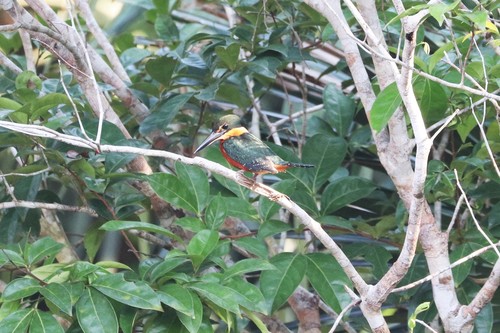 Martín Pescador Verdirrufo
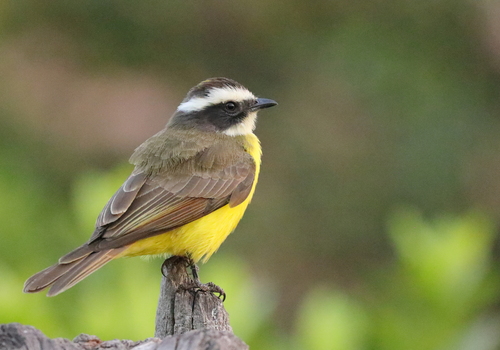 Bienteveo Alicastaño
En breve
La separación más confiable en el campo entre el Martín Pescador Verdirrufo y el Bienteveo Alicastaño es estructural: el martinete tiene un pico largo y pesado y un perfil compacto, de cabeza grande y cola corta, mientras que el bienteveo muestra un pico mucho más corto y grueso y una forma más típica de ave cantora con una cola más larga y postura erguida. Los martinetes juveniles tienen una banda pectoral verde y manchas pesadas en la parte superior, que pueden confundirse con los bordes de las alas y la cola del bienteveo, pero las partes inferiores rufo del martinete y las partes superiores verdes con manchas blancas son únicas. En vuelo o posado, busca las alas manchadas de blanco del martinete y su rico vientre rufo frente a las partes inferiores amarillas brillantes y las alas con bordes oxidados del bienteveo. Ambas especies ocurren en regiones superpuestas, pero su comportamiento y estructura son muy diferentes.
Consejos de identificación
- Forma y tamaño del pico: El Martín Pescador Verdirrufo tiene un pico largo, pesado y en forma de daga (negro con amarillo pálido en la base), mucho más grande que el pico corto y negro del Bienteveo Alicastaño. Esta es la diferencia estructural más confiable a cualquier edad.
- Cabeza y cresta: El martinete tiene una cresta desaliñada y una cabeza proporcionalmente masiva, lo que le da un aspecto desbalanceado. La cabeza del bienteveo es más redondeada, con una corona oscura y sucia y un parche de corona amarilla oculto en los adultos.
- Banda pectoral en juveniles: Los martinetes juveniles y hembras muestran una banda pectoral verde con manchas blancas; los machos tienen una banda verde delgada, pero todos tienen partes inferiores rufo. El bienteveo nunca muestra una banda pectoral; sus partes inferiores son siempre de un amarillo brillante, claramente diferenciadas de la garganta blanca.
- Patrón de la parte superior del ala: El martinete (todas las edades) tiene cobertoras con puntas blancas y pequeñas manchas blancas en las secundarias, terciarias y cola; el bienteveo tiene bordes oxidados o canela-rufos (nunca manchas blancas) en las alas y la cola, que son más obvios en juveniles y algunas subespecies.
- Color de las partes inferiores: Las partes inferiores del martinete (excepto el mentón/garganta) son de un rufo oscuro rico; las del bienteveo son de un amarillo brillante desde el pecho hasta el vent, con un mentón y garganta blancos.
- Supercilio: El bienteveo tiene un supercilio blanco audaz que se extiende bien más allá del ojo; el martinete carece de supercilio, con una cabeza verde simple y un collar pálido.
- Cola: La cola del martinete es corta y verde con manchas blancas; la del bienteveo es más larga, de color marrón oscuro con bordes oliva u oxidados, nunca manchada.
- Color de las patas: Las patas y pies del martinete son de un color rosado a gris oscuro; las del bienteveo son negras.
- Postura al posarse: El martinete se sienta horizontalmente, a menudo bajo sobre el agua; el bienteveo se posa erguido, a menudo más alto y alejado del agua.
- Contexto del hábitat: Si se ve lejos del agua, descarta el martinete. Si está posado sobre un arroyo o río, verifica la estructura y plumaje del martinete.
- Estilo de vuelo: El martinete vuela rápido y directo, generalmente bajo sobre el agua; el bienteveo tiene un vuelo más saltarín y ondulante, a menudo saliendo y regresando a un posadero.
- Parche de corona: Los bienteveos adultos tienen un parche de corona amarillo o naranja dorado oculto, a veces visible cuando están agitados; la corona del martinete es verde simple.
- Diferencias sexuales: Solo las hembras y los martinetes juveniles muestran una amplia banda pectoral verde; los machos martinetes tienen una banda verde delgada o ninguna, pero todos tienen partes inferiores rufo. Los sexos del bienteveo son similares.
- Confusión juvenil: Los martinetes juveniles tienen manchas blancas más pesadas arriba y una banda pectoral verde, pero nunca las partes inferiores amarillas o el supercilio blanco del bienteveo. Los bienteveos juveniles tienen más canela-oxidado en las alas y la cola, pero no manchas verdes o blancas.
- Impresión de tamaño: El martinete es notablemente más grande, más robusto y con un pico más pesado que cualquier bienteveo, incluso cuando está posado a distancia.
Tamaño
El Martín Pescador Verdirrufo es más grande y pesado (24 cm, 40–62 g) que el Bienteveo Alicastaño (16.5–18 cm, 22–29.5 g). El martinete parece más robusto y compacto, con una cabeza y pico proporcionalmente más grandes, mientras que el bienteveo es más delgado, con una cola más larga y una construcción más delicada. Incluso el bienteveo más grande es notablemente más ligero y más corto que el martinete más pequeño.
Plumaje
- Juvenil Martín Pescador Verdirrufo: Ambos sexos muestran una banda pectoral verde y manchas blancas pesadas en las partes superiores verdes, que pueden parecer superficialmente los bordes oxidados y oliva de las alas del bienteveo, pero el martinete siempre tiene un vientre y flancos rufo ricos, y alas y cola verdes manchadas de blanco. La banda pectoral verde es delgada en los machos jóvenes y más ancha en las hembras y juveniles.
- Adulto Martín Pescador Verdirrufo: Los machos tienen partes superiores verdes brillantes con cobertoras con puntas blancas y pequeñas manchas blancas en las alas y la cola, un collar amarillento pálido y partes inferiores rufo completamente oscuras. Las hembras son similares pero con una banda pectoral verde ancha con manchas blancas y más manchas pálidas arriba. Ambos sexos tienen una garganta y mentón rufo pálido.
- Bienteveo Alicastaño (todas las edades): Nunca muestra partes inferiores verdes o rufo. Los adultos y juveniles tienen una corona oscura y sucia (con un parche de corona amarilla oculto en los adultos), un supercilio blanco audaz, partes superiores marrón simple a marrón oliva, y partes inferiores amarillas brillantes. Las alas tienen bordes oxidados o canela-rufos delgados (más audaces en algunas subespecies y juveniles), pero nunca manchas blancas. Los juveniles carecen del parche de corona amarilla y tienen más canela-oxidado en las alas y la cola.
- Contraste clave: Solo el martinete tiene alas y cola verdes manchadas de blanco, y partes inferiores rufo ricas; solo el bienteveo tiene partes inferiores amarillas brillantes y un supercilio blanco.
Comportamiento
El Martín Pescador Verdirrufo se ve típicamente posado bajo sobre el agua, a menudo en ramas o raíces cerca de arroyos, escaneando en busca de peces y zambulléndose de cabeza. Se sienta horizontalmente, con una cabeza y pico grandes, y rara vez mueve su cola. En vuelo, es directo y rápido, a menudo bajo sobre el agua. El Bienteveo Alicastaño se encuentra generalmente más alto, a menudo en bosques abiertos o bordes de bosques, posándose erguido en ramas expuestas, saliendo para atrapar insectos y regresando al mismo posadero. Mueve su cola con frecuencia y cambia de posición, y su vuelo es más saltarín y menos directo que el del martinete.
Hábitat
Ambas especies ocurren en gran parte de América Central y del Sur, pero el Martín Pescador Verdirrufo está estrictamente ligado al agua: arroyos, ríos y humedales forestales, donde caza presas acuáticas. El Bienteveo Alicastaño se encuentra en una gama más amplia de hábitats, incluyendo bosques abiertos, bordes de bosques, jardines e incluso parques urbanos, y no está ligado al agua. Si el ave está lejos del agua, casi con certeza no es un Martín Pescador Verdirrufo.
Martín Pescador Verdirrufo · Bienteveo Alicastaño · Mis aves difíciles