

greater coucal vs asian koel
Centropus sinensis versus Eudynamys scolopaceus
Jogue um quiz com greater coucal e asian koel
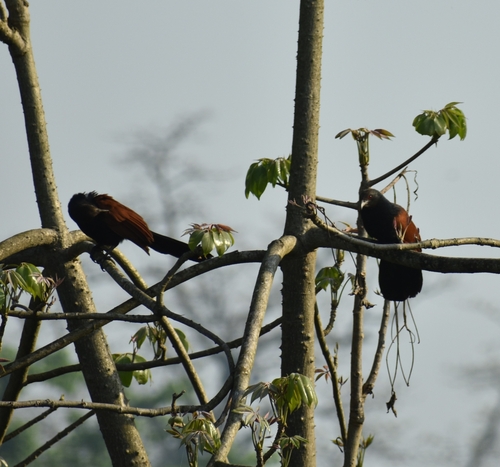 greater coucal
 asian koel
Em resumo
A marca de campo mais confiável para separar o greater coucal do asian koel é a cor das asas e das costas: o greater coucal de todas as idades apresenta asas ricas em castanho ou marrom-cobre, contrastando com uma cabeça e corpo pretos, enquanto os machos de asian koel são azul-preto brilhante por toda parte e as fêmeas são fortemente manchadas e listradas de marrom acima, com partes inferiores pálidas. O juvenile greater coucal é mais opaco, mas ainda mostra asas castanhas, enquanto o juvenile asian koel se assemelha à fêmea, com manchas e listras proeminentes. Em voo ou empoleirado, as asas castanhas do coucal se destacam, enquanto o koel nunca mostra esse contraste. Ambos são cucos grandes e de cauda longa, mas o coucal é mais pesado e robusto, frequentemente se movendo desajeitadamente em vegetação densa, enquanto o koel é mais esguio e mais arborícola. A voz e o comportamento também diferem, mas a cor das asas e do corpo é a mais confiável em todas as idades.
Dicas de identificação
- Asas castanhas (todas as idades, todos os sexos): Apenas o greater coucal mostra asas e costas ricas em castanho ou marrom-cobre, contrastando com uma cabeça e corpo pretos. Isso é visível em todas as plumagens, incluindo juvenis. O asian koel nunca mostra asas castanhas—os machos são pretos brilhantes, as fêmeas e juvenis são marrons com manchas brancas.
- Machos brilhantes e totalmente pretos (adulto): O macho de asian koel é azul-preto brilhante por toda parte, sem marrom ou castanho em lugar algum. O macho de greater coucal é preto com asas castanhas—nunca totalmente preto.
- Fêmea e juvenil manchados/listrados: A fêmea e o juvenil de asian koel são marrons acima, com manchas brancas/buff e partes inferiores pálidas, fortemente listradas. O greater coucal de qualquer idade nunca mostra esse padrão—sempre é liso por baixo, com asas castanhas.
- Confusão juvenil: Se você ver um grande cuco com asas castanhas e corpo preto opaco, é um juvenile greater coucal. Se for marrom com manchas e listras brancas pesadas, é um juvenile asian koel.
- Cor do bico: O macho de asian koel tem um bico verde-acinzentado pálido; os juvenis têm um bico preto. O greater coucal tem um bico escuro em todas as idades. Isso é sutil, mas pode ajudar em vistas próximas.
- Cor dos olhos: Ambos têm olhos vermelhos ou carmesins como adultos; não é um separador confiável.
- Cauda: Ambos têm caudas longas, mas a cauda do coucal é mais larga e frequentemente parece mais pesada. A cauda do koel é mais esguia e mais aerodinâmica.
- Estrutura e aparência: O greater coucal é robusto, com uma aparência desajeitada, semelhante à de um corvo, especialmente no chão ou em cobertura densa. O asian koel é mais esguio, mais arborícola e se move com mais agilidade nas árvores.
- Estilo de voo: O coucal voa fraco e relutante, geralmente baixo e por curtas distâncias. O koel voa mais prontamente e pode se mover entre as copas das árvores.
- Comportamento: O coucal é secreto, frequentemente se escondendo em vegetação densa ou tomando sol com as asas abertas. O koel é ousado, vocal e frequentemente se empoleira de forma conspícua em árvores frutíferas.
- Habitat: Ambos podem ocorrer em jardins e bordas, mas o coucal prefere sub-bosques densos, enquanto o koel é mais frequentemente encontrado em árvores abertas e na copa.
- Voz: Se você ouvir um 'coop-coop-coop' profundo e ressonante, é o coucal. Se você ouvir um 'koo-Ooo' alto e repetitivo ou um 'kik-kik-kik...' estridente, é o koel.
- Diferenças sexuais: Os sexos do coucal são semelhantes em plumagem; os sexos do koel são muito diferentes—os machos são totalmente pretos, as fêmeas são marrons e manchadas.
- Contexto sazonal: O koel é especialmente vocal e conspícuo durante a estação de reprodução (março-agosto); o coucal é mais secreto durante todo o ano.
- Armadilhas comuns: Não confie apenas no tamanho—ambos são grandes e de cauda longa. Foque na cor das asas e no padrão do corpo, especialmente em voo ou quando empoleirados em boa luz.
Tamanho
O greater coucal é a ave mais pesada e robusta, com uma massa corporal média de 283 g [wikidata], em comparação com a massa variável, mas geralmente mais leve do asian koel (190–327 g, com a maioria dos machos na extremidade inferior) [wikipedia]. O coucal é ligeiramente mais longo (até 48 cm) e tem uma construção mais robusta, semelhante à de um corvo, com uma cauda longa e larga. O koel também é de cauda longa (39–46 cm), mas mais esguio, mais aerodinâmico e menos robusto. No campo, o coucal frequentemente parece maior e mais pesado, especialmente ao se mover no chão ou em cobertura densa.
Plumagem
- Juvenil/imaturo: O juvenile greater coucal é preto opaco no geral, com asas castanho-avermelhadas, às vezes com barras pálidas na parte inferior e na cauda (em raças do norte), mas sempre carece das pesadas manchas e listras brancas do juvenile asian koel. O juvenile koel se assemelha à fêmea: marrom acima com manchas brancas e buff, partes inferiores pálidas fortemente listradas, e nunca mostra asas castanhas.
- Macho adulto: O macho adulto greater coucal é preto com um brilho roxo na cabeça e partes inferiores, e asas e costas ricas em castanho. O macho adulto asian koel é azul-preto brilhante por toda parte, sem castanho ou marrom nas asas ou costas.
- Fêmea adulta: A fêmea greater coucal é muito semelhante ao macho, apenas ligeiramente maior; ambos os sexos têm asas castanhas. A fêmea asian koel é marrom acima com listras ruivas, costas e coberturas de asas marrons escuras com manchas brancas/buff, e partes inferiores pálidas, fortemente listradas.
- Íris: Ambas as espécies têm olhos vermelhos ou carmesins em adultos, não sendo um separador confiável.
- Bico: O koel tem um bico verde-acinzentado pálido (macho), preto em juvenis; o coucal tem um bico escuro.
Comportamento
O greater coucal é frequentemente visto se movendo desajeitadamente no chão ou baixo em vegetação densa, às vezes tomando sol com as asas abertas. Ele raramente voa longe e parece pesado e lento em voo. O asian koel é muito mais arborícola, frequentemente se empoleirando alto nas árvores e se movendo com agilidade através da copa. O koel é mais propenso a ser visto voando entre as copas das árvores ou chamando conspicuamente de poleiros expostos. Os movimentos do coucal são secretos e lentos em comparação com o koel, que é mais ativo e vocal.
Habitat
Ambas as espécies compartilham uma ampla gama no subcontinente indiano e no sudeste asiático, e podem ocorrer em habitats semelhantes, incluindo jardins, cultivo e bordas de florestas. No entanto, o greater coucal é mais frequentemente encontrado em sub-bosques densos, emaranhados, aglomerados de bambu ou vegetação densa, enquanto o asian koel prefere florestas abertas, árvores frutíferas e parques urbanos, frequentemente mais alto na copa. O habitat sozinho não é diagnóstico, mas o coucal é mais terrestre e o koel mais arborícola.
Voz
As vocalizações são muito diferentes e podem ser diagnósticas se ouvidas. O greater coucal emite chamados profundos e ressonantes de 'coop-coop-coop' ou 'boop-boop', geralmente de cobertura ou poleiros baixos. O asian koel é famoso por sua canção alta e que se propaga de 'koo-Ooo' (macho) e os chamados estridentes de 'kik-kik-kik...' da fêmea, frequentemente repetidos por longos períodos, especialmente na estação de reprodução. O koel é muito mais vocal e conspícuo pelo som, especialmente na primavera e no verão.