

Chinese spoorkoekoek vs Indische koël
Centropus sinensis versus Eudynamys scolopaceus
Speel een quiz met Chinese spoorkoekoek en Indische koël
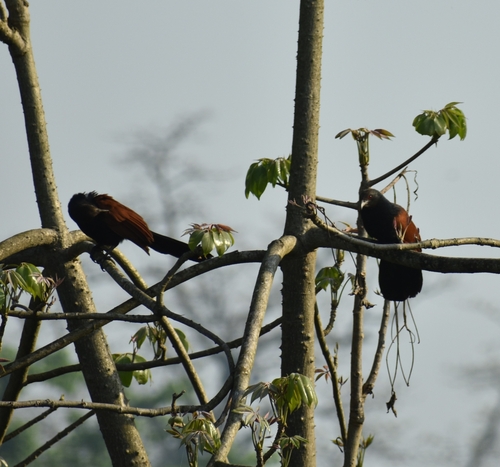 Chinese spoorkoekoek
 Indische koël
Kort gezegd
Het meest betrouwbare veldkenmerk om de Chinese spoorkoekoek van de Indische koël te scheiden, is de kleur van de vleugels en de rug: de Chinese spoorkoekoek van alle leeftijden toont rijke kastanjebruine of koperbruine vleugels die contrasteren met een zwarte kop en lichaam, terwijl de mannelijke Indische koël overal glanzend blauwzwart is en de vrouwelijke zwaar gevlekt en gestreept bruin is boven met lichte onderdelen. Juveniele Chinese spoorkoekoek is doffer maar toont nog steeds kastanjebruine vleugels, terwijl de juvenile Indische koël op de vrouwelijke lijkt met prominente vlekken en strepen. In de vlucht of zittend vallen de kastanjebruine vleugels van de spoorkoekoek op, terwijl de koël dit contrast nooit toont. Beide zijn grote, langstaartige koekoeken, maar de spoorkoekoek is zwaarder en robuuster, vaak onhandig bewegend in dichte vegetatie, terwijl de koël slanker en meer boombewonend is. Stem en gedrag verschillen ook, maar de kleur van de vleugels en het lichaam zijn het meest betrouwbaar op alle leeftijden.
Herkenningstips
- Kastanjebruine vleugels (alle leeftijden, alle seksen): Alleen de Chinese spoorkoekoek toont rijke kastanjebruine of koperbruine vleugels en rug die contrasteren met een zwarte kop en lichaam. Dit is zichtbaar in alle verenkleed, inclusief juvenielen. De Indische koël toont nooit kastanjebruine vleugels—mannen zijn glanzend zwart, vrouwen en juvenielen zijn bruin met witte vlekken.
- Glanzende volledig zwarte mannelijke (volwassen): De mannelijke Indische koël is overal glanzend blauwzwart zonder bruin of kastanjebruin ergens. De mannelijke Chinese spoorkoekoek is zwart met kastanjebruine vleugels—nooit volledig zwart.
- Gevlekte/gestreepte vrouwelijke en juvenile: De vrouwelijke en juvenile Indische koël zijn bruin boven met witte/buff vlekken en lichte, zwaar gestreepte onderdelen. De Chinese spoorkoekoek van welke leeftijd dan ook toont dit patroon nooit—altijd eenvoudig onder, met kastanjebruine vleugels.
- Juveniele verwarring: Als je een grote koekoek ziet met kastanjebruine vleugels en een dof zwart lichaam, is het een juvenile Chinese spoorkoekoek. Als het bruin is met zware witte vlekken en strepen, is het een juvenile Indische koël.
- Snavelkleur: De mannelijke Indische koël heeft een lichte groenachtige-grijze snavel; juvenielen hebben een zwarte snavel. De Chinese spoorkoekoek heeft in alle leeftijden een donkere snavel. Dit is subtiel maar kan helpen bij dichtbij bekijken.
- Oogkleur: Beide hebben rode of karmijnrode ogen als volwassenen; niet een betrouwbare scheiding.
- Staart: Beide zijn langstaartig, maar de staart van de spoorkoekoek is breder en lijkt vaak zwaarder. De staart van de koël is slanker en gestroomlijnder.
- Structuur en jizz: De Chinese spoorkoekoek is zwaar gebouwd, met een kraaiachtige, onhandige uitstraling, vooral op de grond of in dichte dekking. De Indische koël is slanker, meer boombewonend, en beweegt met meer behendigheid in bomen.
- Vluchtstijl: De spoorkoekoek vliegt zwak en met tegenzin, meestal laag en voor korte afstanden. De koël vliegt gemakkelijker en kan tussen de boomtoppen bewegen.
- Gedrag: De spoorkoekoek is geheimzinnig, vaak schuilend in dichte vegetatie of zich zonnebadend met uitgespreide vleugels. De koël is moedig, vocaal, en zit vaak opvallend in vruchtdragende bomen.
- Habitat: Beide kunnen voorkomen in tuinen en randen, maar de spoorkoekoek geeft de voorkeur aan dichte ondergroei, de koël is vaker in open bomen en het bladerdak.
- Stem: Als je een diepe, resonante 'coop-coop-coop' hoort, is het de spoorkoekoek. Als je een luide, repetitieve 'koo-Ooo' of scherpe 'kik-kik-kik...' hoort, is het de koël.
- Seksverschillen: De seksen van de spoorkoekoek zijn vergelijkbaar in verenkleed; de seksen van de koël zijn heel verschillend—mannen zijn volledig zwart, vrouwen zijn bruin en gevlekt.
- Seizoenscontext: De koël is vooral vocaal en opvallend tijdens het broedseizoen (maart-augustus); de spoorkoekoek is het hele jaar door geheimzinnig.
- Veelvoorkomende valkuilen: Vertrouw niet alleen op grootte—beide zijn groot en langstaartig. Focus op vleugel kleur en lichaamspatroon, vooral in de vlucht of wanneer ze in goed licht zitten.
Grootte
De Chinese spoorkoekoek is de zwaardere en robuustere vogel, met een gemiddelde lichaamsmassa van 283 g [wikidata], vergeleken met de variabele maar over het algemeen lichtere massa van de Indische koël (190–327 g, met de meeste mannen aan de onderkant) [wikipedia]. De spoorkoekoek is iets langer (tot 48 cm) en heeft een robuustere, kraaiachtige bouw met een lange, brede staart. De koël is ook langstaartig (39–46 cm), maar slanker, gestroomlijnder en minder zwaar gebouwd. In het veld lijkt de spoorkoekoek vaak groter en zwaarder, vooral wanneer hij zich op de grond of in dichte dekking beweegt.
Verenkleed
- Juveniel/onvolwassen: Juveniele Chinese spoorkoekoek is dof zwart met kastanjebruine vleugels, soms met lichte strepen op de onderzijde en staart (in noordelijke rassen), maar mist altijd de zware witte vlekken en strepen van de juvenile Indische koël. Juveniele koël lijkt op de vrouwelijke: bruin boven met witte en buff vlekken, zwaar gestreepte lichte onderdelen, en toont nooit kastanjebruine vleugels.
- Volwassen mannelijke: Volwassen mannelijke Chinese spoorkoekoek is zwart met een paarse glans op de kop en onderdelen, en rijke kastanjebruine vleugels en rug. Volwassen mannelijke Indische koël is overal glanzend blauwzwart, zonder kastanjebruin of bruin op de vleugels of rug.
- Volwassen vrouwelijke: Vrouwelijke Chinese spoorkoekoek is zeer vergelijkbaar met de mannelijke, alleen iets groter; beide seksen hebben kastanjebruine vleugels. Vrouwelijke Indische koël is bruinachtig boven met roestkleurige strepen, donkere bruine rug en vleugelbedekking met witte/buff vlekken, en lichte, zwaar gestreepte onderdelen.
- Iris: Beide soorten hebben rode of karmijnrode ogen bij volwassenen, niet een betrouwbare scheiding.
- Snavel: De koël heeft een lichte groenachtige-grijze snavel (man), zwart bij juvenielen; de spoorkoekoek heeft een donkere snavel.
Gedrag
De Chinese spoorkoekoek wordt vaak gezien terwijl hij onhandig op de grond of laag in dichte vegetatie beweegt, soms zich zonnebadend met uitgespreide vleugels. Hij vliegt zelden ver en lijkt zwaar en traag in de vlucht. De Indische koël is veel meer boombewonend, vaak hoog in bomen zittend en met behendigheid door het bladerdak bewegend. De koël is waarschijnlijker te zien terwijl hij tussen de boomtoppen vliegt of opvallend roept vanaf blootgestelde zitplaatsen. De bewegingen van de spoorkoekoek zijn geheimzinnig en traag in vergelijking met de actievere, vocale koël.
Habitat
Beide soorten delen een breed bereik over het Indiase subcontinent en Zuidoost-Azië, en kunnen voorkomen in vergelijkbare habitats, waaronder tuinen, landbouw en bosranden. De Chinese spoorkoekoek wordt echter vaker gevonden in dichte ondergroei, kluwen, bamboe-struiken of dichte vegetatie, terwijl de Indische koël de voorkeur geeft aan open bos, vruchtdragende bomen en stedelijke parken, vaak hoger in het bladerdak. Habitat alleen is niet diagnostisch, maar de spoorkoekoek is meer terrestrisch en de koël meer boombewonend.
Geluid
Vocalisaties zijn zeer verschillend en kunnen diagnostisch zijn als ze gehoord worden. De Chinese spoorkoekoek geeft diepe, resonante 'coop-coop-coop' of 'boop-boop' roepen, meestal vanuit dekking of lage zitplaatsen. De Indische koël is beroemd om zijn luide, verdragende 'koo-Ooo' zang (man) en de scherpe 'kik-kik-kik...' roepen van de vrouw, vaak herhaald voor lange periodes, vooral in het broedseizoen. De koël is veel vocaler en opvallender door geluid, vooral in de lente en zomer.