

Motmot

オオバンケン 対 オニカッコウ

Centropus sinensis 対 Eudynamys scolopaceus

オオバンケンとオニカッコウのクイズ
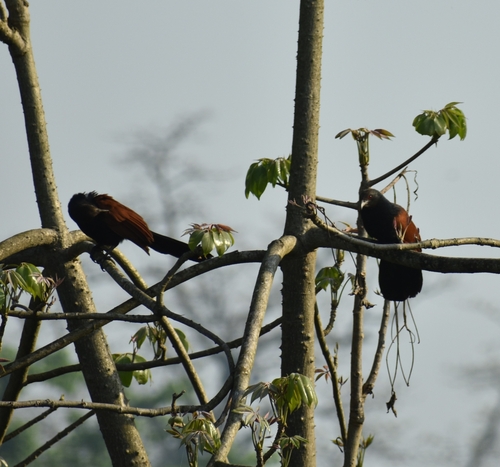
オオバンケン (Centropus sinensis) オオバンケン

オニカッコウ (Eudynamys scolopaceus) オニカッコウ

メディア

読み込み中…

要点

オオバンケンとオニカッコウを区別する最も信頼できるフィールドマークは、翼と背中の色です:すべての年齢のオオバンケンは、黒い頭と体と対照的なリッチな栗色または銅色の翼を示し、一方でオニカッコウのオスは全体が光沢のある青黒で、メスは上面が濃い茶色で白い斑点と筋があり、下部は淡い色をしています。幼鳥のオオバンケンは鈍い色合いですが、まだ栗色の翼を示しますが、幼鳥のオニカッコウはメスに似ており、目立つ斑点と筋があります。飛んでいる時や止まっている時、オオバンケンの栗色の翼が際立ちますが、オニカッコウはこの対比を示しません。どちらも大きく、長い尾を持つカッコウですが、オオバンケンはより重く、がっしりしており、密な植生の中で不器用に動くことが多いのに対し、オニカッコウはスリムで樹上性です。声と行動も異なりますが、翼と体の色はすべての年齢で最も信頼できます。

識別のコツ

  1. 栗色の翼(すべての年齢、すべての性別): オオバンケンだけがリッチな栗色または銅色の翼と背中を示し、黒い頭と体と対照的です。これはすべての羽毛で見られ、幼鳥も含まれます。オニカッコウは決して栗色の翼を示しません—オスは光沢のある黒、メスと幼鳥は白い斑点のある茶色です。
  2. 光沢のある全黒のオス(成鳥): オニカッコウのオスは全体が光沢のある青黒で、どこにも茶色や栗色はありません。オオバンケンのオスは栗色の翼を持つ黒で、決して全黒ではありません。
  3. 斑点/筋のあるメスと幼鳥: オニカッコウのメスと幼鳥は、上面が茶色で白/淡色の斑点があり、淡い色の筋が目立つ下部を持っています。オオバンケンはどの年齢でもこのパターンを示さず、常に下部は無地で、栗色の翼を持っています。
  4. 幼鳥の混乱: 栗色の翼と鈍い黒い体を持つ大きなカッコウを見たら、それは幼鳥のオオバンケンです。もしそれが白い斑点と筋のある茶色であれば、それは幼鳥のオニカッコウです。
  5. くちばしの色: オニカッコウのオスは淡い緑がかった灰色のくちばしを持ち、幼鳥は黒いくちばしを持っています。オオバンケンはすべての年齢で暗いくちばしを持っています。これは微妙ですが、近くで見ると役立ちます。
  6. 目の色: 両方とも成鳥では赤または深紅の目を持っていますが、信頼できる区別にはなりません。
  7. 尾: 両方とも長い尾を持っていますが、オオバンケンの尾は広く、しばしば重そうに見えます。オニカッコウの尾はスリムで流線型です。
  8. 構造と印象: オオバンケンはがっしりしており、カラスのような不器用な外見を持ち、特に地面や密なカバーの中でそう見えます。オニカッコウはスリムで樹上性があり、木の中でより敏捷に動きます。
  9. 飛行スタイル: オオバンケンは弱々しく、嫌々飛び、通常は低く、短い距離を飛びます。オニカッコウはより快適に飛び、木の上を移動できます。
  10. 行動: オオバンケンは秘密主義で、しばしば密な植生の中で隠れたり、翼を広げて日向ぼっこをしています。オニカッコウは大胆で、声が大きく、しばしば果実のなる木に目立つように止まります。
  11. 生息地: 両方とも庭やエッジに出現することがありますが、オオバンケンは密な下草を好み、オニカッコウはよりオープンな木や樹冠にいることが多いです。
  12. 声: 深く響く「クープ・クープ・クープ」という声が聞こえたら、それはオオバンケンです。大きく繰り返される「クー・オー」や鋭い「キキ・キキ・キキ...」が聞こえたら、それはオニカッコウです。
  13. 性差: オオバンケンの性別は羽毛が似ていますが、オニカッコウの性別は非常に異なります—オスは全て黒、メスは茶色で斑点があります。
  14. 季節的文脈: オニカッコウは繁殖期(3月〜8月)に特に声が大きく目立ちますが、オオバンケンは年間を通じてより秘密主義です。
  15. 一般的な落とし穴: サイズだけに頼らないでください—両方とも大きく、長い尾を持っています。特に飛行中や良い光の中で止まっている時に、翼の色と体のパターンに焦点を当ててください。

大きさ

オオバンケンはより重く、がっしりした鳥で、平均体重は283 g [wikidata]で、オニカッコウの変動するが一般的に軽い体重(190〜327 g、ほとんどのオスは下限に近い)[wikipedia]と比較されます。オオバンケンはわずかに長く(最大48 cm)より頑丈でカラスのような体型を持ち、長く広い尾を持っています。オニカッコウも長い尾を持っています(39〜46 cm)が、スリムで流線型で、あまり重くありません。フィールドでは、オオバンケンは特に地面や密なカバーの中で動いている時に、より大きく、重く見えることが多いです。

羽色

行動

オオバンケンはしばしば地面や密な植生の中で不器用に動いているのが見られ、時には翼を広げて日向ぼっこをしています。遠くに飛ぶことは稀で、飛行中は重く、遅く見えます。オニカッコウははるかに樹上性で、しばしば高い木に止まり、樹冠を通って敏捷に動きます。オニカッコウは木の間を飛んでいるのが見られたり、露出した止まり木から目立って呼びかけることが多いです。オオバンケンの動きは、より活動的で声が大きいオニカッコウと比較して、秘密主義で鈍いです。

生息環境

両種はインド亜大陸と東南アジア全域に広い範囲を持ち、庭、耕作地、森林のエッジなど、似たような生息地に出現することがあります。しかし、オオバンケンは密な下草、絡み合った植物、竹の塊、または厚い植生の中で見つかることが多いのに対し、オニカッコウはオープンな森林、果実のなる木、都市公園を好み、しばしば樹冠の高い位置にいます。生息地だけでは診断にはならず、オオバンケンはより地上性で、オニカッコウはより樹上性です。

声

声は非常に異なり、聞こえた場合には診断的です。オオバンケンは深く響く「クープ・クープ・クープ」または「ブープ・ブープ」という呼び声を出し、通常はカバーや低い止まり木から発します。オニカッコウは大きく、遠くまで届く「クー・オー」という歌(オス)や、メスの鋭い「キキ・キキ・キキ...」という呼び声で有名で、特に繁殖期には長時間繰り返されることが多いです。オニカッコウは声が大きく、特に春と夏に音で目立ちます。

より良い説明を送る

比較と同じ項目を使ってください。文章はすぐに公開されます。

The most reliable field mark to separate Greater Coucal from Asian Koel is the wing and back color: Greater Coucal of all ages shows rich chestnut or coppery-brown wings contrasting with a black head and body, while Asian Koel males are glossy blue-black all over and females are heavily spotted and streaked brown above with pale underparts. Juvenile Greater Coucal is duller but still shows chestnut wings, whereas juvenile Asian Koel resembles the female with prominent spotting and streaking. In flight or perched, the Coucal’s chestnut wings stand out, while Koel never shows this contrast. Both are large, long-tailed cuckoos, but Coucal is heavier and bulkier, often moving clumsily in dense vegetation, while Koel is slimmer and more arboreal. Voice and behavior also differ, but the wing and body color are most reliable at all ages.

  1. Chestnut wings (all ages, all sexes): Only Greater Coucal shows rich chestnut or coppery-brown wings and back contrasting with a black head and body. This is visible in all plumages, including juveniles. Asian Koel never shows chestnut wings—males are glossy black, females and juveniles are brown with white spots.
  2. Glossy all-black male (adult): Asian Koel male is glossy blue-black all over with no brown or chestnut anywhere. Greater Coucal male is black with chestnut wings—never all-black.
  3. Spotted/streaked female and juvenile: Asian Koel female and juvenile are brown above with white/buff spots and pale, heavily streaked underparts. Greater Coucal of any age never shows this pattern—always plain below, with chestnut wings.
  4. Juvenile confusion: If you see a large cuckoo with chestnut wings and dull black body, it is a juvenile Greater Coucal. If it is brown with heavy white spots and streaks, it is a juvenile Asian Koel.
  5. Bill color: Asian Koel male has a pale greenish-grey bill; juveniles have a black bill. Greater Coucal has a dark bill in all ages. This is subtle but can help with close views.
  6. Eye color: Both have red or crimson eyes as adults; not a reliable separator.
  7. Tail: Both are long-tailed, but Coucal’s tail is broader and often appears heavier. Koel’s tail is slimmer and more streamlined.
  8. Structure and jizz: Greater Coucal is heavyset, with a crow-like, clumsy appearance, especially on the ground or in dense cover. Asian Koel is slimmer, more arboreal, and moves with more agility in trees.
  9. Flight style: Coucal flies weakly and reluctantly, usually low and for short distances. Koel flies more readily and can move between treetops.
  10. Behavior: Coucal is secretive, often skulking in thick vegetation or sunning with wings spread. Koel is bold, vocal, and often perches conspicuously in fruiting trees.
  11. Habitat: Both can occur in gardens and edges, but Coucal prefers dense undergrowth, Koel is more often in open trees and canopy.
  12. Voice: If you hear a deep, resonant 'coop-coop-coop', it is Coucal. If you hear a loud, repetitive 'koo-Ooo' or shrill 'kik-kik-kik...', it is Koel.
  13. Sex differences: Coucal sexes are similar in plumage; Koel sexes are very different—males are all black, females are brown and spotted.
  14. Seasonal context: Koel is especially vocal and conspicuous during the breeding season (March–August); Coucal is more secretive year-round.
  15. Common pitfalls: Do not rely on size alone—both are large and long-tailed. Focus on wing color and body pattern, especially in flight or when perched in good light.

Greater Coucal is the heavier and bulkier bird, with an average body mass of 283 g [wikidata], compared to the Asian Koel’s variable but generally lighter mass (190–327 g, with most males at the lower end) [wikipedia]. Coucal is slightly longer (up to 48 cm) and has a more robust, crow-like build with a long, broad tail. Koel is long-tailed as well (39–46 cm), but slimmer, more streamlined, and less heavyset. In the field, Coucal often looks larger and heavier, especially when moving on the ground or in thick cover.

  • Juvenile/immature: Juvenile Greater Coucal is dull black overall with chestnut-brown wings, sometimes with pale bars on the underside and tail (in northern races), but always lacks the heavy white spotting and streaking of juvenile Asian Koel. Juvenile Koel resembles the female: brown above with white and buff spots, heavily streaked pale underparts, and never shows chestnut wings.
  • Adult male: Greater Coucal adult male is black with a purple gloss on the head and underparts, and rich chestnut wings and back. Asian Koel adult male is glossy blue-black all over, with no chestnut or brown on the wings or back.
  • Adult female: Greater Coucal female is very similar to the male, only slightly larger; both sexes have chestnut wings. Asian Koel female is brownish above with rufous streaks, dark brown back and wing coverts with white/buff spots, and pale, heavily striped underparts.
  • Iris: Both species have red or crimson eyes in adults, not a reliable separator.
  • Bill: Koel has a pale greenish-grey bill (male), black in juveniles; Coucal has a dark bill.

Greater Coucal is often seen moving clumsily on the ground or low in dense vegetation, sometimes sunning with wings spread. It rarely flies far and appears heavy and slow in flight. Asian Koel is much more arboreal, often perching high in trees and moving with agility through the canopy. Koel is more likely to be seen flying between treetops or calling conspicuously from exposed perches. Coucal’s movements are secretive and sluggish compared to the more active, vocal Koel.

Both species share a wide range across the Indian subcontinent and Southeast Asia, and can occur in similar habitats, including gardens, cultivation, and forest edges. However, Greater Coucal is more often found in dense undergrowth, tangles, bamboo clumps, or thick vegetation, while Asian Koel prefers open woodland, fruiting trees, and urban parks, often higher up in the canopy. Habitat alone is not diagnostic, but Coucal is more terrestrial and Koel more arboreal.

Vocalizations are very different and can be diagnostic if heard. Greater Coucal gives deep, resonant 'coop-coop-coop' or 'boop-boop' calls, usually from cover or low perches. Asian Koel is famous for its loud, far-carrying 'koo-Ooo' song (male) and the female’s shrill 'kik-kik-kik...' calls, often repeated for long periods, especially in the breeding season. Koel is much more vocal and conspicuous by sound, especially in spring and summer.

変更を破棄しますか?

保存していない編集があります。今離れると失われます。

オオバンケン · オニカッコウ · 苦手な鳥