

estorninho-metálico-lamurioso vs cape starling
Lamprotornis chalybaeus versus Lamprotornis nitens
Jogue um quiz com estorninho-metálico-lamurioso e cape starling
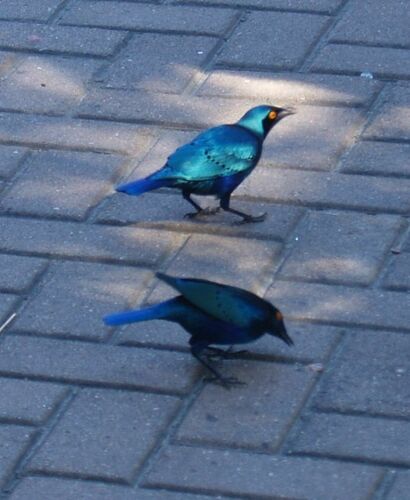 estorninho-metálico-lamurioso
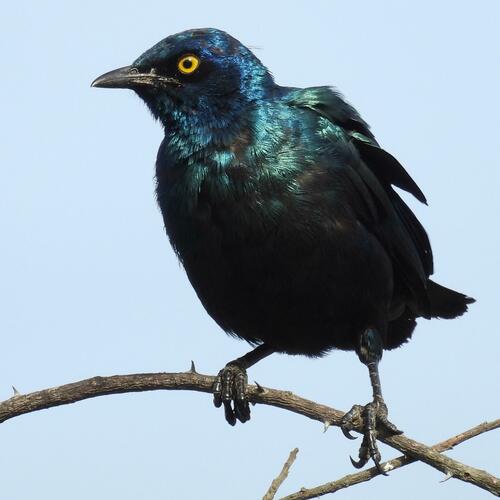 cape starling
Em resumo
A marca de campo mais confiável entre o estorninho-metálico-lamurioso e o cape starling é a extensão e o tom de azul nas partes inferiores: o estorninho-metálico-lamurioso apresenta uma barriga azul profunda que se estende para frente das pernas, enquanto o cape starling é mais uniformemente brilhante e não possui essa barriga azul nitidamente demarcada. Ambos são estorninhos brilhantes e de olhos amarelos de habitats abertos, mas o cape starling é maior, com cauda mais longa e mais uniformemente colorido, com um tom mais verde nas partes superiores. Os estorninhos-metálicos-lamuriosos juvenis são muito mais opacos embaixo, com partes inferiores marrom-escuro, enquanto os imaturos do cape starling não são descritos como tendo um contraste tão forte. A estrutura e o comprimento da cauda podem ajudar em aves empoleiradas, mas a cor das partes inferiores e o padrão de brilho são mais úteis. Ambas as espécies são gregárias e frequentemente encontradas juntas, então é necessário prestar atenção cuidadosa a essas sutis diferenças.
Dicas de identificação
- Cor das partes inferiores (adultos): O estorninho-metálico-lamurioso tem uma barriga azul profunda que se estende para frente das pernas, criando um forte contraste com o resto do corpo. O cape starling é mais uniformemente brilhante embaixo, não possuindo essa barriga azul nitidamente demarcada.
- Plumagem juvenil: O estorninho-metálico-lamurioso juvenil é muito mais opaco, com partes inferiores marrom-escuro contrastando com as partes superiores brilhantes—a forte separação em relação aos juvenis do cape starling, que não são descritos como tendo barrigas tão escuras.
- Mancha auricular: O estorninho-metálico-lamurioso apresenta uma distinta mancha auricular azul, enquanto as coberturas auriculares do cape starling são mais escuras, mas não tão azuis.
- Brilho geral: O cape starling é mais uniformemente brilhante, com uma cabeça azul e partes superiores verde-azuladas, enquanto o estorninho-metálico-lamurioso tem um brilho mais variado com tons azul-esverdeados e azul-púrpura.
- Comprimento da cauda: O cape starling tem cauda mais longa e parece mais alongado quando empoleirado; o estorninho-metálico-lamurioso tem cauda mais curta e é mais compacto.
- Tamanho: O cape starling é ligeiramente maior e mais pesado, mas isso é sutil e melhor utilizado em comparação direta ou em bandos mistos.
- Cor das asas e cauda (subespécies): Algumas subespécies do cape starling têm asas e cauda mais verdes, e as penas internas das secundárias podem ser pretas opacas, mas isso é sutil e nem sempre visível.
- Cor da íris: Ambas as espécies têm olhos amarelos ou laranjas brilhantes em adultos, então isso não é uma separação útil.
- Contexto de habitat: No sul da África, o cape starling é mais provável de ser encontrado em jardins e parques suburbanos, enquanto o estorninho-metálico-lamurioso prefere florestas abertas, mas ambos se sobrepõem amplamente.
- Comportamento em bandos: Ambas as espécies são gregárias e frequentemente se misturam, então o comportamento não é um separador confiável.
- Vocalizações: Os chamados são variáveis e sobrepostos; o nasal "squee-ar" do estorninho-metálico-lamurioso pode ajudar, mas o canto e a imitação do cape starling não são distintos o suficiente para separação em campo.
- Comportamento alimentar: Ambas as espécies se alimentam no chão, às vezes em gado, e consomem alimentos semelhantes; isso não ajuda na identificação.
- Estação e sexo: Ambas as espécies são semelhantes em ambos os sexos e durante todo o ano; nenhum dimorfismo sazonal ou sexual ajuda na identificação.
- Armadilhas: Em bandos mistos, concentre-se na extensão do azul na barriga e na uniformidade do brilho; cuidado com juvenis opacos, especialmente o estorninho-metálico-lamurioso, que pode parecer muito menos brilhante embaixo.
- Quando em dúvida: Use uma combinação de cor da barriga, comprimento da cauda e padrão geral de brilho, e tente ver múltiplos indivíduos para comparação.
Tamanho
O cape starling é ligeiramente maior e mais longo no geral (cerca de 25 cm e 88–100 g) em comparação com o estorninho-metálico-lamurioso (22 cm e 85,8 g). A diferença é mais aparente em campo pelo comprimento maior da cauda do cape starling e pela construção ligeiramente mais robusta, mas ambos são estorninhos de tamanho médio e podem parecer semelhantes em bandos mistos. A diferença de tamanho é sutil e nem sempre confiável em aves solitárias.
Plumagem
Os estorninhos-metálicos-lamuriosos juvenis são distintamente mais opacos do que os adultos, com partes inferiores marrom-escuro que contrastam com as partes superiores azul-esverdeadas brilhantes; essa é uma marca forte para separar aves jovens, já que os juvenis do cape starling não são notados por apresentarem barrigas tão escuras e contrastantes. O adulto do estorninho-metálico-lamurioso tem um corpo azul-esverdeado brilhante, uma mancha auricular azul e uma barriga azul-púrpura com o azul se estendendo para frente das pernas. Em contraste, os adultos do cape starling são mais uniformemente brilhantes, com uma cabeça azul, coberturas auriculares mais escuras e partes superiores verde-azuladas, mas sem a barriga azul nitidamente definida. O brilho do cape starling é mais uniforme, e as partes inferiores não mostram a extensão azul profunda do estorninho-metálico-lamurioso. Subespécies do cape starling podem mostrar asas e cauda mais verdes, mas as penas internas das secundárias podem ser pretas opacas em algumas formas. Ambas as espécies têm íris amarelas ou laranjas brilhantes em adultos.
Comportamento
Ambas as espécies são altamente gregárias, formando grandes bandos e frequentemente se associando umas com as outras e com outras espécies de estorninhos. Elas forrageiam principalmente no chão, às vezes empoleirando-se em gado para se alimentar de insetos ou ectoparasitas. Ambas são onívoras, consumindo insetos, frutas e ocasionalmente néctar. Seu comportamento social e hábitos alimentares são muito semelhantes e não são úteis para separação em campo.
Habitat
O estorninho-metálico-lamurioso se distribui amplamente pela África subsaariana, incluindo o leste e o nordeste da África do Sul, e é comum em florestas abertas. O cape starling é mais restrito ao sul da África, incluindo África do Sul, Namíbia, Botswana e regiões adjacentes, e é encontrado em florestas, bushveld, savanas e áreas suburbanas. No sul da África, ambas as espécies se sobrepõem em habitats abertos, mas o cape starling é mais provável de ser encontrado em parques e jardins suburbanos, enquanto o estorninho-metálico-lamurioso é mais típico de florestas abertas. No entanto, ambos podem ser encontrados juntos em bandos mistos em áreas abertas.
Voz
O chamado mais familiar do estorninho-metálico-lamurioso é um nasal "squee-ar," com uma variedade de notas musicais ou ásperas. O cape starling tem uma longa canção trinado e é conhecido por imitar sons ambientais. Ambos podem ser barulhentos e variáveis, e seus chamados nem sempre são diagnósticos em campo, especialmente em bandos mistos.
estorninho-metálico-lamurioso · cape starling · Minhas aves difíceis