

Greater Blue-eared Starling vs Cape Starling
Lamprotornis chalybaeus contro Lamprotornis nitens
Fai un quiz con Greater Blue-eared Starling e Cape Starling
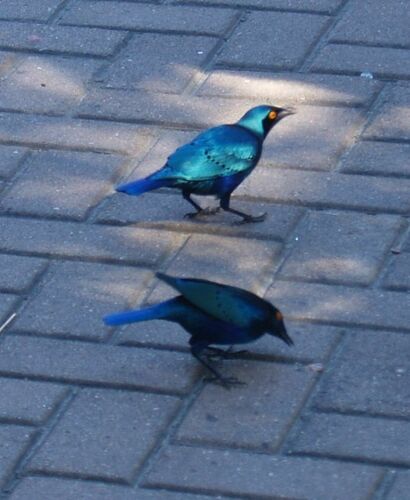 Greater Blue-eared Starling
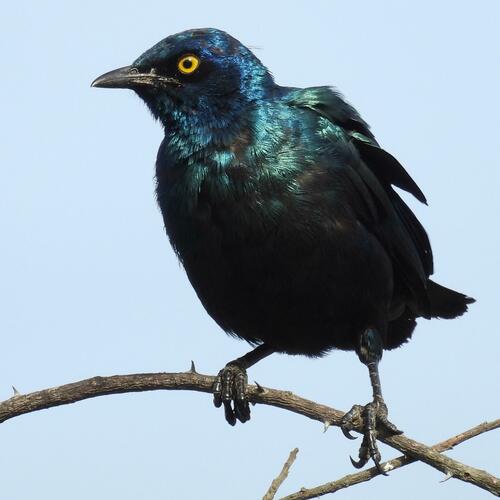 Cape Starling
In breve
Il segno di campo più affidabile tra Greater Blue-eared Starling e Cape Starling è l'estensione e il tono di blu sulle parti inferiori: Greater Blue-eared Starling mostra una pancia blu profonda che si estende in avanti rispetto alle gambe, mentre Cape Starling è più uniformemente lucido e manca di questa pancia blu nettamente demarcata. Entrambi sono storni lucidi e con occhi gialli di habitat aperti, ma Cape Starling è più grande, con una coda più lunga e un colore più uniforme, con un tono più verde sulle parti superiori. I giovani Greater Blue-eared Starlings sono molto più opachi sotto, con parti inferiori marrone scuro, mentre i giovani Cape Starling non sono descritti come aventi un contrasto così forte. La struttura e la lunghezza della coda possono aiutare negli uccelli in perching, ma il colore delle parti inferiori e il modello di lucentezza sono i più utili. Entrambe le specie sono gregarie e spesso si trovano insieme, quindi è necessaria un'attenzione particolare a queste sottili differenze.
Consigli di identificazione
- Colore delle parti inferiori (adulti): Greater Blue-eared Starling ha una pancia blu profonda che si estende in avanti rispetto alle gambe, creando un forte contrasto con il resto del corpo. Cape Starling è più uniformemente lucido sotto, mancando di questa pancia blu nettamente demarcata.
- Piumaggio giovanile: Il giovane Greater Blue-eared Starling è molto più opaco, con parti inferiori marrone scuro che contrastano con le parti superiori lucide—una forte separazione dai giovani Cape Starling, che non sono descritti come aventi pance così scure.
- Macchia auricolare: Greater Blue-eared Starling mostra una distintiva macchia auricolare blu, mentre le copritrici auricolari di Cape Starling sono più scure ma non così blu.
- Lucentezza generale: Cape Starling è più uniformemente lucido, con una testa blu e parti superiori blu-verdi, mentre Greater Blue-eared ha una lucentezza più varia con toni blu-verdi e blu-porpora.
- Lunghezza della coda: Cape Starling ha una coda più lunga e appare più allungato quando è in perching; Greater Blue-eared Starling ha una coda più corta e più compatta.
- Dimensione: Cape Starling è leggermente più grande e pesante, ma questo è sottile e meglio utilizzato in confronto diretto o in stormi misti.
- Colore delle ali e della coda (sottospecie): Alcune sottospecie di Cape Starling hanno ali e coda più verdi, e le vane interne delle secondarie possono essere nere opache, ma questo è sottile e non sempre visibile.
- Colore dell'iride: Entrambe le specie hanno occhi gialli o arancioni brillanti negli adulti, quindi questo non è un utile separatore.
- Contesto dell'habitat: Nel sud dell'Africa, Cape Starling è più probabile trovarlo in giardini e parchi suburbani, mentre Greater Blue-eared preferisce boschi aperti, ma entrambi si sovrappongono ampiamente.
- Comportamento di stormo: Entrambe le specie sono gregarie e spesso si mescolano, quindi il comportamento non è un separatore affidabile.
- Vocalizzazioni: I richiami sono variabili e sovrapposti; il nasale "squee-ar" di Greater Blue-eared può aiutare, ma il canto e la mimica di Cape Starling non sono distintivi abbastanza per la separazione sul campo.
- Comportamento alimentare: Entrambe le specie si nutrono a terra, a volte su bestiame, e prendono cibi simili; questo non aiuta con l'identificazione.
- Stagione e sesso: Entrambe le specie sono simili in entrambi i sessi e tutto l'anno; nessun dimorfismo stagionale o sessuale aiuta l'identificazione.
- Insidie: Negli stormi misti, concentrati sull'estensione del blu sulla pancia e sull'uniformità della lucentezza; fai attenzione ai giovani opachi, specialmente Greater Blue-eared, che possono apparire molto meno lucidi sotto.
- Quando hai dubbi: Usa una combinazione di colore della pancia, lunghezza della coda e modello di lucentezza generale, e cerca di vedere più individui per confronto.
Taglia
Cape Starling è leggermente più grande e più lungo in generale (circa 25 cm e 88–100 g) rispetto a Greater Blue-eared Starling (22 cm e 85.8 g). La differenza è più evidente sul campo grazie alla coda più lunga di Cape Starling e alla sua corporatura leggermente più robusta, ma entrambi sono storni di dimensioni medie e possono apparire simili in stormi misti. La differenza di dimensione è sottile e non sempre affidabile su uccelli solitari.
Piumaggio
I giovani Greater Blue-eared Starlings sono decisamente più opachi degli adulti, con parti inferiori marrone scuro che contrastano con le parti superiori blu-verdi lucide; questo è un forte segno per separare i giovani uccelli, poiché i giovani Cape Starling non sono notati per mostrare pance così scure e contrastanti. L'adulto Greater Blue-eared Starling ha un corpo blu-verde lucido, una macchia auricolare blu e una pancia blu-porpora con il blu che si estende in avanti rispetto alle gambe. Al contrario, gli adulti Cape Starling sono più uniformemente lucidi, con una testa blu, copritrici auricolari più scure e parti superiori blu-verdi, ma senza la pancia blu nettamente definita. La lucentezza di Cape Starling è più uniforme, e le parti inferiori non mostrano l'estensione blu profonda di Greater Blue-eared. Le sottospecie di Cape Starling possono mostrare ali e coda più verdi, ma le vane interne delle secondarie possono essere nere opache in alcune forme. Entrambe le specie hanno iridi gialle o arancioni brillanti negli adulti.
Comportamento
Entrambe le specie sono altamente gregarie, formando grandi stormi e spesso associandosi tra loro e con altre specie di storni. Si nutrono principalmente a terra, a volte posandosi su bestiame per nutrirsi di insetti o ectoparassiti. Entrambi sono onnivori, prendendo insetti, frutta e occasionalmente nettare. Il loro comportamento sociale e le abitudini alimentari sono molto simili e non utili per la separazione sul campo.
Habitat
Greater Blue-eared Starling si distribuisce ampiamente nell'Africa sub-sahariana, inclusa l'Africa del Sud orientale e nord-orientale, ed è comune nei boschi aperti. Cape Starling è più ristretto all'Africa meridionale, inclusi Sudafrica, Namibia, Botswana e regioni adiacenti, e si trova in boschi, bushveld, savane e aree suburbane. Nel sud dell'Africa, entrambe le specie si sovrappongono in habitat aperti, ma Cape Starling è più probabile trovarlo in parchi e giardini suburbani, mentre Greater Blue-eared è più tipico dei boschi aperti. Tuttavia, entrambi possono essere trovati insieme in stormi misti in campagna aperta.
Voce
Il richiamo più familiare di Greater Blue-eared Starling è un nasale "squee-ar," con una gamma di note musicali o graffianti. Cape Starling ha un lungo canto melodioso ed è noto per imitare suoni ambientali. Entrambi possono essere rumorosi e variabili, e i loro richiami non sono sempre diagnostici sul campo, specialmente in stormi misti.
Greater Blue-eared Starling · Cape Starling · I miei uccelli difficili