

gavião-preto vs gavião-asa-de-telha
Buteogallus urubitinga versus Parabuteo unicinctus
Jogue um quiz com gavião-preto e gavião-asa-de-telha
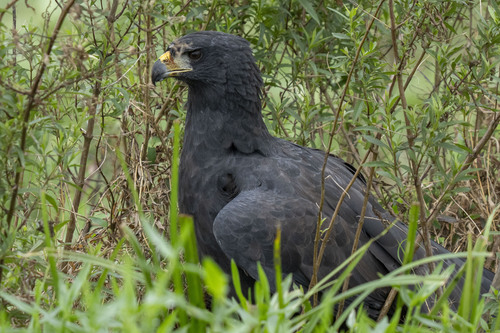 gavião-preto
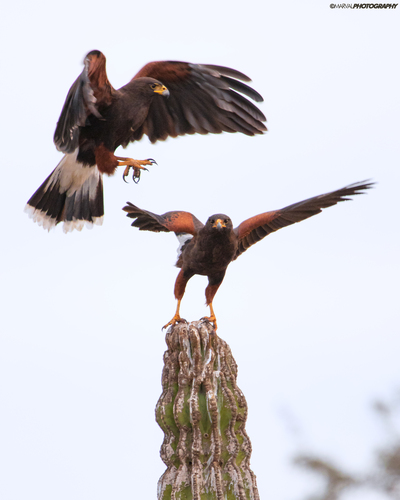 gavião-asa-de-telha
Em resumo
A marca de campo mais confiável entre gavião-preto e gavião-asa-de-telha, especialmente para aves imaturas em voo, é o padrão da cauda e das asas: os juvenis de gavião-preto apresentam uma cauda com múltiplas barras escuras e sombreadas, enquanto os juvenis de gavião-asa-de-telha têm uma faixa de cauda mais clara e um painel pálido distinto na asa externa. Os adultos de ambos são principalmente escuros, mas o gavião-preto é maior, com asas mais largas e uma cauda branca curta com uma ponta preta larga, enquanto os adultos de gavião-asa-de-telha apresentam ombros e coxas castanhos e uma base e ponta brancas na cauda. A estrutura e o tamanho também ajudam: o gavião-preto é mais robusto, com asas mais largas e um bico mais pesado. A voz e o habitat são menos prováveis de ajudar, a menos que você esteja no extremo norte (onde o gavião-preto é um vagante).
Dicas de identificação
- Padrão da cauda juvenil: Os juvenis de gavião-preto apresentam uma cauda com múltiplas barras pretas e sombreadas; os juvenis de gavião-asa-de-telha têm uma faixa de cauda mais clara e uma barragem menos extensa. Verifique a cauda em voo ou quando empoleirados.
- Parte inferior e corpo juvenil: O juvenil de gavião-asa-de-telha é muito mais claro por baixo, fortemente estriado com buff ou branco, e apresenta um painel pálido na asa externa (primárias esbranquiçadas, exceto nas pontas). Os juvenis de gavião-preto são mais escuros, com partes inferiores de buff e manchas escuras, sem o painel de asa pálido.
- Padrão da cauda adulta: Os adultos de gavião-preto têm uma cauda curta que é branca com uma ponta preta larga (uma única faixa branca larga). Os adultos de gavião-asa-de-telha têm uma cauda com base branca e ponta branca, separadas por uma faixa escura larga; o branco é mais extenso, especialmente em P. u. harrisi.
- Plumagem adulta: Os adultos de gavião-preto são quase totalmente pretos, sem tons castanhos. Os adultos de gavião-asa-de-telha têm castanho rico nos ombros e coxas, que é visível tanto empoleirados quanto em voo.
- Tamanho e estrutura: O gavião-preto é maior, mais robusto, e tem asas mais largas e um bico mais pesado. O gavião-asa-de-telha é menor e mais esbelto, com cauda e asas proporcionalmente mais longas (especialmente em P. u. unicinctus).
- Cor das pernas e cera: Ambas as espécies têm pernas e cera amarelas, então isso não é um separador útil.
- Comportamento em voo: O gavião-preto parece pesado e com asas largas em voo, com batidas lentas e profundas. O gavião-asa-de-telha é mais ágil e menos maciço, frequentemente visto planando ou pairando com as asas mantidas planas.
- Comportamento em grupo: O gavião-asa-de-telha é frequentemente visto em grupos ou pares, às vezes com três aves em um ninho. O gavião-preto é solitário.
- Habitat: O gavião-asa-de-telha prefere habitats abertos, áridos ou semiáridos com árvores ou cactos dispersos. O gavião-preto é uma ave de florestas úmidas e bordas de rios; nos EUA, é apenas um vagante.
- Vocalização: Se você ouvir um chamado distinto de 'ooo-wheeeeee', é o gavião-preto. Os chamados do gavião-asa-de-telha não são descritos aqui.
- Variação de subespécies: Se você ver um gavião-asa-de-telha com uma parte inferior padronizada e mais clara (não sólida e escura), pode ser P. u. unicinctus, mas todos os gaviões-asa-de-telha têm ombros e coxas castanhos e uma base e ponta brancas na cauda.
- Armadilhas de plumagem: Os juvenis de gavião-asa-de-telha podem parecer muito diferentes dos adultos, sendo muito mais claros por baixo e com painéis de asa pálidos; não confunda estes com os juvenis de gavião-preto, que são mais escuros e com marcas mais uniformes.
- Contexto geográfico: Se você estiver fora dos Neotrópicos e ver um grande gavião totalmente escuro, o gavião-asa-de-telha é muito mais provável, a menos que você tenha um gavião-preto vagante conhecido.
- Visão empoleirada: Procure por castanho nas coxas e ombros para o gavião-asa-de-telha; o gavião-preto não terá tons quentes e parecerá totalmente preto com uma faixa branca na cauda.
- Quando em dúvida: Concentre-se no padrão da cauda e na presença/ausência de tons castanhos para adultos, e no padrão da parte inferior e da cauda para juvenis. Estas são as marcas de campo mais confiáveis em todas as condições.
Tamanho
O gavião-preto é visivelmente maior e mais pesado que o gavião-asa-de-telha. O gavião-preto mede de 56 a 64 cm de comprimento e pesa cerca de 1,1 kg, tornando-o mais robusto e imponente em voo ou empoleirado. O gavião-asa-de-telha é menor, com uma massa média adulta de 843,7 g. No campo, o gavião-preto parecerá ter asas mais largas e ser mais robusto, enquanto o gavião-asa-de-telha parecerá de tamanho médio e menos maciço.
Plumagem
- Aves juvenis/imaturas em voo:
- Os juvenis de gavião-preto são marrons escuros por cima com manchas e listras, partes inferiores de buff com manchas escuras, e uma cauda com várias barras pretas e sombreadas. Suas asas são largas e principalmente escuras, sem painéis pálidos óbvios.
- Os juvenis de gavião-asa-de-telha são muito mais claros por baixo, fortemente estriados com branco ou buff, e em voo mostram partes inferiores de buff com listras marrons. As primárias são esbranquiçadas, exceto nas pontas, criando um painel pálido na asa externa, e a faixa da cauda é mais clara do que nos adultos.
- Adultos:
- Os adultos de gavião-preto são quase totalmente pretos, com uma cauda curta que é branca com uma ponta preta larga. O bico é preto, e as pernas e a cera são amarelas. Sem tons castanhos.
- Os adultos de gavião-asa-de-telha são marrons escuros a pretos em geral, mas têm castanho rico nos ombros e coxas, e a cauda tem uma base e ponta brancas (as faixas brancas são mais largas nas subespécies do norte, P. u. harrisi). A parte inferior da asa é completamente escura em P. u. harrisi maduro, mas padronizada e mais clara em P. u. unicinctus. Nenhum pássaro totalmente preto com uma única faixa branca na cauda.
Comportamento
O gavião-asa-de-telha é famoso pela caça cooperativa e frequentemente visto em pequenos grupos, às vezes com três aves em um ninho. O gavião-preto é tipicamente solitário. O gavião-asa-de-telha pode ser visto empoleirado junto ou caçando em tandem, enquanto o gavião-preto geralmente está sozinho e é mais discreto. Ambos empoleiram-se de forma conspícua, mas o gavião-asa-de-telha é mais provável de ser visto em campo aberto ou empoleirado em cactos.
Habitat
O gavião-preto é uma espécie de florestas úmidas, bordas de rios e áreas arborizadas nos Neotrópicos, raramente vagando para o norte (vagante nos EUA). O gavião-asa-de-telha prefere habitats abertos e áridos: arbustos, savanas e desertos, frequentemente com árvores ou cactos dispersos. Se você estiver em um país seco e aberto, o gavião-asa-de-telha é muito mais provável; o gavião-preto é um vagante raro nos EUA e nunca é esperado em desertos ou arbustos áridos.
Voz
O gavião-preto tem um chamado distinto descrito como 'ooo-wheeeeee.' Os chamados do gavião-asa-de-telha não são descritos nas notas, então a voz só é útil se você ouvir o chamado único do gavião-preto.