

Great Black Hawk vs Poiana di Harris
Buteogallus urubitinga contro Parabuteo unicinctus
Fai un quiz con Great Black Hawk e Poiana di Harris
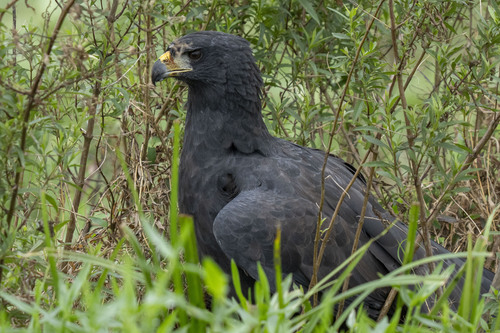 Great Black Hawk
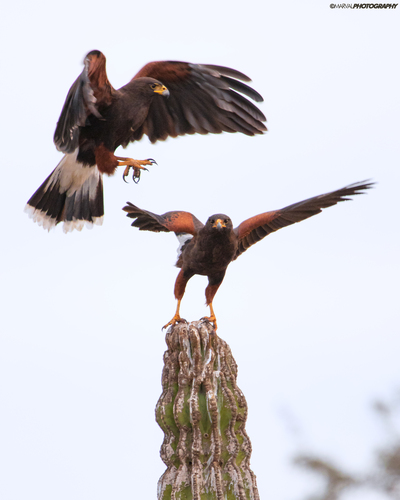 Poiana di Harris
In breve
Il segno distintivo più affidabile tra il Great Black Hawk e la Poiana di Harris, specialmente per gli uccelli immaturi in volo, è il modello della coda e delle ali: i giovani Great Black Hawk mostrano una coda con molteplici barre scure e grigie, mentre i giovani Poiane di Harris hanno una banda della coda più chiara e un pannello distintivo chiaro sulla parte esterna dell'ala. Gli adulti di entrambi sono per lo più scuri, ma il Great Black Hawk è più grande, con ali più larghe e una coda bianca corta con una larga punta nera, mentre gli adulti della Poiana di Harris mostrano spalle e cosce castagne e una base e punta bianche sulla coda. Anche la struttura e le dimensioni aiutano: il Great Black Hawk è più robusto con ali più larghe e un becco più pesante. La voce e l'habitat sono meno utili a meno che non ti trovi nel lontano nord (dove il Great Black Hawk è un vagabondo).
Consigli di identificazione
- Juvenile tail pattern: I giovani Great Black Hawk mostrano una coda con molteplici barre nere e grigie; i giovani Poiane di Harris hanno una banda della coda più chiara e una minore estensione delle barre. Controlla la coda in volo o quando sono posati.
- Juvenile underwing and body: La giovane Poiana di Harris è molto più chiara sotto, fortemente striata di buff o bianco, e mostra un pannello chiaro sulla parte esterna dell'ala (primarie biancastre tranne che alle punte). I giovani Great Black Hawk sono più scuri, con parti inferiori color buff e macchie scure, privi del pannello chiaro dell'ala.
- Adult tail pattern: Gli adulti del Great Black Hawk hanno una coda corta che è bianca con una larga punta nera (una singola larga banda bianca). Gli adulti della Poiana di Harris hanno una coda con sia una base bianca che una punta bianca, separate da una larga banda scura; il bianco è più esteso, specialmente in P. u. harrisi.
- Adult plumage: Gli adulti del Great Black Hawk sono quasi completamente neri senza toni castagni. Gli adulti della Poiana di Harris hanno ricche tonalità castagne sulle spalle e cosce, visibili sia posati che in volo.
- Size and structure: Il Great Black Hawk è più grande, più robusto, e ha ali più larghe e un becco più pesante. La Poiana di Harris è più piccola e più snella, con coda e ali proporzionalmente più lunghe (specialmente in P. u. unicinctus).
- Leg and cere color: Entrambe le specie hanno gambe e cere gialle, quindi questo non è un separatore utile.
- Flight jizz: Il Great Black Hawk appare pesante e con ali larghe in volo, con battiti d'ala lenti e profondi. La Poiana di Harris è più agile e meno massiccia, spesso vista planare o librarsi con le ali tenute piatte.
- Group behavior: La Poiana di Harris è spesso vista in gruppi o coppie, a volte con tre uccelli in un nido. Il Great Black Hawk è solitario.
- Habitat: La Poiana di Harris preferisce habitat aperti, aridi, o semi-aridi con alberi o cactus sparsi. Il Great Black Hawk è un uccello delle foreste umide e dei bordi dei fiumi; negli Stati Uniti, è solo un vagabondo.
- Vocalization: Se senti un richiamo distintivo 'ooo-wheeeeee', è il Great Black Hawk. I richiami della Poiana di Harris non sono descritti qui.
- Subspecies variation: Se vedi una Poiana di Harris con un sottocoda a motivo e più chiaro (non completamente scuro), potrebbe essere P. u. unicinctus, ma tutte le Poiane di Harris hanno spalle e cosce castagne e una base e punta bianche sulla coda.
- Plumage pitfalls: I giovani della Poiana di Harris possono apparire molto diversi dagli adulti, essendo molto più chiari sotto e con pannelli d'ala chiari; non confondere questi con i giovani Great Black Hawk, più scuri e con marcature più uniformi.
- Geographic context: Se sei al di fuori dei Neotropici e vedi un grande falco completamente scuro, è molto più probabile che sia una Poiana di Harris a meno che tu non abbia un noto vagabondo Great Black Hawk.
- Perched view: Cerca castano sulle cosce e spalle per la Poiana di Harris; il Great Black Hawk non avrà toni caldi e apparirà completamente nero con una banda bianca sulla coda.
- When in doubt: Concentrati sul modello della coda e sulla presenza/assenza di toni castagni per gli adulti, e sul modello del sottocoda e della coda per i giovani. Questi sono i segni distintivi più affidabili in tutte le condizioni.
Taglia
Il Great Black Hawk è notevolmente più grande e più pesante della Poiana di Harris. Il Great Black Hawk misura 56–64 cm di lunghezza e pesa circa 1,1 kg, rendendolo più robusto e imponente in volo o posato. La Poiana di Harris è più piccola, con una massa media adulta di 843,7 g. Sul campo, il Great Black Hawk apparirà con ali più larghe e più robusto, mentre la Poiana di Harris appare di dimensioni medie e meno massiccia.
Piumaggio
- Juvenile/immature birds in flight:
- I giovani Great Black Hawk sono marrone scuro sopra con macchie e striature, parti inferiori color buff con macchie scure, e una coda con diverse barre nere e grigie. Le loro ali sono larghe e per lo più scure, prive di pannelli chiari evidenti.
- I giovani Poiane di Harris sono molto più chiari sotto, fortemente striati di bianco o buff, e in volo mostrano sottocoda color buff con striature marroni. Le primarie sono biancastre tranne che alle punte, creando un pannello chiaro sulla parte esterna dell'ala, e la banda della coda è più chiara rispetto agli adulti.
- Adults:
- Gli adulti del Great Black Hawk sono quasi completamente neri, con una coda corta che è bianca con una larga punta nera. Il becco è nero e le gambe e la cere sono gialle. Nessun tono castano.
- Gli adulti della Poiana di Harris sono marrone scuro a nerastri nel complesso ma hanno ricche tonalità castagne sulle spalle e cosce, e la coda ha una base e punta bianche (le bande bianche sono più larghe nelle sottospecie settentrionali, P. u. harrisi). Il sottocoda è completamente scuro nei maturi P. u. harrisi, ma a motivo e più chiaro nei P. u. unicinctus. Nessun uccello completamente nero con una singola banda bianca sulla coda.
Comportamento
La Poiana di Harris è famosa per la caccia cooperativa ed è spesso vista in piccoli gruppi, a volte con tre uccelli in un nido. Il Great Black Hawk è tipicamente solitario. La Poiana di Harris può essere vista posata insieme o cacciando in tandem, mentre il Great Black Hawk è di solito solo e più riservato. Entrambi si posano in modo evidente, ma la Poiana di Harris è più probabile che venga vista in campagna aperta o posata su cactus.
Habitat
Il Great Black Hawk è una specie di foreste umide, bordi dei fiumi e aree boschive nei Neotropici, raramente vagando a nord (vagabondo negli Stati Uniti). La Poiana di Harris preferisce habitat aperti e aridi: macchia, savana e deserto, spesso con alberi o cactus sparsi. Se ti trovi in un paese secco e aperto, è molto più probabile che sia una Poiana di Harris; il Great Black Hawk è un vagabondo raro negli Stati Uniti e non è mai atteso in deserto o macchia arida.
Voce
Il Great Black Hawk ha un richiamo distintivo descritto come 'ooo-wheeeeee.' I richiami della Poiana di Harris non sono descritti nelle note, quindi la voce è utile solo se senti il richiamo unico del Great Black Hawk.
Great Black Hawk · Poiana di Harris · I miei uccelli difficili