

great barbet vs ayeyarwady bulbul
Psilopogon virens versus Pycnonotus blanfordi
Jogue um quiz com great barbet e ayeyarwady bulbul
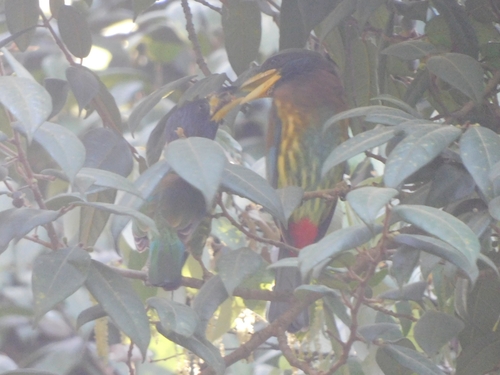 great barbet
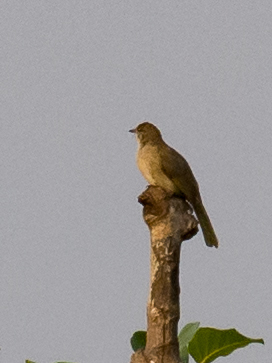 ayeyarwady bulbul
Em resumo
A marca de campo mais confiável para separar o great barbet do ayeyarwady bulbul é o tamanho e a robustez: o great barbet é um pássaro maciço e de bico pesado, enquanto o ayeyarwady bulbul é muito menor e mais esbelto. O great barbet apresenta uma cabeça azul distinta e um grande bico amarelo, com um corpo riscado de verde e marrom e um ventrículo vermelho, enquanto o ayeyarwady bulbul não possui essas cores marcantes. Em voo ou empoleirado, o tamanho do barbet, seu bico grosso e sua plumagem colorida são inconfundíveis em comparação com o bulbul muito mais simples e menor. O habitat também pode ajudar: o great barbet é encontrado em florestas de alta altitude, enquanto o ayeyarwady bulbul é restrito a florestas de planície em Mianmar.
Dicas de identificação
- O tamanho é a verificação mais rápida: O great barbet é quase dez vezes mais pesado que o ayeyarwady bulbul. Se o pássaro parecer grande e robusto, é quase certamente o barbet.
- Estrutura do bico: O great barbet tem um bico amarelo maciço, grosso e longo, facilmente visível mesmo à distância. O bico do ayeyarwady bulbul é esbelto e curto, típico de pássaros canoros insetívoros ou frugívoros.
- Cor da cabeça: A cabeça azul do barbet é única e diagnóstica. Nenhum bulbul na região apresenta azul na cabeça.
- Coloração do corpo: Procure as partes superiores verdes do barbet, as partes inferiores riscado de marrom e verde, e o ventrículo vermelho. O bulbul é muito mais simples, sem azul, verde ou vermelho.
- Postura empoleirada: O great barbet se senta ereto e parece pesado, muitas vezes alto na copa das árvores. Os bulbuls se empoleiram de forma mais horizontal e parecem muito mais leves.
- Voo: O voo do barbet é lento e direto, combinando com sua robustez. Os bulbuls são mais rápidos e erráticos em voo.
- Contexto do habitat: O great barbet é encontrado em florestas de alta altitude, especialmente nos Himalaias e no Sudeste Asiático. O ayeyarwady bulbul está apenas em florestas de planície de Mianmar. A altitude e a distribuição podem excluir um ou outro.
- Vocalizações: Um chamado territorial alto, profundo e repetitivo aponta para o great barbet. Os chamados dos bulbuls são mais suaves e menos ressonantes.
- Tamanho do grupo: Os barbets geralmente são solitários ou em pares; os bulbuls costumam formar pequenos grupos.
- Confusão sazonal: Ambas as espécies são residentes, então a estação não é um separador forte, mas os pares de barbets em nidificação podem ser mais vocais na primavera e no verão.
- Sexo e idade: Nenhum dimorfismo sexual forte ou marcas de campo específicas para idade são descritas para ambas as espécies, então todas as idades e sexos do great barbet permanecem muito maiores e mais coloridos que qualquer ayeyarwady bulbul.
- Armadilhas: Em luz fraca, as cores do barbet podem parecer opacas, mas o tamanho e o bico permanecem óbvios. Os bulbuls nunca mostram uma cabeça azul ou ventrículo vermelho.
- Comportamento alimentar: Os barbets costumam se alimentar de grandes frutas e podem ser vistos batendo em galhos; os bulbuls pegam frutas menores ou insetos de forma mais delicada.
- Local do ninho: Se você ver um pássaro entrando em um buraco de árvore, é provável que seja um barbet; os bulbuls fazem ninhos em copos abertos.
- Sobreposição: Há pouca ou nenhuma sobreposição de distribuição; se você estiver fora das planícies de Mianmar, o ayeyarwady bulbul é muito improvável.
Tamanho
O great barbet é dramaticamente maior que o ayeyarwady bulbul. O barbet atinge 32–35 cm de comprimento e pesa 192–295 g, tornando-se o maior barbet asiático [wikipedia]. Em contraste, o ayeyarwady bulbul pesa apenas cerca de 33 g [wikidata] e é um bulbul de tamanho médio típico. Essa diferença de tamanho é óbvia tanto na mão quanto no campo, especialmente quando vistos lado a lado ou comparados a espécies familiares. O bico do barbet também é muito mais grosso e longo, contribuindo para sua aparência robusta.
Plumagem
Nenhuma marca de padrão de asa ou voo específica para idade é descrita para ambas as espécies, então o foco está na plumagem adulta. O great barbet é strikingly colorido: os adultos têm uma cabeça azul, um grande bico amarelo, partes superiores verdes, partes inferiores riscado de marrom e verde, e um ventrículo vermelho. Essa combinação de azul, verde e vermelho é única na região. O ayeyarwady bulbul, por outro lado, é muito mais discreto, sem azul, verde ou vermelho em sua plumagem. As cores do bulbul não são detalhadas nas fontes, mas como um típico Pycnonotus bulbul, espera-se que seja principalmente marronzado ou oliva acima, com partes inferiores mais claras e sem coloração forte na cabeça ou ventrículo. O padrão ousado do barbet é visível tanto empoleirado quanto em voo, enquanto o bulbul permanece simples durante todo o ano.
Comportamento
O great barbet é frequentemente visto empoleirado alto na copa das árvores ou voando entre grandes árvores, movendo-se deliberadamente e frequentemente chamando alto. Sua construção pesada e seu grande bico lhe conferem um voo lento e intencional. O ayeyarwady bulbul, como outros bulbuls, é mais ativo e ágil, flutuando através da folhagem e frequentemente visto em pares ou pequenos grupos. A construção mais leve do bulbul e seus movimentos mais erráticos contrastam com o comportamento mais robusto e lento do barbet.
Habitat
O great barbet habita florestas até 3.000 m nos Himalaias e no Sudeste Asiático, preferindo elevações mais altas e florestas maduras [wikipedia]. O ayeyarwady bulbul é endêmico de Mianmar e restrito a florestas tropicais ou subtropicais úmidas de planície [wikipedia]. Assim, a localização e a altitude são pistas fortes: ver um barbet grande e colorido em uma floresta montanhosa aponta para o great barbet, enquanto um bulbul pequeno e simples em uma floresta de planície de Mianmar é provavelmente um ayeyarwady bulbul.
Voz
O great barbet tem um chamado territorial muito alto e que se propaga, descrito como 'kay-oh', um alarme áspero 'keeab', e um repetitivo 'piou-piou-piou-piou' [wikipedia]. Esses chamados são profundos e ressonantes, combinando com o grande tamanho do pássaro. Nenhum detalhe vocal é dado para o ayeyarwady bulbul, mas os bulbuls normalmente têm chamados mais suaves, melodiosos ou de tagarelice, nunca tão altos ou ressonantes quanto os do barbet. Se você ouvir um chamado profundo e retumbante, suspeite do great barbet.