

Great Barbet vs Ayeyarwady Bulbul
Psilopogon virens contro Pycnonotus blanfordi
Fai un quiz con Great Barbet e Ayeyarwady Bulbul
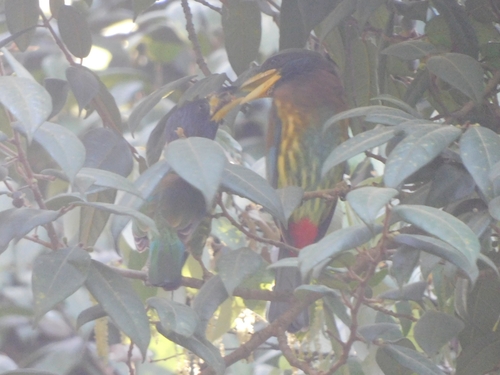 Great Barbet
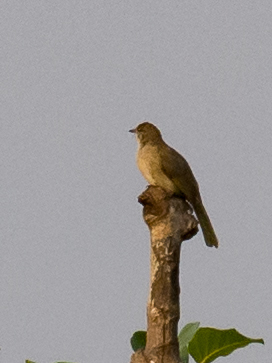 Ayeyarwady Bulbul
In breve
Il segno distintivo più affidabile per separare il Great Barbet dall'Ayeyarwady Bulbul è la dimensione e la massa: il Great Barbet è un uccello massiccio e dal becco pesante, mentre l'Ayeyarwady Bulbul è molto più piccolo e snello. Il Great Barbet mostra una testa blu distintiva e un grande becco giallo, con un corpo striato di verde e marrone e un'apertura rossa, mentre l'Ayeyarwady Bulbul manca di questi colori audaci. In volo o posato, la dimensione del barbet, il becco spesso e il piumaggio colorato sono inconfondibili rispetto al bulbul molto più semplice e piccolo. L'habitat può anche aiutare: il Great Barbet si trova in foreste ad alta quota, mentre l'Ayeyarwady Bulbul è limitato alle foreste di pianura in Myanmar.
Consigli di identificazione
- La dimensione è il controllo più veloce: Il Great Barbet è quasi dieci volte più pesante dell'Ayeyarwady Bulbul. Se l'uccello appare grande e massiccio, è quasi certamente il barbet.
- Struttura del becco: Il Great Barbet ha un becco giallo massiccio, spesso e lungo, facilmente visibile anche da lontano. Il becco dell'Ayeyarwady Bulbul è sottile e corto, tipico degli uccelli canori insettivori o frugivori.
- Colore della testa: La testa blu del barbet è unica e diagnostica. Nessun bulbul nella regione mostra blu sulla testa.
- Colorazione del corpo: Cerca le parti superiori verdi del barbet, le parti inferiori striate di marrone e verde e l'apertura rossa. Il bulbul è molto più semplice, privo di blu, verde o rosso.
- Postura posata: Il Great Barbet si siede dritto e appare pesante, spesso in alto nella chioma. I bulbul si posano più orizzontalmente e appaiono molto più leggeri.
- Volo: Il volo del barbet è lento e diretto, in linea con la sua massa. I bulbul sono più veloci e più erratici in volo.
- Contesto dell'habitat: Il Great Barbet si trova in foreste ad alta quota, specialmente nell'Himalaya e nel Sud-est asiatico. L'Ayeyarwady Bulbul si trova solo nelle foreste di pianura del Myanmar. L'altitudine e l'areale possono escludere uno o l'altro.
- Vocalizzazioni: Un richiamo forte, profondo e ripetitivo indica il Great Barbet. I richiami dei bulbul sono più morbidi e meno risonanti.
- Dimensione del gruppo: I barbets sono solitamente solitari o in coppie; i bulbul spesso formano piccoli gruppi.
- Confusione stagionale: Entrambe le specie sono residenti, quindi la stagione non è un forte separatore, ma le coppie di barbet in nidificazione possono essere più vocali in primavera e estate.
- Sesso e età: Non ci sono forti dimorfismi sessuali o segni specifici per l'età descritti per nessuna delle due specie, quindi tutte le età e i sessi del Great Barbet rimangono molto più grandi e colorati di qualsiasi Ayeyarwady Bulbul.
- Trappole: In scarsa illuminazione, i colori del barbet possono apparire opachi, ma la dimensione e il becco rimangono ovvi. I bulbul non mostrano mai una testa blu o un'apertura rossa.
- Comportamento alimentare: I barbets si nutrono spesso di grandi frutti e possono essere visti battere sui rami; i bulbul scelgono frutti più piccoli o insetti in modo più delicato.
- Sito del nido: Se vedi un uccello entrare in un buco di albero, è probabile che sia un barbet; i bulbul nidificano in coppe aperte.
- Sovrapposizione: C'è poca o nessuna sovrapposizione di areale; se ti trovi al di fuori delle pianure del Myanmar, l'Ayeyarwady Bulbul è molto improbabile.
Taglia
Il Great Barbet è drammaticamente più grande dell'Ayeyarwady Bulbul. Il barbet raggiunge i 32–35 cm di lunghezza e pesa 192–295 g, rendendolo il più grande barbet asiatico [wikipedia]. Al contrario, l'Ayeyarwady Bulbul pesa solo circa 33 g [wikidata] ed è un tipico bulbul di dimensioni medie. Questa differenza di dimensione è ovvia sia a mano che sul campo, specialmente quando visti fianco a fianco o confrontati con specie familiari. Il becco del barbet è anche molto più spesso e lungo, contribuendo al suo aspetto robusto.
Piumaggio
Non ci sono segni specifici per l'età sulle ali o sul volo descritti per nessuna delle due specie, quindi ci si concentra sul piumaggio degli adulti. Il Great Barbet è straordinariamente colorato: gli adulti hanno una testa blu, un grande becco giallo, parti superiori verdi, parti inferiori striate di marrone e verde e un'apertura rossa. Questa combinazione di blu, verde e rosso è unica nella regione. L'Ayeyarwady Bulbul, al contrario, è molto più sobrio, privo di blu, verde o rosso nel suo piumaggio. I colori del bulbul non sono dettagliati nelle fonti, ma come tipico Pycnonotus bulbul, ci si aspetta che sia per lo più marrone o oliva sopra, con parti inferiori più chiare e senza una forte colorazione della testa o dell'apertura. Il motivo audace del barbet è visibile sia posato che in volo, mentre il bulbul rimane semplice per tutto l'anno.
Comportamento
Il Great Barbet è spesso visto posato in alto nella chioma o volare tra grandi alberi, muovendosi deliberatamente e spesso chiamando ad alta voce. La sua struttura pesante e il grande becco gli conferiscono un volo lento e intenzionale. L'Ayeyarwady Bulbul, come altri bulbul, è più attivo e agile, svolazzando tra il fogliame e spesso visto in coppie o piccoli gruppi. La struttura più leggera del bulbul e i movimenti più erratici contrastano con il comportamento più massiccio e lento del barbet.
Habitat
Il Great Barbet abita foreste fino a 3.000 m nell'Himalaya e nel Sud-est asiatico, preferendo altitudini più elevate e boschi maturi [wikipedia]. L'Ayeyarwady Bulbul è endemico del Myanmar ed è limitato a foreste umide di pianura subtropicali o tropicali [wikipedia]. Pertanto, la posizione e l'altitudine sono indizi forti: vedere un grande barbet colorato in una foresta montana indica il Great Barbet, mentre un piccolo bulbul semplice in una foresta di pianura del Myanmar è probabilmente un Ayeyarwady Bulbul.
Voce
Il Great Barbet ha un richiamo territoriale molto forte e che si sente da lontano descritto come 'kay-oh', un allarme aspro 'keeab', e un ripetitivo 'piou-piou-piou-piou' [wikipedia]. Questi richiami sono profondi e risonanti, in linea con la grande dimensione dell'uccello. Non sono forniti dettagli vocali per l'Ayeyarwady Bulbul, ma i bulbul tipicamente hanno richiami più morbidi, melodiosi o chiacchieroni, mai così forti o risonanti come quelli del barbet. Se senti un richiamo profondo e rimbombante, sospetta il Great Barbet.