

íbis-preta vs íbis-pelada
Plegadis falcinellus versus Geronticus eremita
Jogue um quiz com íbis-preta e íbis-pelada
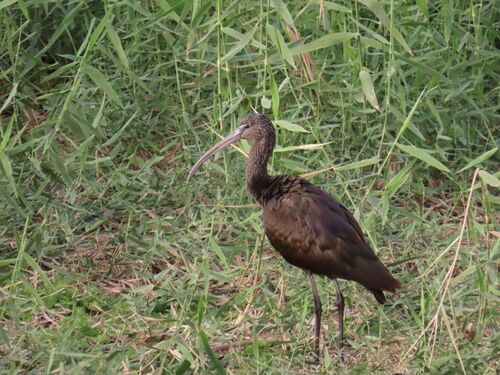 íbis-preta
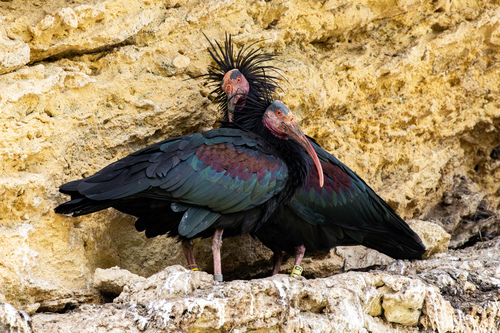 íbis-pelada
Em resumo
A marca de campo mais confiável para separar o íbis-preta do íbis-pelada é a presença de um rosto e cabeça vermelhos e sem penas no íbis-pelada, em comparação com o rosto escuro totalmente plumado do íbis-preta. Em voo, o íbis-pelada apresenta um perfil mais robusto e atarracado, com asas menos arredondadas, um pescoço mais curto e pernas que não se projetam além da cauda, enquanto o íbis-preta parece mais esbelto, com pescoço mais longo e pernas que se estendem além da cauda. O íbis-preta juvenil não possui o rosto vermelho careca, enquanto o jovem íbis-pelada tem uma cabeça escura e plumosa, mas ainda apresenta uma estrutura mais pesada. A iridescência da plumagem está presente em ambos, mas o íbis-preta é mais castanho durante a época de reprodução, enquanto o íbis-pelada é mais uniformemente escuro com um brilho verde bronzeado e violeta. O habitat e o comportamento também diferem: o íbis-preta é um mergulhador de pântanos e áreas úmidas, enquanto o íbis-pelada prefere áreas secas, rochosas ou gramadas abertas e raramente mergulha.
Dicas de identificação
- Rosto e cabeça vermelhos carecas (íbis-pelada): A única espécie neste par com um rosto e cabeça completamente sem penas e vermelhos como adulto. O íbis-preta sempre tem um rosto plumoso, mesmo em juvenis e adultos não reprodutores.
- Cor e forma do bico: Ambos têm bicos longos e curvados, mas o bico do íbis-pelada é vermelho (adultos) e mais robusto, enquanto o bico do íbis-preta é acastanhado e mais esbelto.
- Projeção do pescoço e pernas em voo: O íbis-preta voa com o pescoço e as pernas totalmente estendidos, e os pés se projetam bem além da cauda. O íbis-pelada tem um pescoço mais curto em voo e seus pés não se projetam além da cauda, dando uma aparência mais compacta.
- Forma da asa em voo: O íbis-pelada tem asas menos arredondadas e um estilo de voo mais robusto e poderoso. O íbis-preta parece mais esbelto e gracioso, com asas mais longas e estreitas.
- Iridescência da plumagem: Ambas as espécies mostram iridescência, mas o íbis-preta é castanho-avermelhado com brilho verde/bronze/púrpura, especialmente na época de reprodução. O íbis-pelada é mais uniformemente negro com brilho verde bronzeado e violeta, sem os tons castanhos.
- Confusão juvenil: O íbis-preta juvenil é marrom opaco com finas listras brancas na cabeça/pescoço e sempre tem o rosto plumoso. O íbis-pelada juvenil tem uma cabeça plumosa escura, bico pálido e pernas cinzas, mas é mais robusto e escuro em geral. À medida que amadurece, a cabeça fica careca e vermelha.
- Rabo no pescoço: Os adultos do íbis-pelada têm um rabo esvoaçante no pescoço, ausente no íbis-preta.
- Cor das pernas: O íbis-pelada tem pernas vermelhas (adultos), enquanto o íbis-preta tem pernas castanho-vermelhas.
- Habitat: O íbis-preta está quase sempre em ou perto de áreas úmidas, pântanos ou água rasa. O íbis-pelada é encontrado em habitats de gramados secos, rochosos ou abertos, raramente na água.
- Comportamento: O íbis-preta mergulha e forrageia em água rasa, muitas vezes em bandos. O íbis-pelada forrageia em solo seco, raramente mergulhando.
- Postura empoleirada: O íbis-pelada parece mais robusto e ereto quando empoleirado, com uma cabeça careca proeminente. O íbis-preta é mais esbelto e mais curvado.
- Tamanho: O íbis-pelada é muito maior e mais pesado; use isso apenas com comparação direta ou experiência.
- Padrão facial: O íbis-preta pode mostrar uma faixa facial branca estreita em adultos reprodutores, mas é sutil e nunca tão marcante quanto o rosto vermelho careca do íbis-pelada.
- Vocalização: Não é diagnosticável de forma confiável em campo, mas o íbis-pelada pode ser ouvido emitindo chamados guturais em colônias.
- Contexto sazonal: Se visto em uma área úmida com outros mergulhadores, o íbis-preta é muito mais provável. Se em uma área seca, rochosa ou aberta, especialmente perto de penhascos, o íbis-pelada é favorecido.
Tamanho
O íbis-pelada é significativamente maior e mais pesado que o íbis-preta. O íbis-pelada mede 70–80 cm de comprimento, com uma envergadura de 125–135 cm e pesa 1,0–1,3 kg, tornando-o um pássaro robusto e atarracado. O íbis-preta é de tamanho médio, com 48–66 cm de comprimento, envergadura de 80–105 cm e massa média de 633 g. No campo, o íbis-pelada parecerá mais robusto e imponente, enquanto o íbis-preta é visivelmente mais esbelto e gracioso.
Plumagem
- Juvenis e imaturos: O íbis-preta juvenil é de um marrom mais opaco com finas listras brancas na cabeça e no pescoço, e sempre tem um rosto plumoso. O íbis-pelada juvenil tem uma cabeça plumosa escura (ainda não careca), bico pálido e pernas cinzas claras, mas ainda é mais robusto e escuro em geral. À medida que amadurecem, o íbis-pelada gradualmente perde penas na cabeça e desenvolve o característico rosto careca e vermelho.
- Adultos: O íbis-preta em plumagem de reprodução é castanho-avermelhado com forte iridescência verde metálica, bronze ou púrpura nas asas, e uma sutil borda facial branca. Adultos não reprodutores e imaturos são mais opacos, mas mantêm o rosto plumoso. Os adultos do íbis-pelada são negros brilhantes com brilho verde bronzeado e violeta, um rabo esvoaçante no pescoço e um rosto e cabeça totalmente sem penas e vermelhos. O bico e as pernas são vermelhos nos adultos. A impressão geral é muito mais escura e menos castanha do que a do íbis-preta.
Comportamento
O íbis-preta é um mergulhador clássico, alimentando-se em água rasa, muitas vezes em bandos, e empoleirando-se comunalmente em árvores, às vezes longe dos locais de alimentação. Eles costumam voar em formações em V graciosas com os pescoços estendidos. O íbis-pelada não mergulha, forrageando em habitats secos e abertos em busca de insetos e pequenos animais, e se reproduz colonialmente em penhascos ou beiradas rochosas. Em voo, o íbis-pelada é poderoso, mas menos gracioso, com batidas de asa rasas e flexíveis e uma projeção de pescoço mais curta. Seus pés não se estendem além da cauda em voo, ao contrário do íbis-preta.
Habitat
O íbis-preta é encontrado em áreas úmidas de água doce ou salobra, pântanos, planícies de inundação e prados úmidos, raramente aventurando-se em áreas secas ou rochosas. Prefere fortemente áreas com água parada e vegetação emergente. O íbis-pelada, em contraste, habita gramados abertos, montanhas rochosas e semi-desertos, frequentemente perto de água corrente, mas não em áreas úmidas. É raramente visto mergulhando e é mais provável que seja encontrado em solo seco ou beiradas de penhascos.
Voz
O íbis-pelada é em sua maioria silencioso, exceto em colônias de reprodução, onde emite chamados guturais 'hrump' e altos e roucos 'hyoh'. O íbis-preta é geralmente quieto, e nenhuma vocalização distintiva é notada para separação em campo entre essas duas espécies.